
Librarian's Choice
အဓိကအကြောင်းအရာ
Description/subject:
Résumé:
Le présent rapport rend compte des efforts déployés par le Secrétaire général et
son Envoyé spécial, Razali Ismail, pour essayer de faciliter la réconciliation
nationale et la démocratisation au Myanmar, conformément à la résolution 58/247 de
l?Assemblée générale, en date du 23 décembre 2003. Les entretiens que le Secrétaire
général et son Envoyé spécial ont eus, séparément, avec les autorités du Myanmar au
cours de la période faisant l?objet du présent rapport ont été centrés sur la nécessité
pour ces dernières de faire de la feuille de route en sept étapes vers la
démocratisation, présentée le 30 août 2003 par le général Khin Nyunt, Premier
Ministre, un vecteur crédible de réconciliation nationale et de démocratisation. Pour
y parvenir, elles devaient veiller à ce que cet instrument soit, dès le départ, ouvert à
tous et transparent. Au cours de la mission qu?il a effectuée au mois de mars 2004,
l?Envoyé spécial a exposé la position des Nations Unies au Gouvernement, à Daw
Aung San Suu Kyi et à la Ligue nationale pour la démocratie (LND), ainsi qu?aux
représentants d?autres partis politiques et minorités ethniques. Le 17 mai, la
Convention nationale a été convoquée de nouveau, mais sans la participation de la
LND ni de certains partis politiques ethniques. De plus, Daw Aung San Suu Kyi et
son adjoint, U Tin Oo, qui avaient été arrêtés après les événements survenus à
Depayin le 30 mai 2003, demeuraient assignés à résidence. Leur condition n?avait
pas évolué au moment de l?élaboration du présent rapport. Le Secrétaire général est profondément préoccupé par l?absence d?un processus
de réconciliation nationale et de démocratisation ouvert à tous au Myanmar.
Rappelant les garanties qu?avait données le Gouvernement du Myanmar à son
Envoyé spécial, selon lesquelles la feuille de route serait ouverte à tous, le Secrétaire
général demande instamment au général en chef Than Shwe et aux autres hauts
responsables du Conseil national pour la paix et le développement de profiter de
l?ajournement de la Convention nationale, le 9 juillet 2004, pour lever à titre
prioritaire les restrictions qui pèsent encore sur Daw Aung San Suu Kyi; d?entamer
sur le champ un dialogue de fond avec elle et son parti; de prendre les mesures
nécessaires pour garantir l?ouverture à tous du processus de la Convention nationale;
et de veiller à ce que les points de vue des délégués, notamment ceux qu?avaient déjà
exposés des groupes ethniques participant au cessez-le-feu, soient correctement pris
en considération. Ces gestes donneraient la crédibilité voulue au dialogue tripartite
entre le Gouvernement, la LND et les minorités ethniques.
En outre, le Secrétaire général engage les pays de la région, en particulier les
États membres de l?Association des nations de l?Asie du Sud-Est (ANASE), à jouer
un rôle moteur en incitant le Conseil national pour la paix et le développement à
prendre les mesures évoquées ci-dessus. Il invite aussi instamment le Conseil à
permettre à son Envoyé spécial de reprendre ses visites régulières, afin qu?il puisse
contribuer au processus de réconciliation nationale et de démocratisation dans le
pays. Le Secrétaire général regrette à ce propos de devoir constater qu?à ce jour, les
autorités du pays ont jugé « inopportunes » les demandes successives tendant à ce
que son Envoyé spécial soit autorisé à retourner au Myanmar (et les requêtes
similaires formulées par le Rapporteur spécial de la Commission des droits de
l?homme, Paulo Sergio Pinheiro). On ne peut donc qu?en conclure que le Myanmar
n?a pas coopéré dans toute la mesure du possible avec l?Organisation des Nations
Unies; de ce fait, les activités entreprises par cette dernière pour contribuer au
processus n?ont pas été aussi efficaces qu?elles auraient pu l?être. Le Secrétaire
général est cependant déterminé à poursuivre sa mission de bons offices, en
s?appuyant sur une série de résolutions de l?Assemblée générale, afin d?aider le
peuple du Myanmar qui, jusqu?à présent, a été privé des bienfaits apportés par le
développement économique, social et politique dont jouissent les citoyens de pays
voisins.
Source/publisher:
Nations Unies (A/59/269)
Date of publication:
2004-08-16
Date of entry/update:
2004-09-28
Type:
Individual Documents
Category:
Language:
Francais, French
Format :
pdf
Size:
125.36 KB
Local URL:
 GA2004-SG-fr.pdf
 more
Description/subject:
"... The ENC does not believe that the SPDC?s 7-stages ?road map” and its National Convention will lead to democratization and establishment of a federal union. The sole purpose of SPDC?s National Convention is to sustain a military dictatorship and transform itself from De Facto Government to De Jure Government through constitution. The ENC, therefore, issued a statement on 14 May 2004, in support of CF groups? letter to the SPDC. Part of the statement read as follows:
(i) The National Convention procedural rules should be discussed and revised;
(ii) Objective No. 6 of the National Convention (military role in politics) is not compatible with democracy. It should be discussed and revised;
(iii) The 104 Articles adopted by the previous National Convention are not compatible with democracy. It should be discussed and revised.
(iv) Law No. 5/96, which was enacted on 7 June 1996 to protect the 1993-96 National Convention, should be repealed.
The ENC is willing to cooperate and find ways to bring about a transition if above are met. Politics is about making compromises and the ENC is willing to discuss options if the SPDC considers modifying its 7- points Road Map. And, the ENC still believes that the best means to solve our country problem is through a negotiated settlement; and we, therefore, strongly demands a tripartite dialogue as called for by the UNGA since 1994.
In conclusion, I would like to stress again that the right of ?self-determination” that we are struggling for is what we call ?internal self-determination”: which will guarantees our collective rights; the right to rule our homeland by ourselves, the right to practice our religious teaching and culture freely, the right to teach, learn and promote our language freely, and the right to up-hold our identity without fear and live peacefully together with others. I can assure you that we are not separatists. We are for a united Union of Burma, but what we want is a genuine federal union where all ethnic groups in Burma can live peacefully together."... While this is not a formal ENC statement, Lian Sakhong is General Secretary of the ENC as well as of the United Nationalities League for Democracy, UNLD-LA.
Lian H. Sakhong
Source/publisher:
Speech delivered at ?Conference on Indo-Burma Relation”, India International Centre on September 16-17, 2004
Date of publication:
2004-09-17
Date of entry/update:
2004-09-26
Type:
Individual Documents
Language:
English
Format :
htm
Size:
40.93 KB
Local URL:
 Struggle_for_S-D.htm
 more
Description/subject:
Report Highlights:
Burma?s official wood exports should remain at around 475,000 cubic meters. The
industry in Burma is faced with over logging due to continued unchecked illicit
trading in logs...EXECUTIVE SUMMARY
Burma remains more than 50 percent forested and has sizeable stands of commercial hard woods
due to a sound policy of sustainable forest management that has been in place since British times.
While commercial extraction of teak and tropical hardwoods is controlled under Forest
Department regulations and monitoring, population growth and the resulting demand for fuel
wood and agricultural land are putting pressure on both the hardwood and other forested areas.
Illegal logging of hardwoods has and continues to be a problem in border areas, but the largest
threat to Burma?s forest resources is encroachment by villagers seeking wood for fuel and land
for crops.
Accurate and reliable statistics on forest area resources, production, consumption, and trade are
somewhat difficult to obtain given the extent of illicit trade and insufficient government
resources to adequately monitor the sector. Nevertheless, post forecasts that annual production
(based on Burma?s fiscal year of April/March) of teak logs in 2000/01 will continue to be around
475,000 cubic meters. Production of other hardwood logs will be approximately 1.5 million
cubic meters. Lumber output over the same period will be about 35,000 cubic meters of teak and
240,000 cubic meters of other hardwoods.
Burma?s export trade is dominated by logs. Exports of teak logs in calendar year 2000 will likely
be similar to 1999, or about 247,000 cubic meters, while exports of other hardwood logs will
likely be between 335,000 and 400,000 cubic meters. Production of lumber and other valueadded
products for domestic use or for export is hampered by the low level of the local
processing sector.
The forestry sector is a good illustration of the constraints, both economic and policy, that Burma
faces. Articulate and knowledgeable bureaucrats know what their problems are and have good
ideas for resolving them. However, lack of resources, contradictory policies and programs
between Ministries, and irresistible economic incentives often prevent these ideas from being
implemented. The latter factor is a considerable problem for the forestry sector. Commercial
extraction of tropical hardwoods, both officially and outside the system, are extremely profitable
and an important earner of foreign exchange for the cash-strapped government. It is unlikely that
the existing regulations, sound as they might be, can be completely effective in curbing illicit
extraction. At the village level, the short-term economic benefits of gathering fuel wood or
clearing land for crops simply overrule the longer-term benefits of reforestation or other
environment-friendly land management techniques."
Daphne Khin Swe Swe Aye
Source/publisher:
US Dept. of Agriculture (USDA) Global Agriculture Information Network (GAIN)
Date of publication:
2001-02-16
Date of entry/update:
2004-09-23
Type:
Individual Documents
Category:
Timber trade
Language:
English
Local URL:
more
Description/subject:
Summary: The present report is based upon the good offices efforts undertaken by the
Secretary-General and his Special Envoy, Razali Ismail, in attempting to facilitate
national reconciliation and democratization in Myanmar, in accordance with General
Assembly resolution 58/247 of 23 December 2003. The discussions that the
Secretary-General and his Special Envoy have had separately with the Myanmar
authorities during the reporting period focused on the need for the latter to make the
seven-step road map for democratic transition, announced by Prime Minister General
Khin Nyunt on 30 August 2003, a credible vehicle for national reconciliation and
democratization by ensuring that it was all-inclusive and transparent from the
beginning. During his mission in March 2004, the Special Envoy explained the
United Nations position to the Government, Daw Aung San Suu Kyi and the National
League for Democracy, as well as to representatives of other political parties and
ethnic nationality groups. On 17 May, however, the National Convention was
reconvened without the participation of the National League for Democracy and
some ethnic nationality political parties. Moreover, Daw Aung San Suu Kyi and her
deputy, U Tin Oo, who had been detained after the Depayin incident of 30 May 2003,
remained under house arrest. Their status remains unchanged at the time of reporting. The Secretary-General is seriously concerned by the absence of an all-inclusive
process of national reconciliation and democratization in Myanmar. Recalling the
assurances given by the Government of Myanmar to his Special Envoy that the road
map process would be all-inclusive, the Secretary-General urges Senior General
Than Shwe and other senior leaders of the State Peace and Development Council to
use the opportunity presented by the 9 July adjournment of the National Convention
to lift, as a matter of priority, the remaining restrictions on Daw Aung San Suu Kyi;
to commence a substantive dialogue with her and her party immediately; to take the
necessary steps to ensure that the National Convention process is all-inclusive and
open; and to ensure that the views of the delegates, including those already
articulated by the ethnic nationality ceasefire groups, are adequately taken into
account. Those actions, if taken, would provide the basis of a credible forum for a
tripartite dialogue among the Government, the National League for Democracy and
ethnic nationalities.
In addition, the Secretary-General calls on the countries in the region, and
especially the member States of the Association of Southeast Asian Nations, to take a
leading role in counselling the State Peace and Development Council to take the
aforementioned steps. He also urges the Council to allow his Special Envoy to
resume regular visits so that he can help to facilitate national reconciliation and
democratization in the country. In that context, the Secretary-General notes with
concern that repeated requests for his Special Envoy to be allowed to return to
Myanmar (and similar requests made by the Special Rapporteur of the Commission
on Human Rights, Paulo Sergio Pinheiro), have, to date, been considered ?not
convenient? by the Myanmar authorities. Under the circumstances, there can be no
escaping the conclusion that Myanmar has not cooperated to the maximum extent
possible with the United Nations; consequently, the United Nations facilitation
efforts have not been as effective as they could have been. The Secretary-General is
nevertheless determined to continue providing his good offices, on the basis of
successive General Assembly resolutions and in support of the people of Myanmar,
who have hitherto been prevented from enjoying the same benefits of economic,
social and political development as their counterparts in neighbouring countries.
Source/publisher:
United Nations (A/59/269)
Date of publication:
2004-08-16
Date of entry/update:
2004-09-23
Type:
Individual Documents
Language:
English
Format :
pdf
Size:
44.36 KB
Local URL:
sec-gen-report.pdf
sec-gen-report.pdf more
Description/subject:
"The Salons or sea gypsies are the among the smallest minorities in Burma and no less vulnerable or defenseless against human rights abuses committed by the junta. They need the attention of Human Rights activists and organizations."
-- Chin Forum Information Service
Freely roaming the ocean in small boats from birth to death, living simply off its riches, a Southeast Asian people seem as mythical as mermaids. These ethnic groups known as "Sea Gypsies" are still found from the Philippines to Borneo to Thailand to Burma. Their lives are romantic but increasingly difficult.
This report focuses exclusively on those from Burma's waters. Burma's "Sea Gypsies" face particular problems which may even threaten their existence as a culture and people. Amid the vast array of documentation on Burma's human rights situation and ethnic groups there has been very little investigation about Burma's "Sea Gypsies." A series of books by a French ethnologist, two new books published in Burma, and a recent documentary film are among the main resources available. There has been little press coverage outside of a few tourism-oriented articles and a spate of news coverage in early 2004. Even an activist from the Mon ethnic group of the same region of Burma comments about the "Sea Gypsies": "These people are living offshore and rarely have communication with the people on the coast."
As a compendium, this report seeks to fill some of this information gap with a collection of 29 documents and articles from 1997 to 2004 concerning Burma's "Sea Gypsies" in a format accessible to those who are interested in Burma and indigenous/nomadic peoples issues. This compendium is modeled on Project Maje's previous "A Chin Compendium," released in 1999. The material contained here is compiled for nonprofit public interest use. For reproduction contact the original sources. Be sure to credit the original sources, not Project Maje, if quoting from non Project Maje material contained here.
This is not a scientific study or a comprehensive report. It is intended as a reference and background resource. It draws upon available information in English about Burma's "Sea Gypsies" from an array of sources, including news articles, tour agencies, and researchers. Project Maje, the compiler of this report, does not endorse, confirm or deny the veracity of any of the non Project Maje material.
In some cases, only excerpts directly relevant to the Burma "Sea Gypsies" are included, rather than a complete article. Places where articles were cut for excerpts are marked with three woven rattans (###.) The beginning and end of each article is marked with three nautilus shells (@@@.)
Source/publisher:
Project Maje
Date of publication:
2004-05-31
Date of entry/update:
2004-09-22
Type:
Individual Documents
Category:
Salon (Moken, Sea Gypsies)
Language:
English
Local URL:
more
Description/subject:
Abstract:
In this paper, an extensive report on the economy of Myanmar prepared in 1998
is supplemented by more recent reports as of fall 2002 (included as appendices).
The economy of Myanmar is one of the poorest in South East Asia. Despite relatively
rapidly growth during the 1990?s, per capita income by 1998 was little higher than in the
middle 1980s. Inflation rates are high, the currency value has fallen sharply, and
Myanmar has one of the world?s lowest rates relative to income of government revenue
and non-military spending.
Agriculture in Myanmar has an unusually high share (59%) of GDP. Despite a high
reported growth rate, yields for most food crops have remained stagnant or dropped.
Poor price incentives and credit systems constrain agricultural production. As of 1998,
farm wages are barely enough to provide food, with nothing left over for clothing,
school fees, supplies, or medicine. Environmental problems including deteriorating
water supply and diminishing common property resources further impact the poor.
Industry suffers from limited credit, fluctuating power supplies, inflation and exchange
rate instability. A possible bright spot is offshore gas potential. However, much of the
expected revenue from offshore gas development may already have been pledged as
collateral for expenditure prior to 1998, and thus will go primarily to service debt.
Recent evidence summarized in a paper by Debbie Aung Din Taylor (Appendix 3)
indicates that most people in rural areas are much worse off today than a decade ago.
Decline in agricultural production is aggravated by severe degradation of the natural
resource base. River catchment areas are denuded of forest cover, leading to more
frequent and severe flooding. Fish stocks and water supplies are diminishing. These
trends are pervasive and reaching a critical level. Assistance is urgently needed to
provide the rural poor. Sustained international attention is needed to reverse the current
rapid decline of economy and environment.
David Dapice
Source/publisher:
Global Development and Environment Institute, Tufts University
Date of publication:
2003-04-30
Date of entry/update:
2004-09-21
Type:
Individual Documents
Category:
Economy: general, analytical, statistical (various sources), Policies leading to food insecurity in Burma
Language:
English
Local URL:
more
Description/subject:
Yangon/Brussels, 9 September 2004: "International assistance to Myanmar?s Border Areas is needed to consolidate peace and lay the foundations for a more open, democratic system.
Despite continuing state repression in Myanmar and widespread international unwillingness to deal directly with the regime, properly targeted developmental and humanitarian aid can and should be given to help a limited and particular part of the country.
Myanmar: Aid to the Border Areas,* the latest report from the International Crisis Group, lays out in detail why the Border Areas are different and discusses how expanded international assistance could be implemented without strengthening the present government.
"The international community has tended to disregard the needs of the Myanmar?s desperately poor ethnic minority communities", says Robert Templer, Asia Program Director at ICG. "Foreign aid for the Border Areas should be seen as complementary to diplomatic efforts to restore democracy."
The remote, mountainous areas along the borders with Thailand, Laos, China, India and Bangladesh, largely populated by ethnic minorities, have long suffered from war and neglect, which have undermined development. Extreme poverty is widespread, though the area contains more than a third of the country?s population and most of its natural resources. The Border Areas also link to some of the world?s fastest growing economies. The prospects for Myanmar?s peace, prosperity and democracy are thus closely tied to the future of these regions.
International assistance could also reduce refugee flows and the dangers from cross border threats such as the spread of drugs and AIDS, and environmental damage from deforestation.
Much of the world has been reluctant to have any direct dealings with the regime. The political stalemate which has prevailed since the military suppression of the pro-democracy movement in 1988 continues unabated. Daw Aung San Suu Kyi remains in custody, and there is no sign that the National Convention reconvened in May 2004 will produce any meaningful change. Without movement on these two fronts a comprehensive way forward that steers a course between sanctions and over-eager engagement will have few attractions for the international community.
"But if it can overcome its distaste somewhat and at least agree to work with local authorities to a limited extent, the outside world can play a very positive, perhaps even catalytic, role inside this particular region of Myanmar", says Templer. "Although the linkages between peace, prosperity and democracy are complex, international help for the Border Areas provides an important organising principle and practical means for their realisation."
Source/publisher:
International Crisis Group
Date of publication:
2004-09-09
Date of entry/update:
2004-09-09
Type:
Individual Documents
Category:
Multilateral economic development assistance, The discussion on humanitarian assistance to Burma
Language:
English
Format :
pdf
Size:
410.83 KB
Local URL:
082_myanmar_aid_to_the_border_areas.pdf
082_myanmar_aid_to_the_border_areas.pdf more
Description/subject:
"The Rajadhammasangaha" was presented to King Thibaw in December 1878. The first printing was c.1915. This translation by L.E.Bagshawe is from the version edited with a biographical preface by Maung Htin (U Htin Fatt) and published by the Sape U Publishing House in 1979...
"On the seventh waxing day of Nadaw...the Wetmasut Myoza Wungyi finished the writing of his book Rajadhammasangaha and presented it to King Thibaw. The author describes it pleasantly as ?a book of the proper behaviour for Kings and other high officers of government”. The Pagan Wundauk U Tin, however, says ?it is a book of admonishment addressed to King Thibaw.” And in this he speaks the direct truth. In this book the Wetmasut Myoza Wungyi documents the proposals for changes in the system of government that were planned from the time of King Mindon. His intention in writing the book, he says, is, ?In bygone times of the Buddha-to-be there were good and excellent Kings who guarded the well-being of all living creatures; like them may our own King, Lord of the Saddanta Elephant and Lawful King, under the Law guard the well-being of all living creatures like that of his own beloved children.”
This expressed intention has a further meaning. Under an autocracy we cannot really say that the monarch rules with the single-minded wish to rule all living creatures on the same terms as his own children. If he is brought to the point where he must consult the "living creatures", we may be able to say that he regards them on equal terms with his own children. If there is no law requiring consultation, his guardianship becomes dubious..."
By the Yaw Mingyi U Hpo Hlaing (the Wetmasut Myoza Wungyi). Edited with biographical preface by Maung Htin (U Htin Fatt), translated from the Burmese by L.E. Bagshawe
Source/publisher:
Online Burma/Myanmar Library
Date of publication:
1978-11-30
Date of entry/update:
2004-09-05
Type:
Individual Documents
Category:
Burmese Buddhism and Society, Buddhism and society, Buddhist Ethics, Political analysis of Burma and the region
Language:
English
Format :
pdf pdf
Size:
1 MB 1.31 MB
more
Description/subject:
Executive Summary:
"This report 'System of Impunity' documents detailed accounts of sexual violence against
women in all the ethnic states, as well as in central areas of Burma. These stories
demonstrate patterns of continuing widespread, and systematic human rights violations
being perpetrated by the regime?s armed forces and authorities.
Women and girls from different ethnic groups report similar stories of rape, including
gang rape; rape and murder; sexual slavery; and forced ?marriage”. Significantly, almost
all the incidents took place during the last two years, precisely while the regime has been
repeatedly denying the prevalence of military rape in Burma.
These stories bear witness to the fact that, despite the regime?s claims to the contrary,
nothing has changed in Burma. Regardless of their location, be it in the civil war zones,
the ceasefire areas or ?non-conflict” areas, it is clear that no woman or girl is safe from
rape and sexual torture under the current regime. Soldiers, captains, commanders and
other SPDC officials continue to commit rape, gang rape and murder of women and
children, with impunity.
The documented stories demonstrate the systematic and structuralized nature of the
violence, and the climate of impunity which not only enables the military to evade
prosecution for rape and other crimes against civilian women, but also fosters a culture of
continued and escalating violence. Even when crimes are reported no action is taken and
moreover complainants are victimised, threatened or imprisoned. Women and children
continue to be raped, used as sex slaves, tortured and murdered across the country by the
regime?s armed forces and authorities.
It is clear that the rapes and violence are not committed by rogue elements within the
military but are central to the modus operandi of this regime. Structuralized and
systematic human rights violations, including sexual violence, are an inevitable result of
the regime?s policies of military expansion and consolidation of control by all possible
means over a disenfranchised civilian population.
This is why there can be no other solution to the problem of systematic sexual violence in
Burma than an end to military rule. While countries in the region, members of ASEAN,
and particularly Burma?s neighbours, appear willing to overlook human rights issues in
their dealings with Burma, women of Burma wish to highlight that these policies of
constructive engagement have grave repercussions for the citizens of Burma, particularly
women and children. The political support which the regime is gaining from the region is
emboldening it to continue its policies of militarization and accompanying sexual
violence. It is directly placing the lives of women and girls in Burma at risk..."
Source/publisher:
Women's League of Burma (WLB)
Date of publication:
2004-09-04
Date of entry/update:
2004-09-04
Type:
Individual Documents
Category:
Discrimination/violence against women: reports of violations in Burma, Articles, reports and sites relating to women of Burma, Women and armed conflict - Burma/Myanmar
Language:
English
Format :
pdf doc
Size:
945.36 KB 936 KB
Local URL:
SYSTEM_OF_IMPUNITY.pdf,  SYSTEM_OF_IMPUNITY-1.doc
SYSTEM_OF_IMPUNITY.pdf, SYSTEM_OF_IMPUNITY-1.doc more
Description/subject:
"In Burmese, Yadana refers to objects of religious veneration and, by extension, to people and objects of great worth.[1] The construction and maintenance of the Yadana Pipeline has forever changed that. For the thousands of people adversely affected by this multi-national energy project, the word has a very different meaning. Yadana is now synonymous with forced labor and severe human rights violations.[2]
Another Yadana, sadly, is in the making. In January 2004, with the approval of the Burmese government, a consortium of South Korean and Indian companies announced plans to develop a massive natural gas field in the Gulf of Bengal, off the coast of western Burma. This new project, known as Shwe, which means ?gold” in Burmese, is still in its early planning stages. In EarthRights International?s (ERI) view, an alarming number of similarities already exist between the Yadana Pipeline and the proposed Shwe Pipeline. If nothing is done, it appears likely that history will repeat itself. Forced labor and human rights abuses are still an ongoing problem throughout Burma, and it can be assumed that these violations will continue at any major development project site.
At this point, little information on the proposed Shwe Project is publicly available. To help counter this problem ERI is now collaborating with a growing number of groups in the tri-state border region (Burma-Bangladesh-India) where the transnational pipeline is likely to be constructed. Together, the groups are working to raise local, regional and international awareness concerning the social and environmental impacts the massive Shwe Project is likely to have regionally. The Project is expected to cost between one and three billion U.S. dollars to build.[3] Future reports based on careful fact-finding are planned, as is an international campaign should the energy consortium move forward with the project..." N.B. map in pdf version.
Source/publisher:
EarthRights International
Date of publication:
2004-08-27
Date of entry/update:
2004-08-27
Type:
Individual Documents
Language:
English
Format :
pdf
Size:
324.08 KB
Local URL:
The_Shwe_Project.pdf
The_Shwe_Project.pdf more
Description/subject:
Washington, D.C. ? EarthRights International's new report, "In Our Court: ATCA, Sosa, and the Triumph of Human Rights," analyzes the history of the Alien Tort Claims Act (ATCA), its use in human rights cases over the past two decades, and the political debate between the human rights community, the business lobby, and the Bush Administration over how ATCA should be used.
"In Our Court" is the first report to trace the use of ATCA and provide a comprehensive discussion of how and why it has become an important tool for human rights advancement, and why it has come under attack by the business community and the Bush Administration. Using case studies from Burma, Nigeria, and Sudan, the report explains the need for ATCA and the link between the victims of human rights violations and the corporations that have gained from the abuse.
The U.S. Supreme Court's June 2004 decision on Sosa v. Alvarez-Machain was a victory for human rights groups such as EarthRights International and the victims they represent. The Supreme Court ruled that ATCA continues to afford non-citizens a way to sue perpetrators of egregious human rights abuses in U.S. federal courts.
Concluding with a legal analysis of the Sosa decision, "In Our Court" explores the implications of the Supreme Court's ruling for victims of human rights abuses, their defenders, corporations, and the Administration, and makes recommendations for preserving the ability of victims and survivors to seek legal redress in U.S. courts.
Source/publisher:
EarthRights International
Date of publication:
2004-07-27
Date of entry/update:
2004-08-25
Type:
Individual Documents
Category:
Shareholder and other action on corporate involvement in Burma, Political, social and economic dimensions of investment in Burma
Language:
English
Format :
html
Size:
219.44 KB
Local URL:
In_Our_Court.html
In_Our_Court.html more
Description/subject:
The following statement was issued today by the Spokesman for Secretary-General Kofi Annan: "...It is the Secretary-General's judgement that the National Convention does not currently adhere to the recommendations made by successive resolutions of the General Assembly. The Secretary-General believes that, unless and until the views of the National League for Democracy (NLD) and other political parties are sought and considered, the National Convention and the road map process will be incomplete, lacking in credibility and, therefore, unable to gain the full support of the international community, including the countries of the region..."
Source/publisher:
United Nations
Date of publication:
2004-08-17
Date of entry/update:
2004-08-18
Type:
Individual Documents
Language:
English
Format :
htm
Size:
8.09 KB
Local URL:
Annan-2004-08-17.htm
Annan-2004-08-17.htm more
Description/subject:
The IMNA archive on OBL currently contains more than 230 IMNA stories from October 2002. The archive metadata can be browsed, or searched by keyword.
Source/publisher:
OBL-IMNA
Date of publication:
2004-08-13
Date of entry/update:
2004-08-13
Type:
Individual Documents
Category:
Independent Mon News Agency (IMNA)
Language:
English, Burmese, Mon
Local URL:
more
Source/publisher:
Independent Mon News Agency (IMNA)
Date of entry/update:
2004-08-13
Type:
Websites/Multiple Documents
Category:
Independent Mon News Agency (IMNA)
Language:
Mon
Local URL:
more
Description/subject:
This page leads, by browsing and searching, to a number of documents on Burma/Myanmar statistics
Source/publisher:
UNESCAP
Date of entry/update:
2004-08-11
Type:
Websites/Multiple Documents
Language:
English
Local URL:
more
Description/subject:
Click on Myanmar and check relevant boxes to generate a set of statistics for Myanmar.
Source/publisher:
UNESCAP
Date of entry/update:
2004-08-11
Type:
Websites/Multiple Documents
Language:
English
Local URL:
more
Description/subject:
"With the collapse of the Berlin Wall in 1989 and Cory Aquino?s earlier
people?s power revolution, it indeed seemed that the world, and Southeast
Asia too, would be shaped by economic and political freedom, i.e., by the
free market economy and "middle class" democracy. The 1988 uprising in
Burma which toppled Ne Win?s one-man rule seemed part of a global
democratization process. Quite unexpectedly, however, outside actors -- Singapore, China, and the
Thai military -- stepped in to shore up the new military junta..."
Chao-Tzang Yawnghwe
Source/publisher:
"BurmaNet News"
Date of publication:
1995-10-15
Date of entry/update:
2004-08-06
Type:
Individual Documents
Language:
English
Format :
htm
Size:
12.35 KB
Local URL:
New-World-Order.htm
New-World-Order.htm more
Description/subject:
This article, which is a critique of the ICG report, "Myanmar: The Politics of Humanitarian Aid" of 2 April 2002, was adapted from the version on www.bma-online.net
Chao-Tzang Yawnghwe
Date of publication:
2002-04-21
Date of entry/update:
2004-08-05
Type:
Individual Documents
Language:
English
Format :
htm
Size:
24.21 KB
Local URL:
Critique_of_ICG-Report.htm
Critique_of_ICG-Report.htm more
Description/subject:
This is cropped from a photo I took at a meal towards the end of the Burma conference, "Burma-Myanma(r) Research and its Future: Implications for Scholars and Policymakers", 21-25 September 2002, Gothenburg, Sweden.
David Arnott
Source/publisher:
www.arnott-photo.org
Date of publication:
2002-09-24
Date of entry/update:
2004-08-05
Type:
Individual Documents
Language:
Format :
jpg
Size:
74.52 KB
Local URL:
 S2004-62-09b.jpg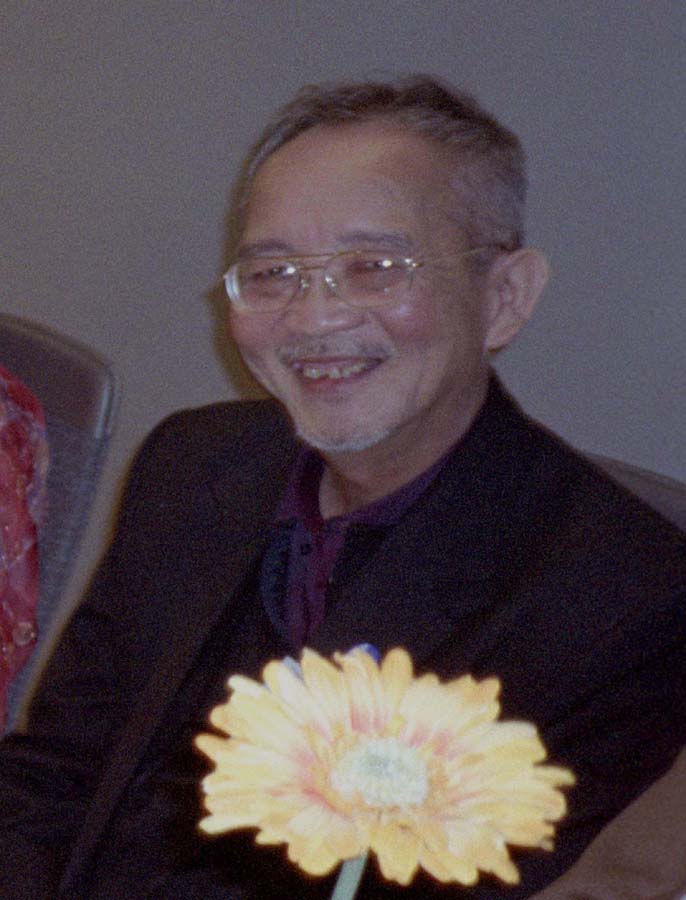
more
Description/subject:
This is cropped from a photo I took at a meal towards the end of the Burma conference, "Burma-Myanma(r) Research and its Future: Implications for Scholars and Policymakers", 21-25 September 2002.
David Arnott
Source/publisher:
www.arnott-photo.org
Date of publication:
2002-09-24
Date of entry/update:
2004-08-05
Type:
Individual Documents
Language:
Format :
jpg
Size:
51.99 KB
Local URL:
S2004-62-08b.jpg
S2004-62-08b.jpg 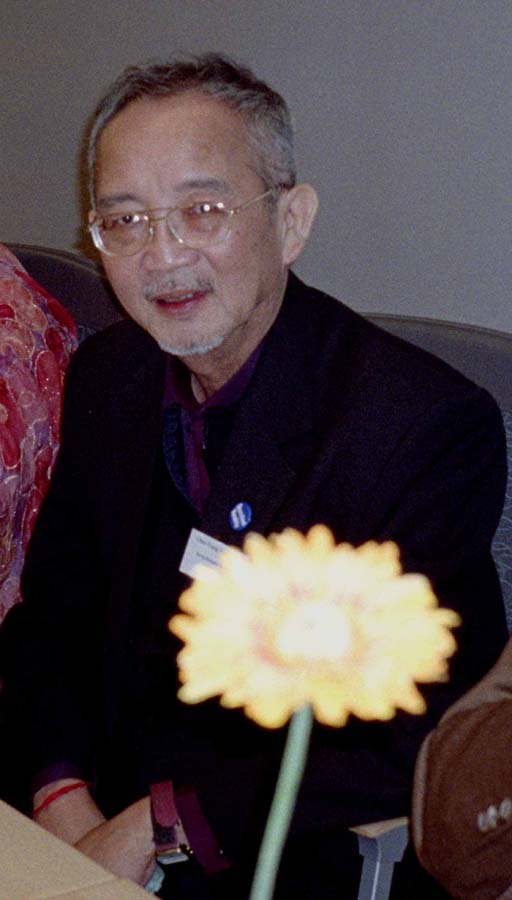
more
Description/subject:
"...Kao Wao recently requested Dr. Chao Tzang Yawnghwe, the Advisory Board member of the United Nationalities League for Democracy-Liberated Area, to take time out from his busy schedule to talk about his life experiences as an activist and freedom fighter. Graduated with a Bachelor?s Degree from Rangoon University and tutored English from 1960-63, when General Ne Win seized power in a military coup in 1962, Chao Tzang became one of the leading founders and served in the Shan resistance movement of the Shan State Army from 1963-1977..."
Chao Tzang Yawnghwe, Cham Toik (interviewer)
Source/publisher:
Kao Wao News Group
Date of publication:
2002-02-26
Date of entry/update:
2004-08-05
Type:
Individual Documents
Language:
English
Format :
htm
Size:
32.95 KB
Local URL:
Interview2002-02.htm
Interview2002-02.htm more
Description/subject:
Moving in Two Directions: Where is Burma Headed?
Josef Silverstein...
Freedom of Expression and Transition away from
Authoritarian Rule, B.K. Sen...
Human Rights Norms in Burmese Society,
Khin Maung Win...
Impunity and Judicial Independence,
John Southalan.
Source/publisher:
Burma Lawyers? Council (BLC)
Date of publication:
2004-03-31
Date of entry/update:
2004-08-05
Type:
Individual Documents
Language:
English
Format :
pdf
Size:
779.38 KB
Local URL:
LIOB_17.pdf
LIOB_17.pdf more
Description/subject:
"(1) The Constructive Engagement policy of Thailand and ASEAN states vis-a-vis the SLORC junta in Burma stems basically from the goodwill of these governments for the people of Burma.
(2) Underlying this policy are 4 major assumptions concerning the situation in, and the politics of Burma. These are:..."
Chao-Tzang Yawnghwe
Source/publisher:
Thai-Yunnan Newsletter, Issue 21 June 1993
Date of publication:
1993-05-31
Date of entry/update:
2004-08-03
Type:
Individual Documents
Language:
English
Local URL:
more
Description/subject:
"The Union Day is worthy of commemorating because it is an event
which the military cannot claim to have any role whatsoever in bringing
about. As such, military rulers have nothing meaningful to say on Union
Day, except to utter empty clichés about "national unity" as Than Shwe
recently did. It is amazing that he should talk about the rights of the
"national races," when in fact, no one but members of the top brass have
such things as human rights..."
Chao-Tzang Yawnghwe
Source/publisher:
reg.burma
Date of publication:
1996-02-25
Date of entry/update:
2004-08-03
Type:
Individual Documents
Language:
English
Format :
html
Size:
6.47 KB
Local URL:
msg00228.html
msg00228.html more
Description/subject:
Abstract: "This thesis investigates the impact of military rule on the state and society by looking at three cases from the same geographical region -- Burma, Indonesia, and Thailand -- that have experienced military intervention and military rule. The thesis is framed by a number of questions: Why does the military sometimes decide to stay on to run the state after it intervenes? What happens to the military, its leaders, and most importantly, the state and society when the military reorganizes the state into a military-authoritarian order? What are the political outcomes of military rule in terms of state autonomy? How can the political variations -- the extent of military penetration into the state order -- between military regimes be explained?
This thesis has found that there are three vital factors influencing the military?s decision, having intervened, to stay on to rule the country. The most important factor is the emergence of an extraordinary military strongman-ruler. The second, and related, factor is military unity -- forged and maintained by the strongman-ruler and bound by the myth that the soldiers are the guardians and saviors of the state. The military supports the ruler and is in turn rewarded by him, and becomes a privileged class. Together they dominate and control other state and societal forces. In fact, while military-authoritarian states are highly autonomous from society, it is clear that the state is not well insulated from abuse by its own elites. The third factor is the extent to which the strongman-ruler is constrained by having to share power with an unimpeachable force (a person, ideal, or myth). This thesis has found that military rulers in Thailand have been constrained because of the person and the role of the monarch.
This thesis has also found significant variations in military-authoritarian states. They range from a nearly pure praetorian example to a tentative quasi-democratic set up -- resulting from historical circumstances combined with the vision, political will and astuteness of the strongman-ruler, his concern with his legacy, and the presence or not of an important constraining force. The military has played a dominant role in politics in Burma and Indonesia since the 1960s; in Thailand, it has been in and out of power since the 1930s. It has become apparent from this research that, although the global democratization trend is hopeful, it is not so easy to get a politicized military to go back to the barracks to stay." A thesis submitted in partial fulfillment of the requirement for the degree of Doctor of Philosophy in the Faculty of Graduate Studies (Department of Political Science), the University of British Columbia.
Chao-Tzang Yawnghwe
Source/publisher:
University of British Columbia (PhD Thesis)
Date of publication:
1997-08-31
Date of entry/update:
2004-08-03
Type:
Individual Documents
Category:
Political analysis of Burma and the region, Chao-Tzang Yawnghwe - various writings, photos etc.
Language:
English
Format :
pdf htm
Size:
1.26 MB 7.82 KB
more
Description/subject:
Drafting a constitution in Burma.
"Federalism is not quite understood in Burma. In fact, it would not be wrong to say it is grossly misunderstood by -- among
many others -- the Burman population segment, or at least by its armed elites (or elites in uniform).
To armed Burman elites, Federalism is synonomous with the destruction or the disintegration of the Union. The
Burman-dominated military led by General Ne Win introduced and entrenched this idea when they usurped power in 1962..."
Chao-Tzang Yawnghwe
Source/publisher:
Legal Issues on Burma Journal No. 3 (Burma Lawyers' Council)
Date of publication:
1999-04-30
Date of entry/update:
2004-08-03
Type:
Individual Documents
Category:
National and State constitutions, draft constitutions and amendments (commentary), Chao-Tzang Yawnghwe - various writings, photos etc., Federalism, ethnic conflict and the politics of national reconciliation - general studies and sources
Language:
English
Format :
htm
Size:
9.08 KB
Local URL:
LIOB03-CTY.htm
LIOB03-CTY.htm more
Description/subject:
It is maintained that Burma?s ethnic conflict? is not per se ethnic, nor that of the kind faced by indigenous peoples of, for
example, North America, but a conflict rooted in politics. Following the collapse of Burma?s General Ne Win?s
military-socialist regime in 1988, the issue of ethnic conflict has attracted the attention from both observers and protagonists.
This attention became heightened following the unraveling of the socialist bloc and the emergence of ethnic wars in those
hitherto (presumed) stable socialist nation-states.
Chao-Tzang Yawnghwe
Source/publisher:
"Legal Issues on Burma Journal" No. 10 (Burma Lawyers' Council)
Date of publication:
2001-11-30
Date of entry/update:
2004-08-03
Type:
Individual Documents
Category:
Chao-Tzang Yawnghwe - various writings, photos etc., Federalism, ethnic conflict and the politics of national reconciliation - general studies and sources
Language:
English
Format :
htm pdf
Size:
28.67 KB 558.64 KB
Local URL:
LIOB10-cty.htm, Legal_Issues_on Burma_Journal_10.pdf
LIOB10-cty.htm, Legal_Issues_on Burma_Journal_10.pdf more
Description/subject:
* Preface;
*
Acknowledgements;
*
Acronyms and Abbreviations, Terms and Measurements;
*
Burma at a Glance: Facts and Figures;
*
Ethnic Peoples of Burma;
*
Headlines in Review: Events of 1995;
*
The State of the Burmese Econonomy under Military Mangement;
*
Universal Declaration of Human Rights and Burma;
Facts on Human Right Violations in Burma 1995;
(I) Extra-judicial, Summary or Arbitrary Executions;
(II) Arbitrary Detention and Enforced or Involuntary Disappearances;
(III) Rights of the Child;
(IV) Forced Labour and Slavery;
(V) Forced Relocation and Internally Displaced Persons;
(VI) Deprivation of Livelihood;
(VII) Minority Protection;
(VIII) Torture and Other Cruel, Inhuman, Degrading Treatment or Punishment;
(IX) Freedom of Belief: Discrimination Against the Right to Practice Religion and Intolerance;
(X) Freedom of Opinion and Expression;
(XI) Freedom of Assembly and Association;
(XII) Freedom of Movement;
(XIII) Abuse of Women;
(XIV) The Refugees Situation and Forced Repatriation;
*
Personal Accounts;
*
Selected SLORC Orders;
*
Selected Bibliography;
*
List of Resources and Contributors.
Source/publisher:
Human Rights Documentation Unit of the NCGUB
Date of publication:
1996-04-30
Date of entry/update:
2004-07-28
Type:
Individual Documents
Language:
English
Format :
pdf
Size:
11.25 MB
Local URL:
YB1995.pdf
YB1995.pdf more
Description/subject:
United by geography, commerce and the colonial experience, the Chin and Mizo have grown apart in recent years.
Karin Kaasik
Source/publisher:
"The Irrawaddy" Vol. 12, No. 4, April 2004
Date of publication:
2004-03-31
Date of entry/update:
2004-07-22
Type:
Individual Documents
Language:
English
Local URL:
more
Description/subject:
I. Executive Summary;
II. Introduction;
III. Thailand: Background.
IV. Burma: Background.
V. Project Methodology;
VI. Findings:
Hill Tribe Women and Girls in Thailand; Burmese Migrant Women and Girls in Thailand;
VII. Law and Policy ?? Thailand;
VIII. Applicable International Human Rights Law;
IX. Law and Policy ?? United States
X. Conclusion and Expanded Recommendations..."This study was designed to provide critical insight and
remedial recommendations on the manner in which
human rights violations committed against Burmese
migrant and hill tribe women and girls in Thailand render
them vulnerable to trafficking,2 unsafe migration,
exploitative labor, and sexual exploitation and, consequently,
through these additional violations, to
HIV/AIDS. This report describes the policy failures of
the government of Thailand, despite a program widely
hailed as a model of HIV prevention for the region.
Physicians for Human Rights (PHR) findings show that
the Thai government?s abdication of responsibility for
uncorrupted and nondiscriminatory law enforcement
and human rights protection has permitted ongoing violations
of human rights, including those by authorities
themselves, which have caused great harm to Burmese
and hill tribe women and girls..."
Karen Leiter, Ingrid Tamm, Chris Beyrer, Moh Wit, Vincent Iacopino, . Holly Burkhalter, Chen Reis.
Source/publisher:
Physicians for Human Rights
Date of publication:
2004-07-14
Date of entry/update:
2004-07-19
Type:
Individual Documents
Category:
Trafficking of migrants, Sex workers, Trafficking: Burma-specific material, Right to Health: reports of violations in Burma, Burma-related legislation and human rights issues in Thailand, Migrants' rights: reports of violations, HIV/AIDS - Burma/Myanmar, HIV/AIDS - international, regional and thematic material
Language:
English
Local URL:
more
Description/subject:
"In 1994, the United Nations Special Rapporteur on Violence Against Women stated, ?[rape] remains, the least condemned war crime; throughout history, the rape of hundreds of thousands of women and children in all regions of the world has been a bitter reality.? Despite the pervasiveness of sexual violence during periods of armed conflict, rape and other forms of sexual violence have traditionally been mischaracterized as private acts, the unfortunate but inevitable behaviour of individual soldiers. The revelations of the existence of rape camps? in Bosnia-Herzegovina, dramatically altered the awareness of systematic sexual violence against women as a facet of warfare. It has become recognised that sexual violence is not purely an unfortunate ancillary effect of armed conflict but rather a tool by which the civilian population is terrorized, dominated, driven from their homes and destroyed. However, although the rapes in Bosnia-Herzegovina and Croatia have attracted a wealth of academic discussion and analysis, numerous other occurrences of widespread and systematic sexual violence have received comparatively little attention. This paper will focus on the systematic use of sexual violence against women in situations of non-international armed conflict, due to both the prevalence of internal conflicts in recent history, and the relative lack of legal provisions of international humanitarian law which apply to conflicts of this nature. The discussion will focus on the use of sexual violence as both a weapon of warfare, i.e. in order to actively achieve a specific political or military objective, and as a form of heinous repression by which the civilian population is dominated, though in practice the distinction between the two concepts may be somewhat fine. It is of the utmost importance to recognise that sexual violence happens systematically. It is only through acknowledging and responding to the occurrence of organised and strategic sexual violence that senior political and military officials can be held accountable. The term systematic is not used to denote the invention of a new crime, but rather to describe certain forms of sexual violence which have been deliberately planned or officially sanctioned by senior military or government figures for the achievement of a specific objective.
Part One of the paper will detail the systematic use of sexual violence, in relation to internal armed conflicts and will outline the various purposes which sexual violence has been intended to achieve. Particular emphasis will be given to the conflicts in Peru, Rwanda and Kosovo, though the conflicts in Kashmir Sierra Leone, Liberia and Chechnya are also particularly pertinent to the discussion. Although the characterisation of the conflict in the former Yugoslavia has been the subject of varying determinations by the International Criminal Tribunal for the Former Yugoslavia (ICTY) and is considered by several academics as having been both an international and a non-international conflict, the details of the mass rape which occurred in Bosnia-Herzegovina have been well documented and will not be discussed in depth. Part One will also examine the factors which fuel systematic rape, with particular regard to the promulgation of gender and ethnicity based stereotypes and propaganda.
Sexual violence in situations of armed conflict amounts to a clear breach of international law. Part Two will consider the importance of the fact that sexual violence has occurred systematically for the characterisation of such acts as violations of international humanitarian law and international human rights law. In this respect, the adequacy of international humanitarian law in relation not only to the physical victims but also to the witnesses of sexual violence warrants analysis, as sexual violence of this nature is often intended to cause harm to those other than the physical victims. Part Two will also examine the characterisation of rape as a crime against humanity and will analyse the genocidal rape discourse which has evolved following the conflicts in the former Yugoslavia..."
Bob Last
Source/publisher:
University of Nottingham School of Law (Dissertation)
Date of publication:
2000-10-06
Date of entry/update:
2004-07-19
Type:
Individual Documents
Category:
International Humanitarian Law (standards and mechanisms), Discrimination/violence against women: standards, mechanisms and commentary - international and Myanmar-specific, Articles, reports and sites relating to women of Burma, Internal conflict: international standards, mechanisms and commentary
Language:
English
Format :
html
Size:
348.06 KB
Local URL:
Bob-Last.html
Bob-Last.html more
Description/subject:
SHOULD THE SPDC BE ALLOWED TO GET
AWAY WITH LIES?
Patience & Flexibility...
WHY ACT NOW?--
SPDC's Broken Promises;
Lack of Democratic Progress;
Continuing Human Rights Abuses;
Releases from international pressure;
Security Concerns, Military Threat...
PRESSURE WORKS:--
Archbishop Desmond Tutu;
Daw Aung San Suu Kyi;
U Lwin, NLD Spokesman;
Asian Activists;
Malaysian Parliamentarians;
Sen. John McCain & HE Madeline Albright;
Sanctions Take Time;
Engagement is not working...
WHAT THE REGIME IS BEING URGED TO DO...
WHAT THE INTERNATIONAL COMMUNITY
CAN DO...
A BAN ON FINANCIAL REMITTANCES â? THE
PRACTICAL OPTION...
A LIFELINE FOR THE DEMOCRACY
MOVEMENT...
A NON-VIOLENT BARGAINING CHIP...
TAKING AIM AT SPDC'S ECONOMIC
LIFELINES...
CREATING DOMESTIC PRESSURE FOR
CHANGE:--
Undermining Moderates?...
INSTIGATING REGIONAL ACTION...
SPDC â? FEIGNING REFORM & ROLLING OUT
THE CHARM...
DAMPENING EFFORTS:
Relabeling;
Enabling Remittances;
Business Diplomacy...
SANCTIONS & SEX WORK:--
Burma's biggest pimp;
Increasing since 1988;
Jumping the Gun;
Low Factory Wages;
Insufficient evidence;
Numbers of job losses disputed;
Job losses from capital flight;
Reforms needed...
PEOPLE OF BURMA SUPPORT SANCTIONS...
PREDICTIONS: Brief Chronology of �Predictions'
by the Thai Government...
RECENT ARMS& DEFENSE EQUIPMENT
ACQUISITIONS...
ROGUE REGIMES â? Pyongyang & the SPDC...
GOING NUCLEAR!...
REGIONAL THREAT...
THE WORST SANCTION:
The Ongoing Banking Crisis;
Investor-Unfriendly Climate...
APPENDIXES:
Burma: An Albatross for Both Asean & Europe,
By Kavi Chongkittavorn. The Nation, Jun 14 04...
Non Interference In Burma Is Not An Option, By
Mitch McConnell and Dianne Feinstein. The
Asian Wall Street Journal, Jun 14 04...
Declaration of the Regional Strategy Meeting on
Burma, Jun 8 04....
Press Statement by the Pro-Democracy
Myanmar MPs' Caucus of The Malaysian
Parliament, Jun 8 04...
Envoy: Assembly a "Mass House Arrestâ�. The
Nation, Jun 2 04...
Now is the time for action on Burma, By Tashika
Elbegdorj. The Nation, May 10 04...
�Window Dressing,' Baltimore Sun, May 12 04...
Don't Help Burma's Generals, by Zaw Oo, Far
Eastern Economic Review, May 6 04...
Imposition of Special Measures against Burma,
Myanmar Mayflower Bank, and Asia Wealth
Bank, Board of Governors, Federal Reserve
System, May 3 04...
A Need to Act on Burma, by John McCain &
Madeleine Albright, Washington Post, Apr 27 04...
No Excuse for Inaction on Burma, Fred Hiatt,
Washington Post, Apr 5 04...
Press Release: FATF Strengthens Global Anti-
Money Laundering and Anti-Terrorist Financing
Campaign, Feb 27 04...
Foreword to Ready, Aim, Sanction: Non-Military
Options to Support Burma's Democratization,
Archbishop Desmond Tutu, Nov 03...
Press Release: FATF decides to impose
counter-measures on Myanmar, Nov 3 03.
Source/publisher:
ALTSEAN-Burma
Date of publication:
2004-06-01
Date of entry/update:
2004-07-06
Type:
Individual Documents
Category:
ALTSEAN-Burma archive
Language:
English
Local URL:
more
Description/subject:
Special sitting to examine developments concerning the question of the observance
by the Government of Myanmar of the Forced Labour Convention, 1930 (No. 29)...
A. Record of the discussion in the Committee on the Application of Standards;
B. Observation of the Committee of Experts on the Application of Conventions and Recommendations on
the observance of the Forced Labour Convention, 1930 (No. 29) by Myanmar...
Documents D.5, D.5 (Add.) and D.5 (Add.2):
C. Brief summary of developments since June 2003; D. Latest developments since the 289th Session of the Governing Body (March 2004);
Appendices:
Letter dated 25 May 2004 from the Liaison Officer a.i. to the Myanmar Minister for Labour;
Letter dated 2 June 2004 from the Director-General to the Myanmar Minister for Labour;
Letter dated 3 June 2004 from the Permanent Representative of Myanmar to the Director-General...
Document D.6:
E. Developments concerning the question of the observance by the Government of Myanmar of the Forced
Labour Convention, 1930 (No. 29):
1. Document GB.288/5;
2. Document GB.288/5/1;
3. Document GB.289/8
4. Documents GB.289/8/1 and GB.289/8/2
Source/publisher:
International Labour Office
Date of publication:
2004-05-31
Date of entry/update:
2004-06-21
Type:
Individual Documents
Language:
English
Local URL:
more
Description/subject:
This article appeared in Burma - Women?s Voices for Change, Thanakha Team, Bangkok, published by ALTSEAN in 2002... "...Unplanned pregnancies and sexually transmitted diseases are problems that many Burmese women face with little support and a poverty of health resources. Of course it is difficult to quantify such statements in light of the limited sharing of information that occurs between the Burman military government and the rest of the world. One informed source, Dr Ba Thike (1997), a doctor working in Burma, reported that in the 1980s abortion complications accounted for twenty percent of total hospital admissions and that for every three women admitted to give birth, one was admitted for abortion complications...The records at the Mae Tao Clinic in Thailand, a health service that offers reproductive health services to women coming from Burma as day visitors or as longer-term migrant workers, reflects a crisis in womenâ�â¢s health. In 2001, the Mae Tao Clinic documented 185 abortion complication cases (Out Patients Department) and 231 cases that needed to be admitted into the In-patients Department with complications such as sepsis, dehydration, haemorrhage and shock from abortions and miscarriage..."
Suzanne Belton (Ma Suu San)
Source/publisher:
Burma - Women
Date of publication:
2002-05-31
Date of entry/update:
2004-06-15
Type:
Individual Documents
Category:
Reproductive Health/Gynaecology, Obstetrics, Refugee Health Care, Karen and other refugees from Burma in Thailand - general reports and articles, Right to Health: reports of violations in Burma, Migrants' rights: reports of violations, Health of migrants from Burma
Language:
English
Format :
htm
Size:
24.33 KB
Local URL:
Lady's_Love_Powder.htm
Lady's_Love_Powder.htm more
Description/subject:
"We, the participants of the Regional Strategy Meeting on Burma, from 40 organisations in 10 countries, met for 2 days in June in Thailand,
AFFIRM THAT:
* The democratisation of Burma is integral to freedom and democracy in the entire region.
* Tripartite dialogue premised on observance of human rights and democratic principles is essential to genuine National Reconciliation.
* Free and fair elections are a cornerstone to any democratic state, therefore the outcome of the 1990 multi-party elections organised by the military regime must be acknowledged.
* Asean is a key actor in determining the future of Burma, and therefore the future of this region.
* Asean and the international community need to focus more effort and resources to advocate effectively for genuine reforms in Burma.
* Sanctions, particularly economic sanctions, are vital non-military options to support the democracy movement in Burma. Hence, the continuation and expansion of such sanctions are needed.
RECOGNISE THAT:..."
Source/publisher:
Regional Strategy Meeting on Burma
Date of publication:
2004-06-08
Date of entry/update:
2004-06-08
Type:
Individual Documents
Category:
ALTSEAN-Burma archive
Language:
English
Format :
htm
Size:
20.78 KB
Local URL:
June-8-decl.htm
June-8-decl.htm more
Description/subject:
Committee on the Application of Standards...
Special sitting to examine developments concerning the question of the observance by the Government of Myanmar of the Forced Labour Convention, 1930 (No. 29)...
Addendum:
Letter dated 3 June 2004 from the Permanent Representative of Myanmar to the Director-General:
Dear Mr. Director-General,
I refer to my letter of 24 May 2004 and your letter of 2 June 2004, addressed to His Excellency U Tin Winn, Minister for Labour. In this connection, I should like to inform you as follows:..."
Source/publisher:
International Labour Office (C. App./D.5(Add.2))
Date of publication:
2004-05-31
Date of entry/update:
2004-06-04
Type:
Individual Documents
Language:
English
Format :
htm
Size:
69.15 KB
Local URL:
ILC2004-capp-d5-add2.htm
ILC2004-capp-d5-add2.htm more
Description/subject:
Special sitting to examine developments concerning the question of the observance by the Government of Myanmar of the Forced Labour Convention, 1930 (No. 29)...
Addendum:...
The following is a concise summary of the contents of the judgement of the Myanmar Supreme Court. The full text can be made available by the Office. The judgement on the appeal of the three persons convicted of high treason contains the arguments of the defence, the prosecution and the findings of the court.
Source/publisher:
International Labour Office (C. App./D.5(Add.))
Date of publication:
2004-05-31
Date of entry/update:
2004-06-04
Type:
Individual Documents
Language:
English
Format :
htm doc
Size:
74.86 KB 48.5 KB
Local URL:
ILC2004-capp-d5-add.htm, ILC2004-capp-d5-add.doc
ILC2004-capp-d5-add.htm, ILC2004-capp-d5-add.doc more
Description/subject:
Special sitting to examine developments concerning the question of the observance
by the Government of Myanmar of the
Forced Labour Convention, 1930 (No. 29)...
Contents:
I. Brief summary of developments since June 2003...
II. Latest developments since the 289th Session of the Governing Body
(March 2004)...
Appendix: Letter dated 25 May 2004 from the Liaison Officer a.i.
to the Myanmar Minister for Labour. 9
Source/publisher:
International Labour Office (C. App./D.5)
Date of publication:
2004-05-31
Date of entry/update:
2004-06-03
Type:
Individual Documents
Language:
English
Format :
htm doc
Size:
131.04 KB 76.5 KB
Local URL:
ILC2004-capp-d5.htm, ILC2004-capp-d5.doc
ILC2004-capp-d5.htm, ILC2004-capp-d5.doc more
Description/subject:
Purchasing Power Parity (PPP) Estimates for Burma; Burma Bank Update; Economic survey of 'Burmese' working in Thailand: An overview of a BEW project... "First up is an important piece by Wylie Bradford on coming to grips with the perennial difficulties of making comparisons between the economic performance of Burma and other countries. A principal obstacle that researchers face is the question of what common standard to employ ? a difficult decision with respect to any country, but much worse in Burma?s surreal universe of multiple exchange rates. The decision is not a trivial one but, as Wylie demonstrates, is critical in determining outcomes. Sadly, many researchers on Burma pay too little heed to the issue, and their findings suffer as a result. Wylie?s contribution here in BEW provides something of a primer for getting it right. Our second article is written by Sean Turnell, and is concerned with updating his analysis of Burma?s banking crisis of 2003. A devastating if little understood event (not least by Burma?s monetary authorities!), its effects in undermining whatever trust the people of Burma had in formal monetary institutions will have profound implications for the country?s economic development. The need to update the story of the crisis is prompted by a number of developments, including the release of relevant data by the International Monetary Fund, and the growing scandal of recent revelations as to the extent to which leading financial institutions in Burma have been involved in money laundering. Our third article, by Alison Vicary, outlines a major project currently being undertaken by BEW into the contribution of Burmese refugees and migrant workers to the economy of Thailand. The project is an enormous logistical operation that will create a vast database from surveys that are currently in the field across the length and breadth of Thailand. The project is a unique one, and its findings will be reported on in many subsequent issues of BEW..."
Wylie Bradford, Sean Turnell, Alison Vicary
Source/publisher:
Burma Economic Watch
Date of publication:
2004-05-31
Date of entry/update:
2004-06-03
Type:
Individual Documents
Language:
English
Format :
pdf
Size:
612.7 KB
Local URL:
BEW2004-01.pdf
BEW2004-01.pdf more
Description/subject:
"The Committee on the Rights of the Child today considered the second
periodic report of Myanmar on that country?s efforts to implement the
provisions of the Convention on the Rights of the Child...."
Source/publisher:
United Nations (Press Office, Geneva)
Date of publication:
2004-05-26
Date of entry/update:
2004-05-26
Type:
Individual Documents
Language:
English
Format :
htm
Size:
35.49 KB
Local URL:
CRC2004-PRESS-RELEASE.htm
CRC2004-PRESS-RELEASE.htm more