Photos of Arbitrary Detention and Enforced or Involuntary Disappearances
![]() |
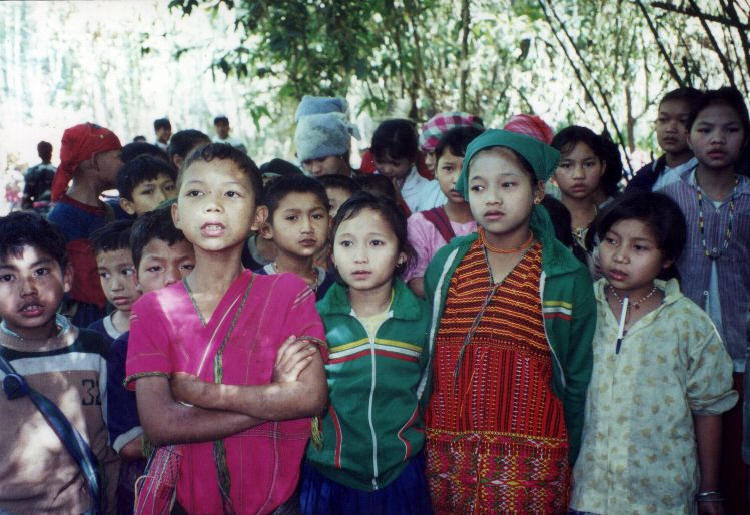
Photos # : Internally
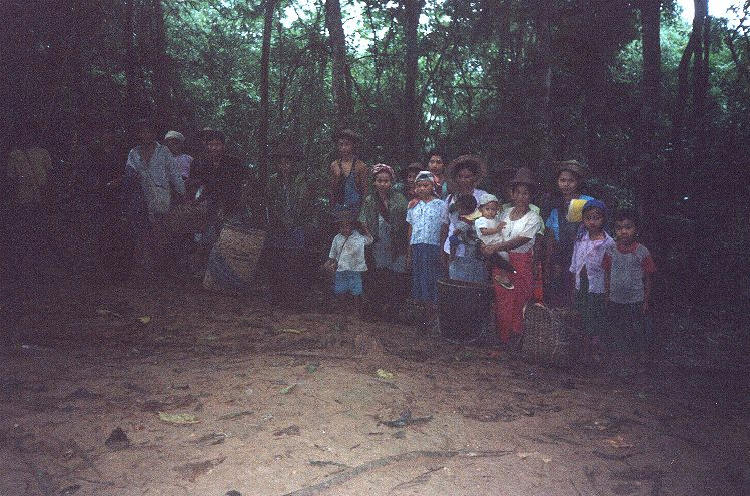
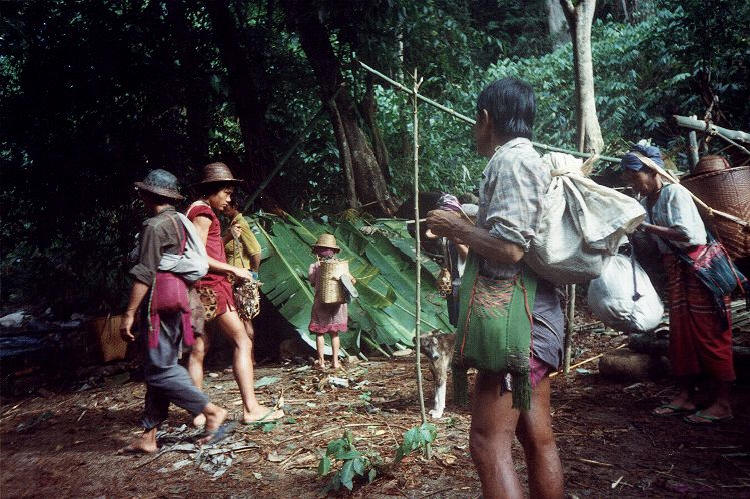
displaced villagers on the run from L—, M— and M— areas (Dweh Loh
township, Papun District) in late June 2001. At the time this photo was
taken, SPDC troops had just arrived at xxxx village only 10 minutes’ walk
away, so they were fleeing up into the highest hills in fear. Night was
about to fall, and being rainy season the conditions on the high mountains
are extremely cold and wet, making survival extremely difficult. [Photos:
KHRG researcher]
|
![]() |
![]() |
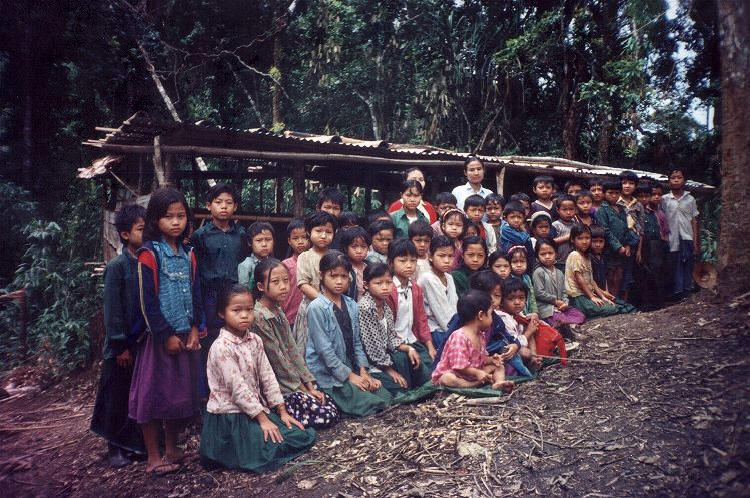
| Photos # : Internally displaced villagers in Dweh Loh township, Papun District, on June 21st 2001. The night before they had to flee L—, N—, L— and P— villages because a column of SPDC Light Infantry Battalion #111 arrived in the area; the villagers from L— escaped only 5 minutes before the arrival of the SPDC column. When this photo was taken, they were only 30 minutes’ walk from the location of the SPDC column. It was the start of the rainy season, which is very cold and wet in the area and will make their lives extremely difficult. [Photos: KHRG researcher] |
![]() |
![]() |
![]() |
|
![]() |
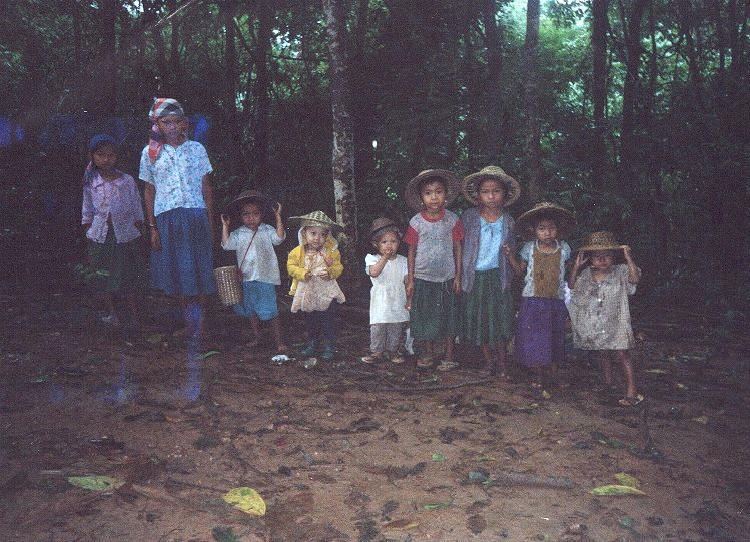
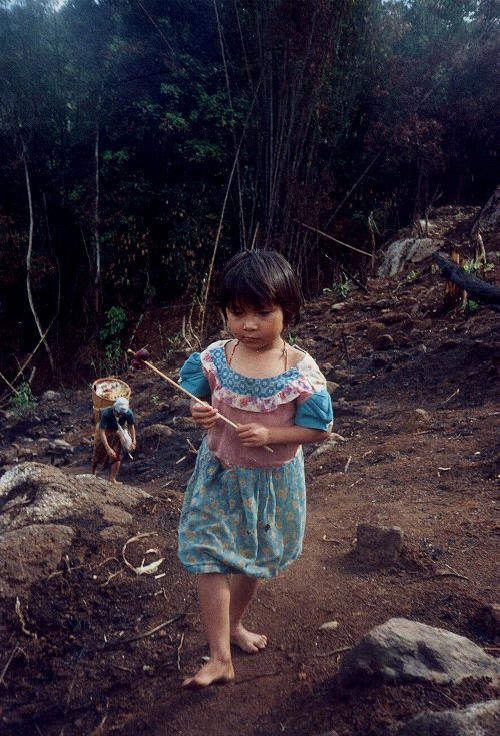
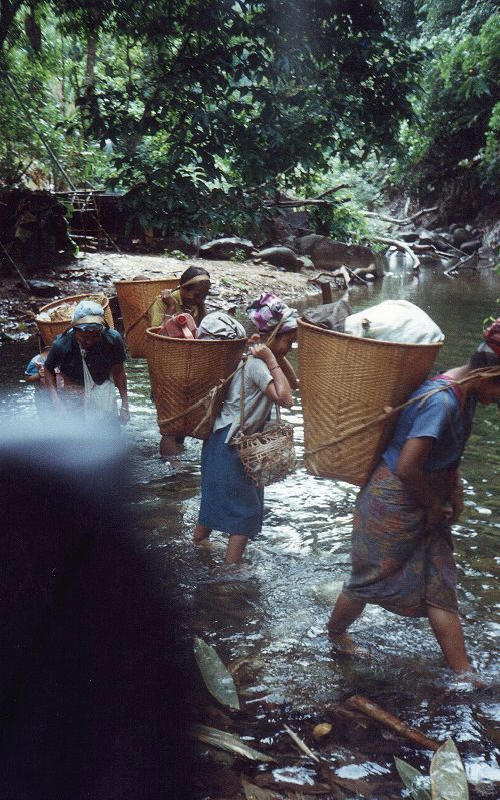
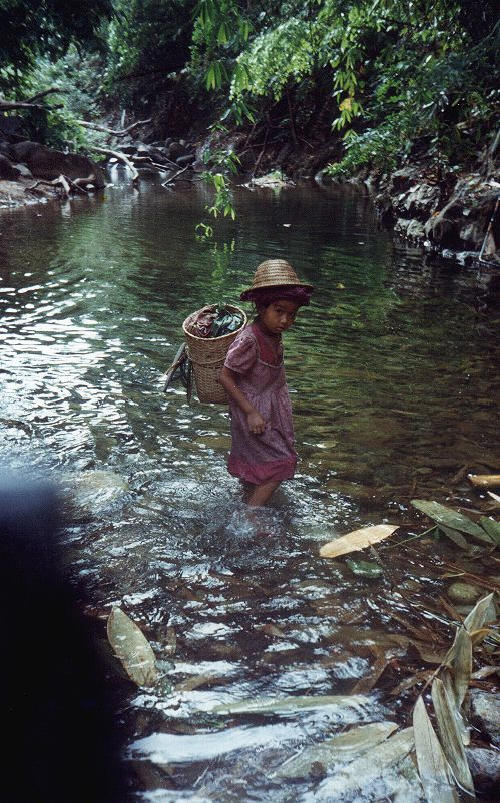
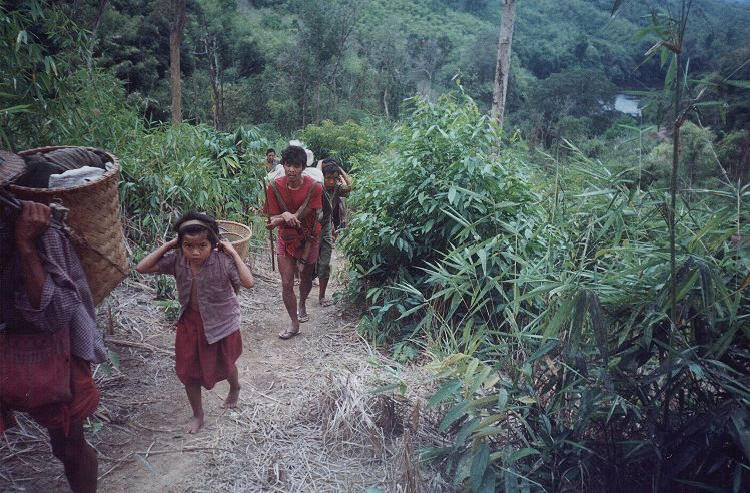
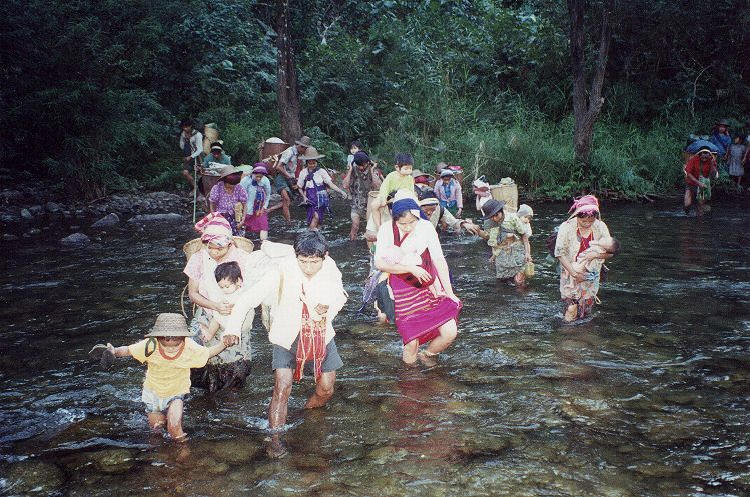
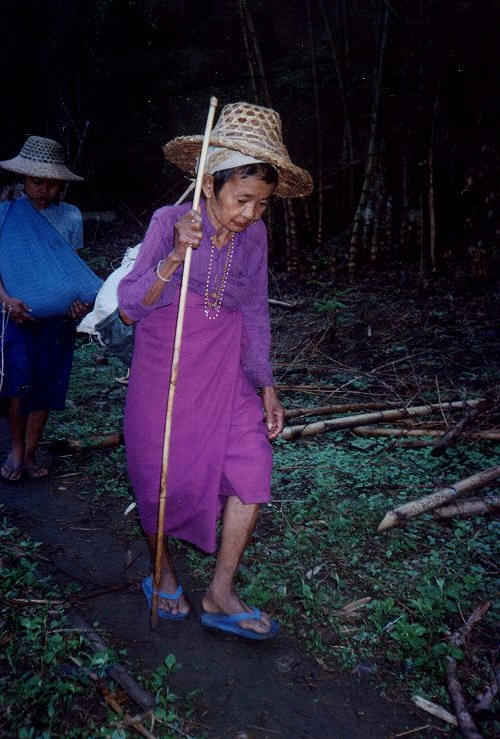
Photos # Karen villagers flee
through the forests of Nyaunglebin District in May 2001. These people fled
their homes in Du Pa Leh village up into the hills because SPDC troops had
occupied their village. They then tried to go and stay back near their
village, but had to flee again because an SPDC Army column came up to their
hiding area, and had to keep fleeing from place to place through April and
May. One to two weeks after most of these photos were taken, they headed
into Papun District and decided to try to make it to Thailand. The bamboo
stick being carried by the little girl in Photo #F9 is for keeping
leeches off during the hike through the jungle; the small cloth on the end
of it contains tobacco, which when wettened and rubbed on the ankles repels
leeches. Even so, hundreds of leeches latch onto the legs of walkers within
a few hours, especially in rainy season. See also photos below. [Photos:
KHRG researcher]
|
![]() |
![]() |
![]() |
![]() |
![]() |
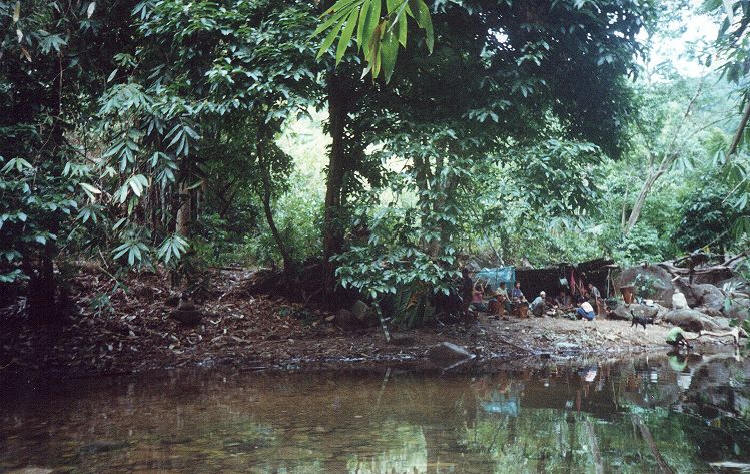
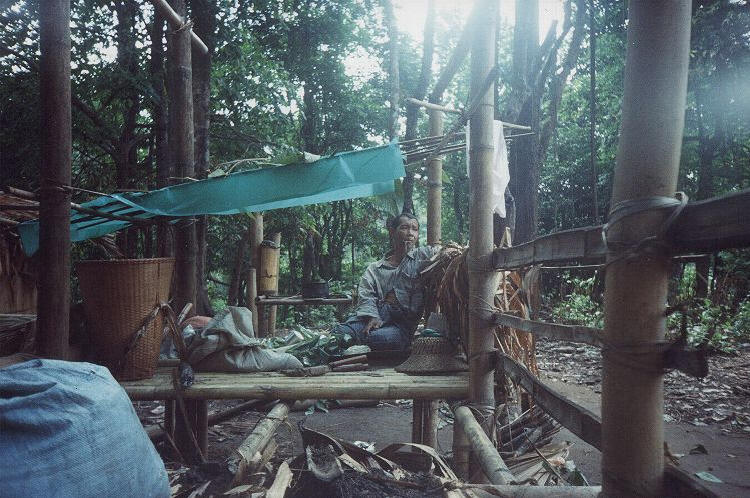
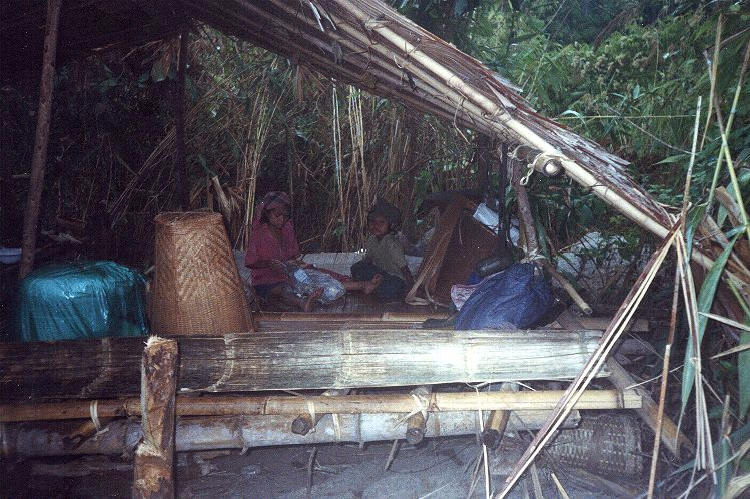
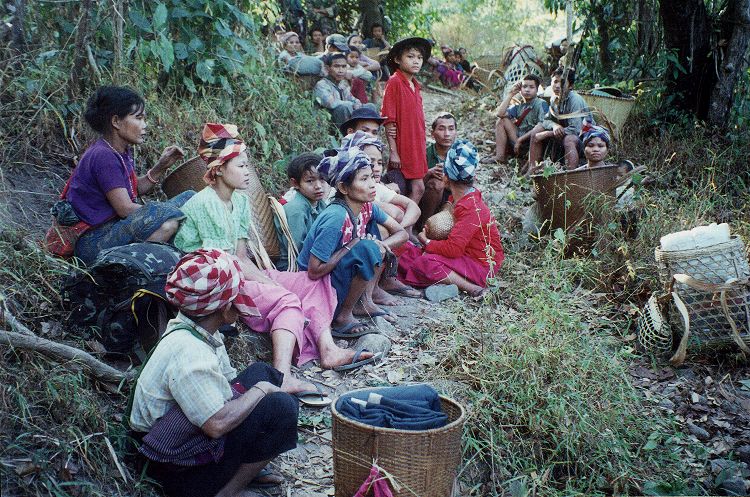
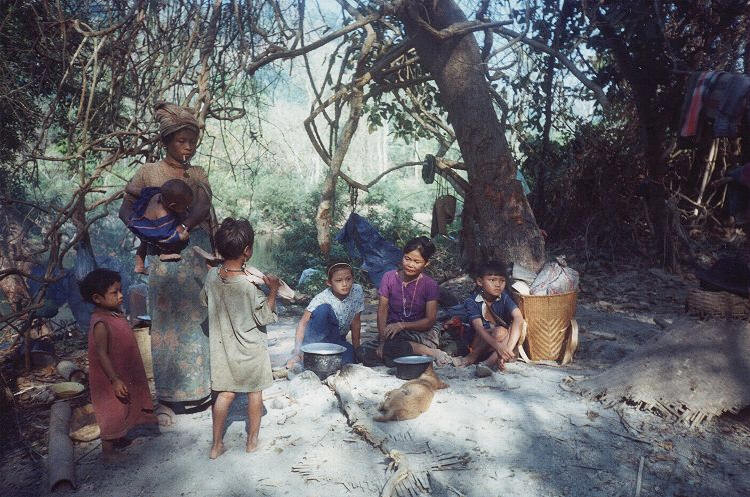
| Photos # : A group of displaced villagers from Du Pa Leh village in Nyaunglebin District set up temporary shelters to rest and hide in the forest in May 2001 (see also photos above). Shortly thereafter they had to flee SPDC troops again, and eventually decided to try to flee to Thailand. [Photos: KHRG researcher] |
![]() |
![]() |
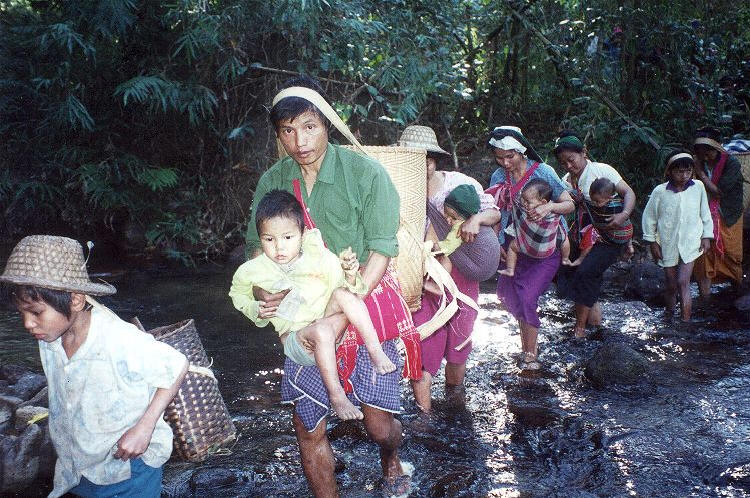
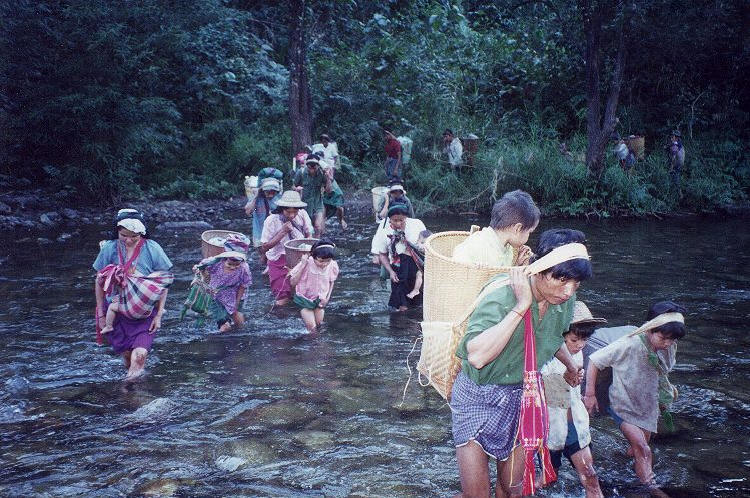
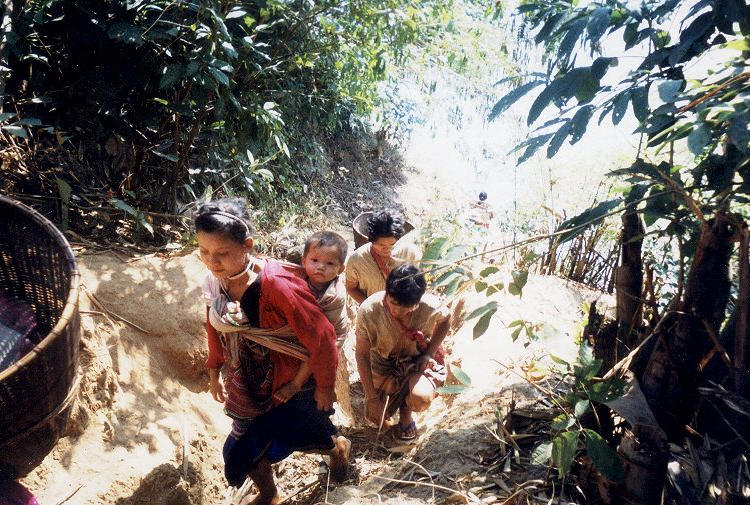
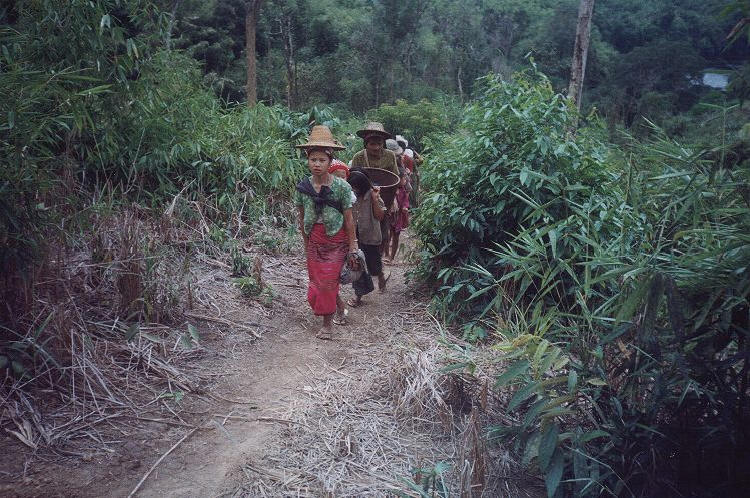
| Photos # : Karen villagers move through Papun District in May 2001 on their way to the Thai border after fleeing their homes in Shwegyin township, Nyaunglebin District. Since the beginning of 2001, SPDC troops have established a heavy military presence in the hills of eastern Shwegyin township, causing villagers to flee eastward as their villages are burned and civilians are shot on sight or captured to be porters. [Photos: KHRG researcher] | |
![]() |
Photo # : Naw T— and her
family from Dweh Loh township, displaced and camping alongside the xxxx
River in April 2001. They fled their village in February 2001 when it was
entirely burned and destroyed by SPDC troops. [Photo: KHRG researcher]
|
![]() |
| Photos # : Displaced villagers from Nyaunglebin District flee through Papun District on their way to the Thai border in April 2001 after their villages were destroyed by SPDC troops. [Photos: KHRG researcher] |
![]() |
![]() |
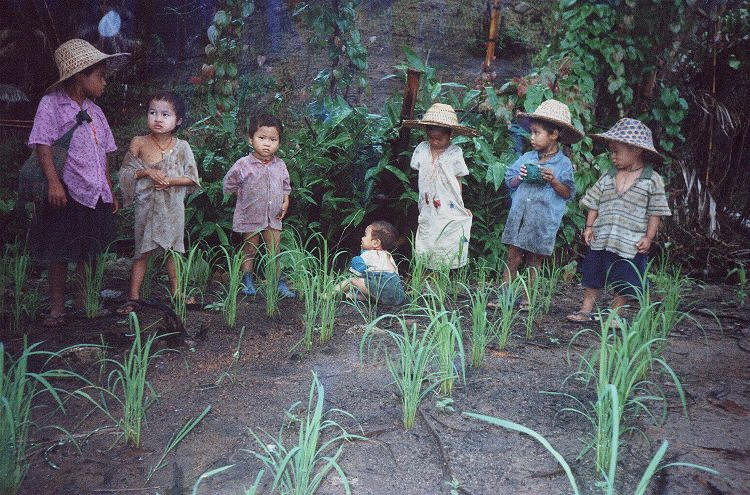
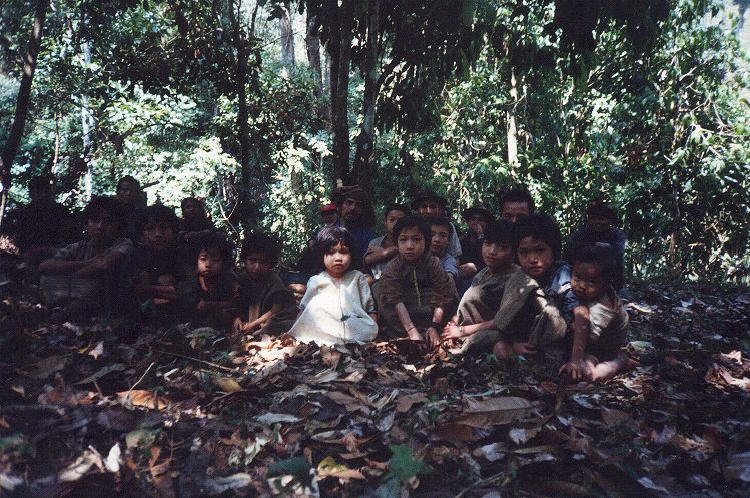
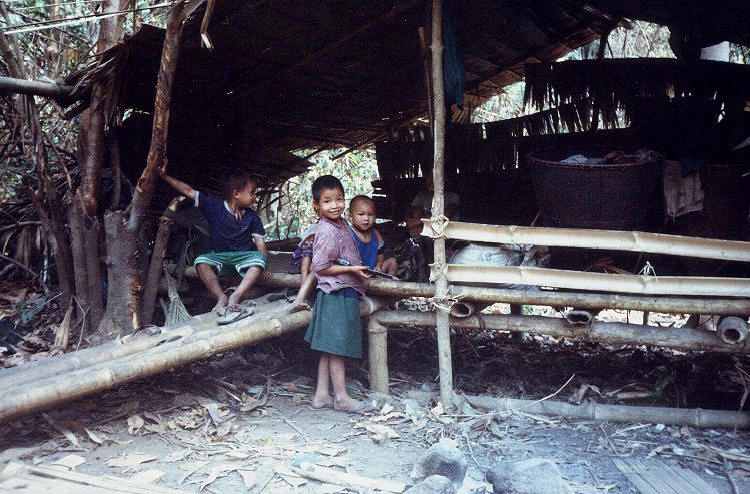
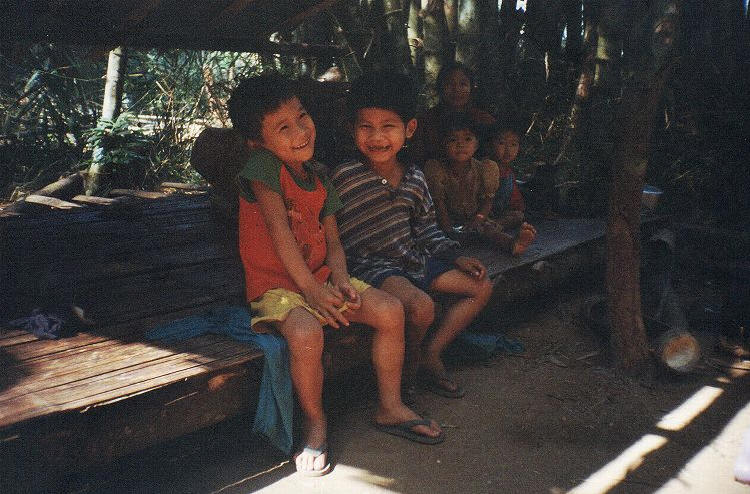
| Photo # : Internally displaced children from T— village in the forest in Papun District, April 2001. [Photo: KHRG researcher] |
![]() |
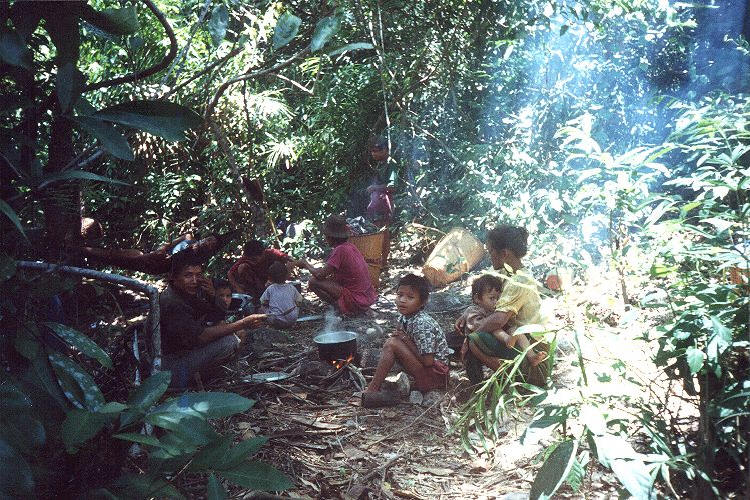
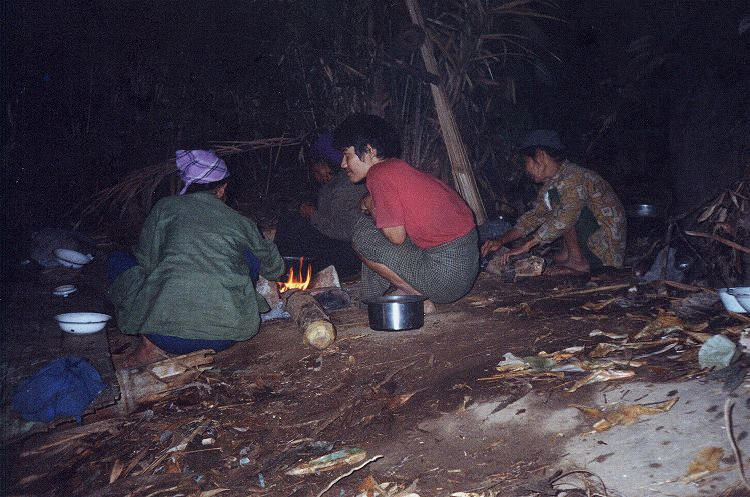
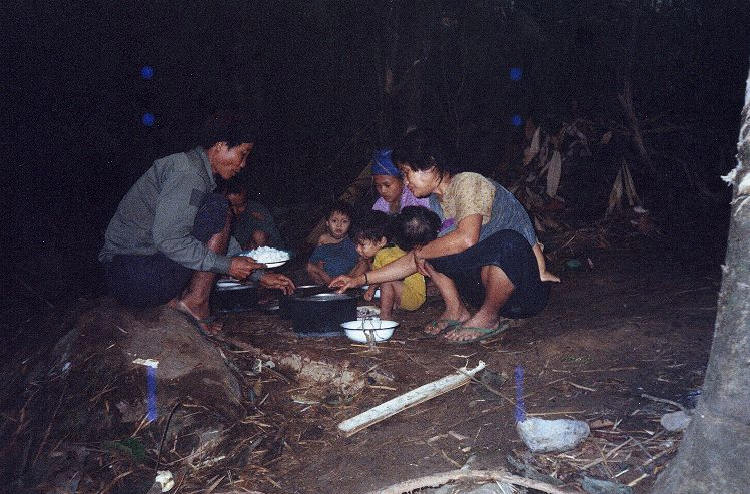
| Photos # : Internally displaced Karen villagers cook and eat by night in the forests of central Nyaunglebin District, March 2001. This group is from T— village. [Photos: KHRG researcher] |
![]() |
![]() |
![]() |
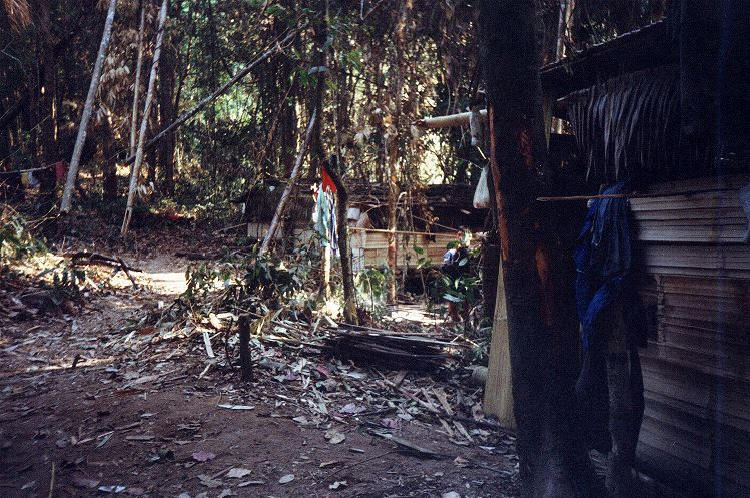
| Photos # : The hidden shelters of villagers from Tee Ler Pa and Thay Ko Hser Der villages in eastern Shwegyin township, Nyaunglebin District. They and about 2,000 others fled their homes and headed eastward into Papun District in January 2001 when SPDC troops came up into the hills and destroyed all the villages in their area. Villages have also been destroyed in the area where they are hiding, so they must always be ready to move. These pictures were taken in March 2001, but they are still in hiding in the same area. [Photo: KHRG researcher] |
![]() |
| Photo # : Internally displaced Karen villagers in the Ya Wah River area, Mergui-Tavoy District, Tenasserim Division, in March 2001. The SPDC has destroyed many of the hill villages in the area since 1997, while people in villages under SPDC control are constantly used for forced labour to support the Army’s campaign to control the region. [Photo: KHRG researcher] |
![]() |
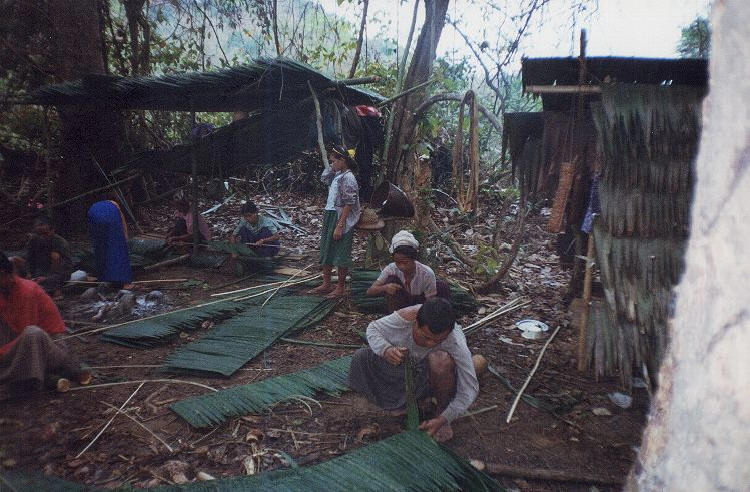
| Photo # : Internally displaced Karen villagers in Papun District weave thatch shingles to roof their shelters in the forest. They fled in March 2001 after SPDC troops destroyed their village. [Photo: KHRG researcher] |
![]() |
![]() |
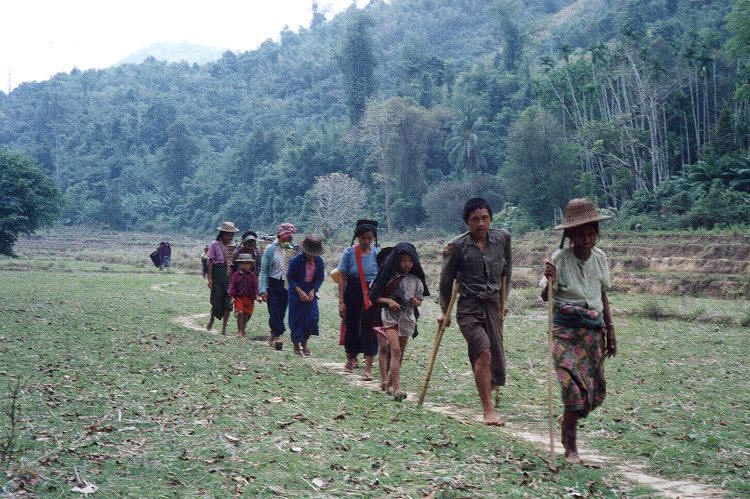
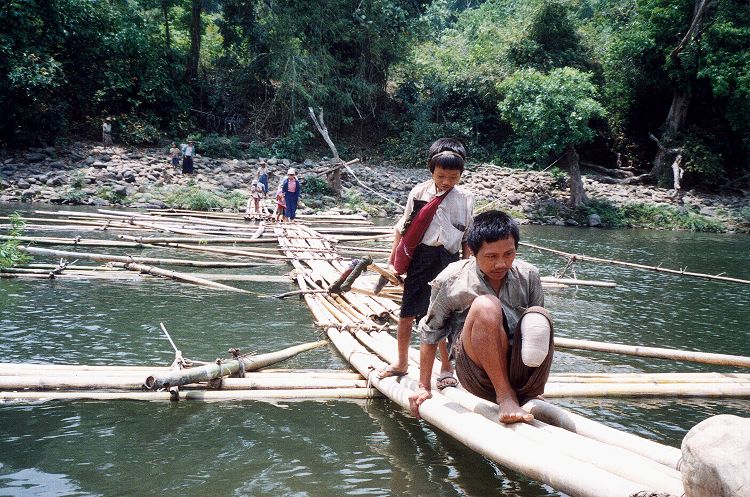
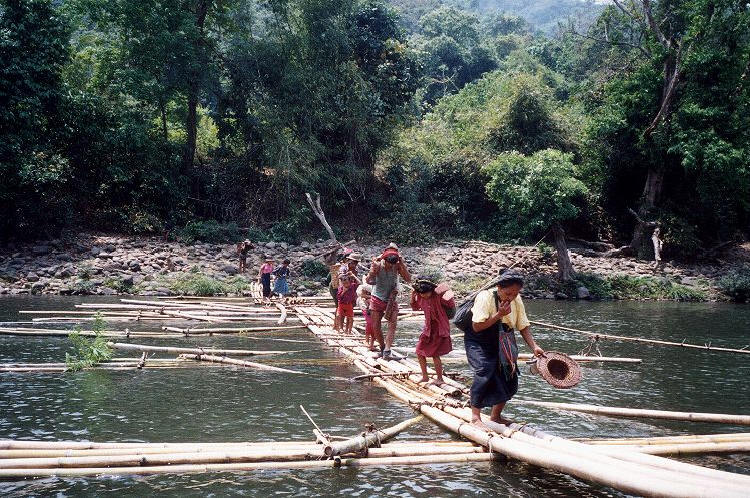
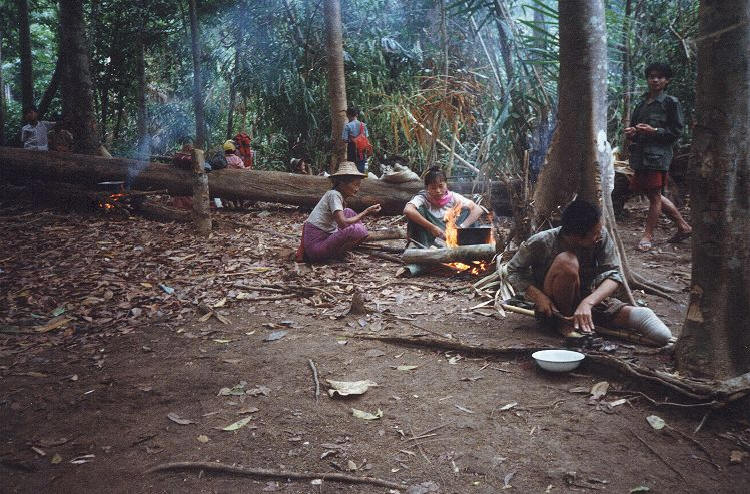
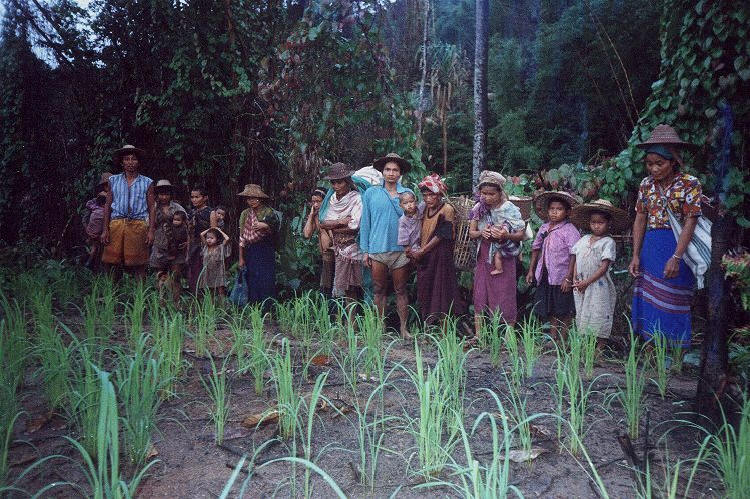
| Photos # : Karen villagers from Maw Kee village in Shwegyin township, Nyaunglebin District, flee through Papun District in March 2001 in an attempt to get to a refugee camp in Thailand. They say that SPDC Light Infantry Division #77 troops came from Shwegyin to base themselves near their village in mid to late 2000 and began demanding forced labour, extortion and other things. When the villagers fled outside the village, LID 77 sent out patrols to hunt them and shoot at them. They fled to another village, but the troops followed them there, shot at them and burned the village, so they fled back to their home area. Then the troops found them and shot at them again so they continued fleeing, and in October 2000 Saw stepped on a landmine near Thay Ko Pu village and lost his lower left leg. While he was recuperating and the villagers were staying in field huts where they didn’t even dare light a cookfire for fear of detection, the 77 Division troops located them again and began shelling them so they fled up further into the hills. The troops found them again, shot 2 of them dead and wounded 7 others. When these photos were taken in March 2001 they had been on the run for about 6 months nonstop, and had decided they had no choice but to make for a refugee camp in Thailand; they had been joined by some villagers from Thay Ko Pu, Meh Yeh Kee, Tee Blah and Kaw Mu Der villages, also in Nyaunglebin District and facing a similar situation. They had nothing but the clothes on their backs and a very small quantity of rice. In Photo #, the group takes a rest to eat.[Photos: KHRG researcher] |
![]() |
![]() |
![]() |
![]() |
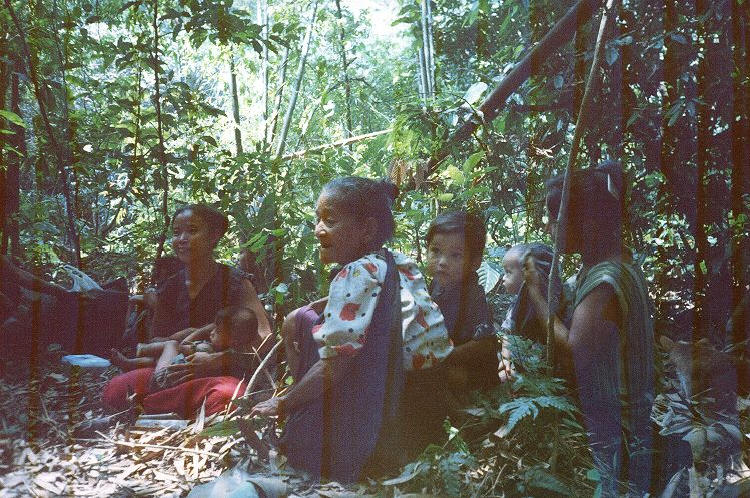
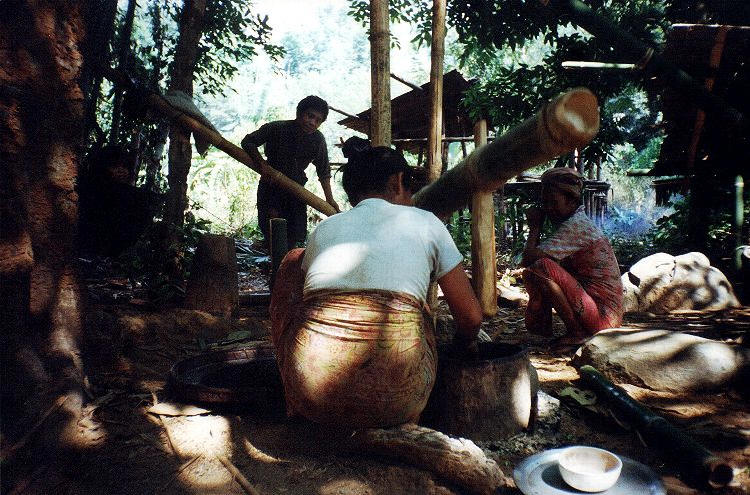
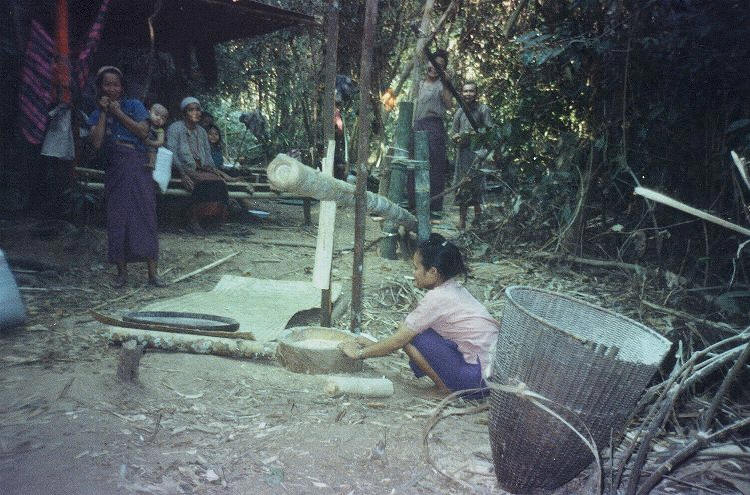
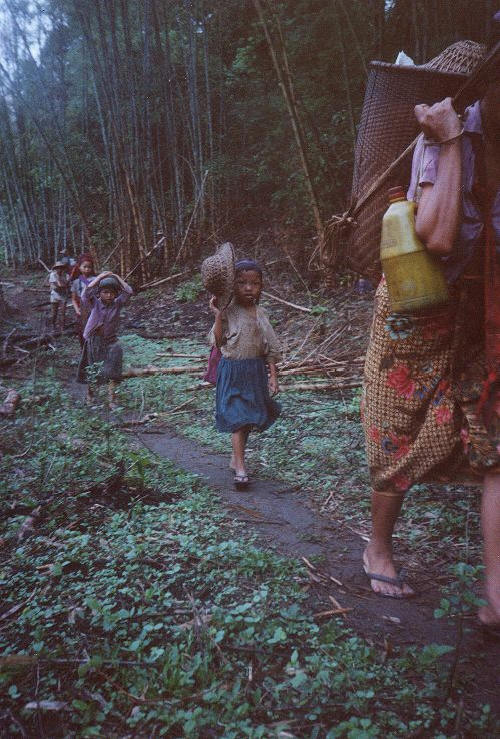
| Photos # : Karen villagers from Bper Kee, K’Dee Mu Der and Htaw Ee Soe villages in Nyaunglebin District hiding in the forest in March 2001 after fleeing SPDC troops who came and occupied the area around their villages in late February 2001. Photo #F57 shows some of them pounding rice to remove the husks using an improvised bamboo levered pounder. As Photo #F58 shows, even after seeing their homes burned and fleeing into the jungle, children still love to have fun. For some of them it is all a great adventure, until the food runs out and they come down with malaria and diarrhoea. [Photos: KHRG researcher] |
![]() |
![]() |
| Photos # : A group of Karen villagers from eastern Nyaunglebin District during the flight from their villages eastward into Papun District on January 30th 2001. SPDC columns had come up from the west to camp around their villages, looting and destroying their homes, destroying their crops and capturing any people they could find for forced labour or shooting them on sight. These people are now internally displaced in hiding in Papun District, where they must often flee continuing SPDC patrols; for more information see KHRG Information Update #2001-U3, 9/4/2001. [Photo: Free Burma Rangers researcher] |
![]() |
![]() |
| Photos # : About 200 of the villagers mentioned above (Photos #F71 through F75) cross the Bilin River during their January 2001 flight from Nyaunglebin District into Papun District, where they are still displaced. They fled after SPDC columns came up from the west to camp around their villages, destroying houses, looting, destroying crops, and taking anyone they found with them for forced labour. [Photos: Free Burma Rangers researcher] |
![]() |
![]() |
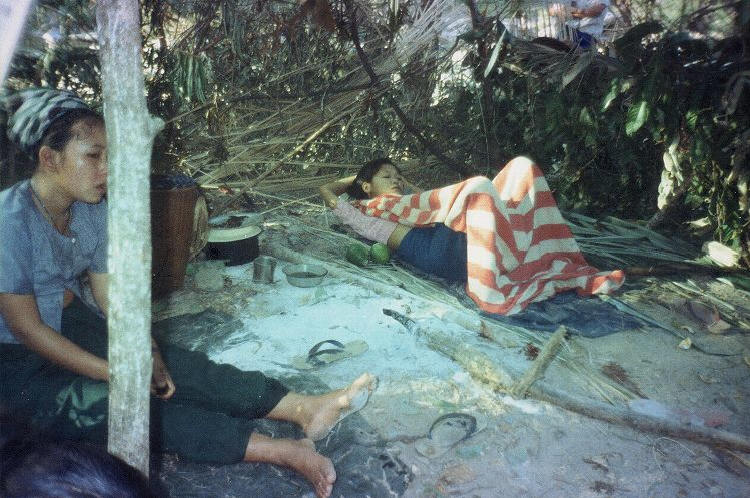
| Photo # : Villagers from M—, W— and L— villages in western Papun District, living in hiding in the forest after SPDC columns destroyed their villages. In Photo #F104 the villagers are pounding paddy to dehusk it. The young woman in Photo #F105 is ill; malaria, diarrhoea, severe vitamin deficiencies, infections, and other problems are very common among the internally displaced, but they have no access to medicines and many die of treatable diseases. [Photos: KHRG researcher] |
![]() |
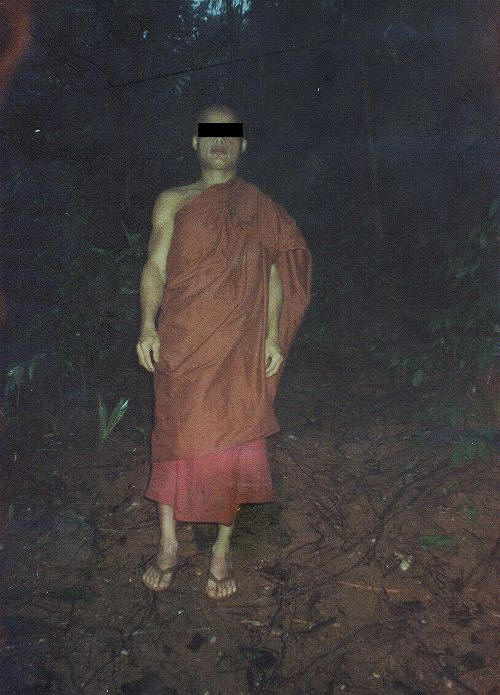
Photo # : A Karen Buddhist monk in Papun District who now lives among the internally displaced in the forest. He told KHRG, “Back when I could stay in my village my villagers built me a monastery. But since 1997 the SPDC battalions have driven us up and down and burned our village. They drove some of the villagers to Meh Way and others to Pway Day, and some villagers fled to stay in the hills. Right now we who live in the jungle don’t have hillfields anymore, because every time we try to work them two or three Battalions come and burn it. We can just get a little for each of us after they burn it. The troops search for our things, they saw all of the things which belonged to the monastery that my villagers had provided, and they took it all. All of the things they took would cost 200,000 Kyat. When they came they also shot at two of my villagers, Saw H— and H—’s father. They weren’t hurt, but the soldiers took everything they had. The SPDC Battalions don’t fight other armies anymore, they just attack the villagers. It’s not easy for me to be a monk anymore. They shoot all the people that they see. Right now even though I’m a monk I have to work a hillfield, because the villagers can’t feed me anymore. We have to work for ourselves. We don’t have our monastery anymore. We have to live in the jungle, and if they see us they will shoot us. If they capture us they will torture us and then kill us.” [Photo: KHRG researcher]
|
![]() |
![]() |
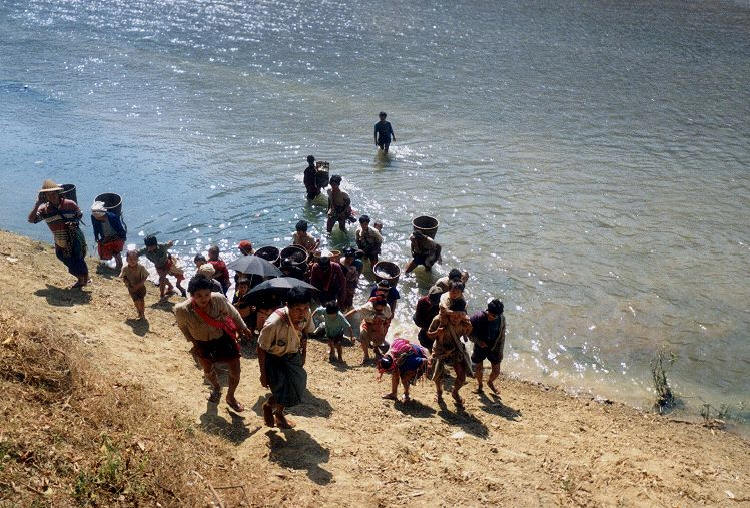
| Photos # : Karen villagers cross the Moei River from Pa’an District into Thailand in mid-January 2001, on their way to a refugee camp. They told KHRG they were fleeing forced labour portering, building Army camps and clearing landmines for SPDC Battalions which had just moved into their home area of Meh Kreh and Kwih Law Ploh in northeastern Pa’an District. To support the new Army camps, they had also been used as forced labour to build a new military supply road from Shan Ywathit to Kha Leh Dee, both clearing the road route and walking in front of a bulldozer to detonate any landmines. More information based on interviews with these refugees can be found in KHRG Information Update #2001-U1. [Photos: KHRG researcher] |
![]() |
![]() |
![]() |
|
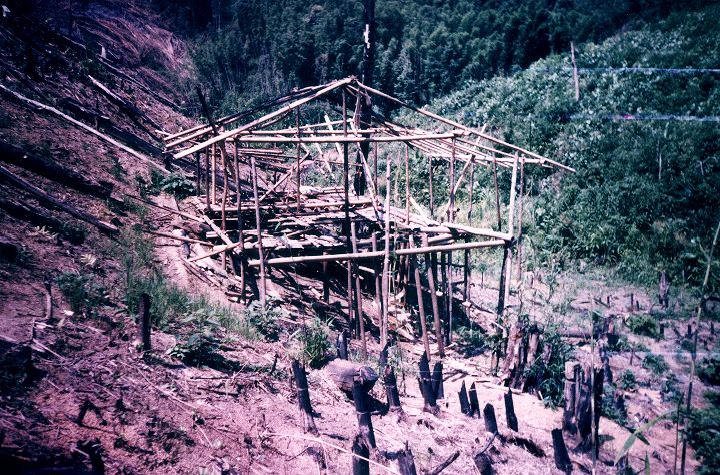
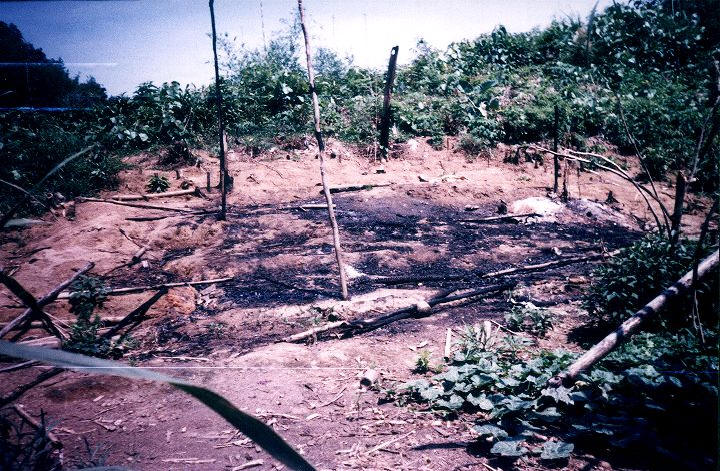
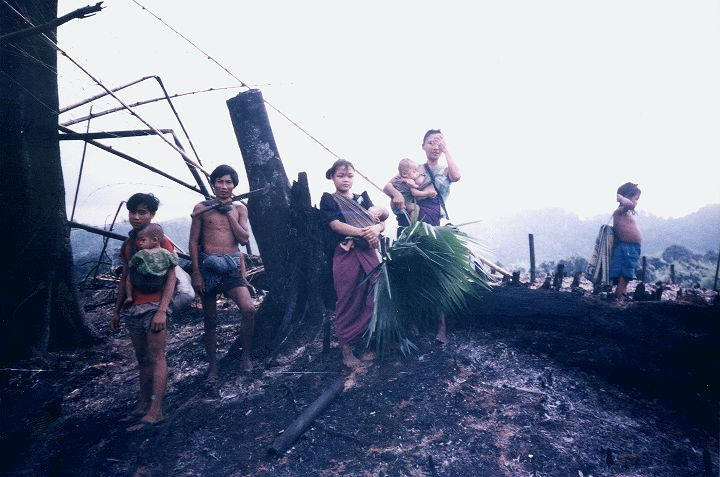
Photo # : Farmfield huts and crop fields burned by SPDC troops in Tenasserim Division as part of their campaign to consolidate control over the region, March 2001. Photo #C3 shows a group of villagers who have been displaced by the campaign standing in the ruins of their ricefield. Villagers normally burn off hillfields before planting, but if it is done too early a proper crop cannot be planted; SPDC troops have taken to doing this as one of the ways to wipe out the food supply of the internally displaced villagers. [Photos: KHRG researcher] |
![]() |
![]() |
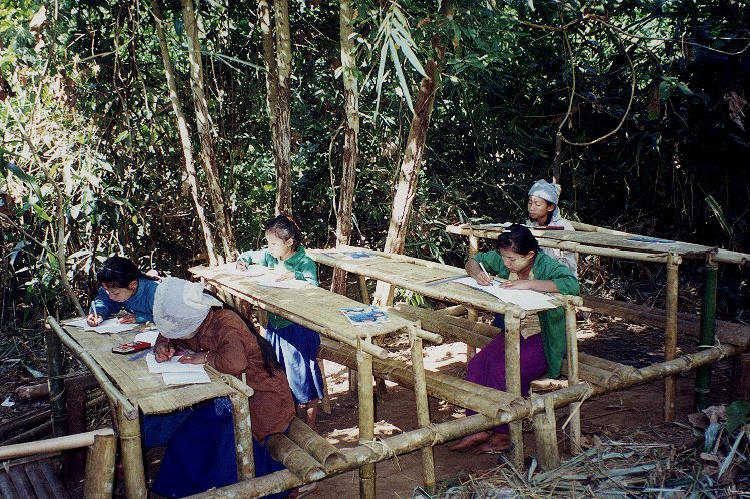
| Photos # : Some of the 70 displaced Karen children trying to study in this makeshift jungle school after fleeing Nyaunglebin District into Papun District in late January 2001 with their parents because SPDC columns had come to destroy their crops and houses and hunt them for forced labour. They are still living in hiding there. [Photos: Free Burma Rangers researcher ] |
![]() |
| Photo # : Students of W— primary school in Toungoo District, July 2001. Though they’ve had to flee their village with their families and live in hiding scattered widely in the forest, they built the temporary schoolhouse in the background and continue to study while living in hiding; their two teachers can be partly seen behind the centre of the group. [Photo: KHRG researcher] |