Internally Displaced Persons and Forced Relocation
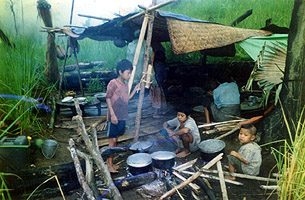
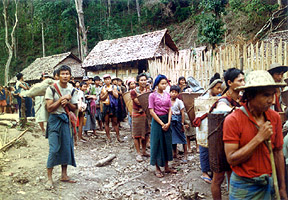
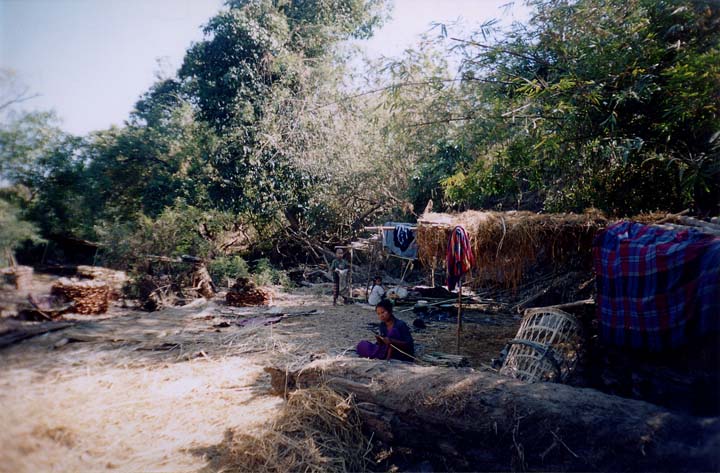
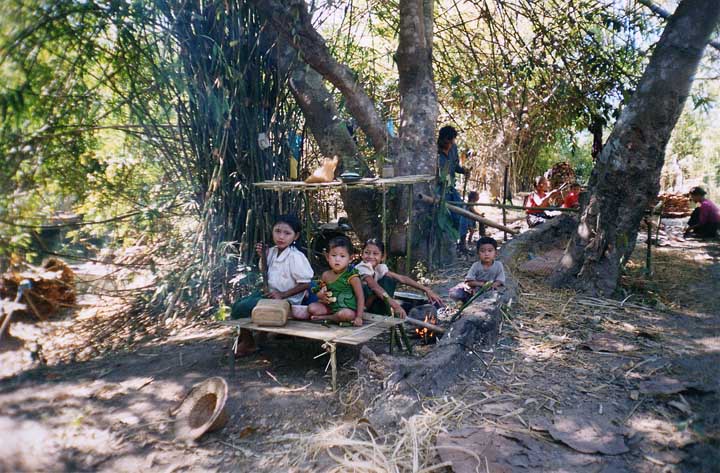
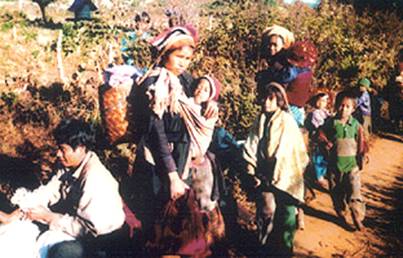
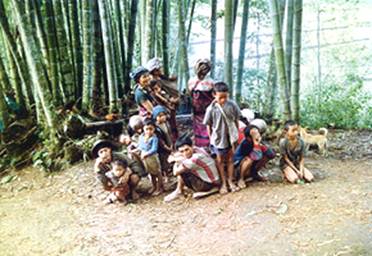
These images depict how internally displaced people live. Out of fear of SPDC troops, they are unable to return to their villages. Therefore, they are forced to hide in the jungle. (Source: BI, 2005)
~ ~ ~ ~ ~ ~ ~ ~ ~ ~ ~ ~ ~ ~ ~ ~ ~ ~ ~


On 22 December 2005, 300 internally displaced villagers were still hiding in the jungles following an SPDC military attack in northern Toungoo District in late November. Above are three photos of the destruction caused by the attacks and the consequences for Karen families. (Source: FBR, 2005)
~ ~ ~ ~ ~ ~ ~ ~ ~ ~ ~ ~ ~ ~ ~ ~ ~ ~ ~
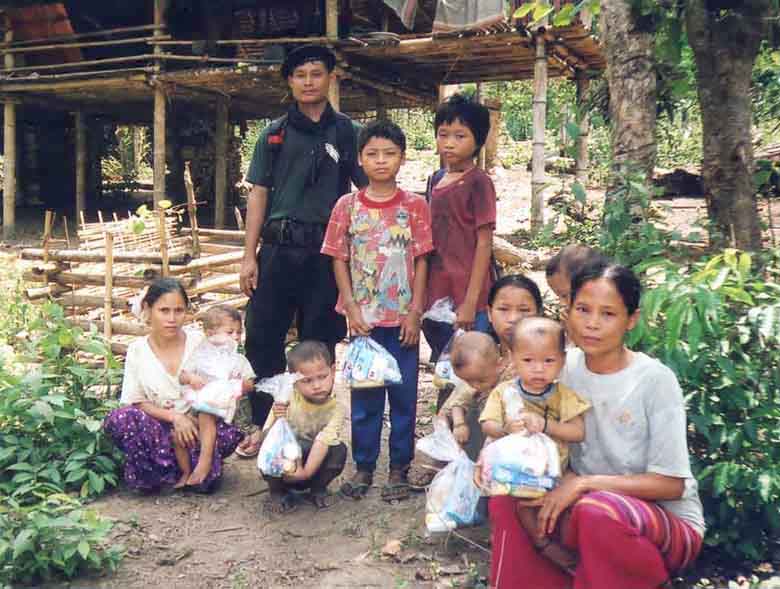
Displaced families in Kawkareik Township, Dooplaya District, Karen State. (Source: FBR, 9-18 May 2005)
~ ~ ~ ~ ~ ~ ~ ~ ~ ~ ~ ~ ~ ~ ~ ~ ~ ~ ~
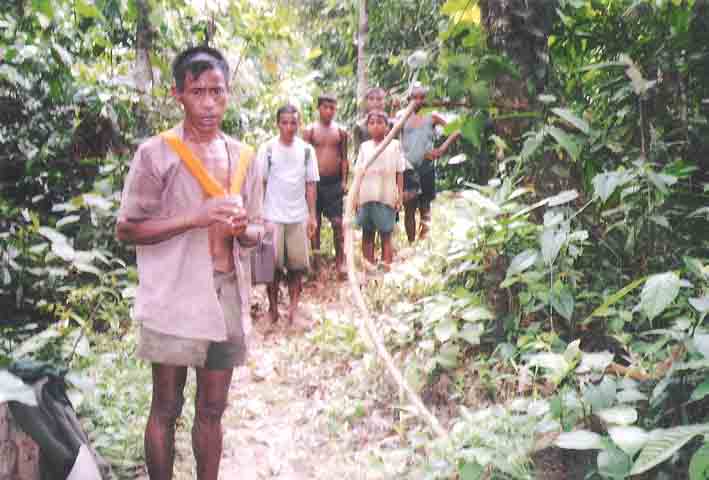
Arakan IDPs searching for safety inside Burma's jungle. (Source: FBR, 20 June - 22 August 2005)
~ ~ ~ ~ ~ ~ ~ ~ ~ ~ ~ ~ ~ ~ ~ ~ ~ ~ ~
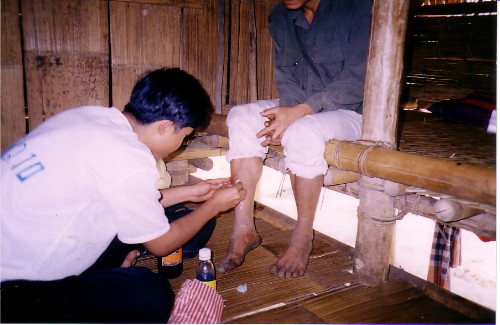
Medic treating an IDP in Mergui-Tavoy District, Tenasserim Division. (Source: FBR, March 2005)
~ ~ ~ ~ ~ ~ ~ ~ ~ ~ ~ ~ ~ ~ ~ ~ ~ ~ ~

IDPs in a hiding place in Toungoo District, Karen State. (Source: FBR, 22 January 2005)
~ ~ ~ ~ ~ ~ ~ ~ ~ ~ ~ ~ ~ ~ ~ ~ ~ ~ ~
 |
 |
|
|
|
A medic treats an IDP in Toungoo District, Northern Karen State. (Source: FBR, 15 January 2005) |
~ ~ ~ ~ ~ ~ ~ ~ ~ ~ ~ ~ ~ ~ ~ ~ ~ ~ ~

These IDPs remained in hiding during 2005 as the SPDC military continued to build new camps in Nyaunglebin District, Karen State. (Source: FBR, 15 January 2005)
~ ~ ~ ~ ~ ~ ~ ~ ~ ~ ~ ~ ~ ~ ~ ~ ~ ~ ~

Kwe Lah villagers in their hiding hut in Nyaunglebin District, Karen State. (Source: FBR, 25-30 August 2005)
~ ~ ~ ~ ~ ~ ~ ~ ~ ~ ~ ~ ~ ~ ~ ~ ~ ~ ~

IDP woman in a hiding site; sick after recently giving birth in Nyaunglebin District, Karen State. (Source: FBR, 25-30 August 2005)
~ ~ ~ ~ ~ ~ ~ ~ ~ ~ ~ ~ ~ ~ ~ ~ ~ ~ ~

Ler Wah villagers eating in a hiding location in Nyaunglebin District, Karen State. (Source: FBR, 25-30 August 2005)
~ ~ ~ ~ ~ ~ ~ ~ ~ ~ ~ ~ ~ ~ ~ ~ ~ ~ ~
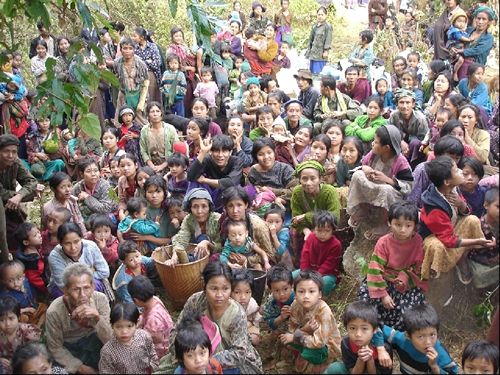
IDPs in Toungoo District, Karen State. (Source: FBR, 1-31 January 2005)
~ ~ ~ ~ ~ ~ ~ ~ ~ ~ ~ ~ ~ ~ ~ ~ ~ ~ ~
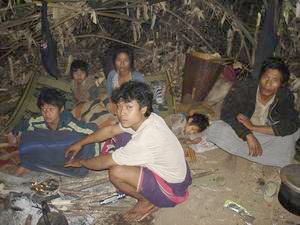
A family of IDPs hiding from SPDC military patrols. Their village was attacked on 26 December 2004. In January 2005, approximately 400 IDPs were hiding in the jungle in eastern Tantabin Township, Toungoo District, Karen State. (Source: FBR, 17 January 2005)
~ ~ ~ ~ ~ ~ ~ ~ ~ ~ ~ ~ ~ ~ ~ ~ ~ ~ ~
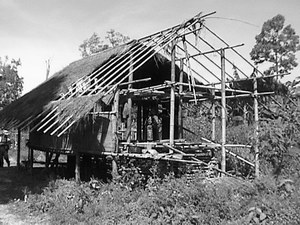
A home destroyed by SPDC forces during attacks from September to November 2005 in Nyaunglebin District, Karen State. (Source: FBR, 23 November 2005)
~ ~ ~ ~ ~ ~ ~ ~ ~ ~ ~ ~ ~ ~ ~ ~ ~ ~ ~
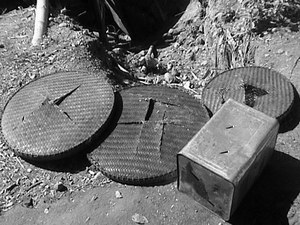
Baskets for winnowing and sifting harvested rice destroyed by the SPDC military forces. (Source: FBR, 23 November 2005)
~ ~ ~ ~ ~ ~ ~ ~ ~ ~ ~ ~ ~ ~ ~ ~ ~ ~ ~
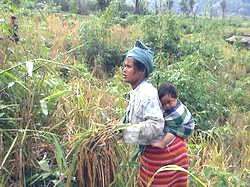
An IDP woman and her child attempt to gather rice from fields that are overgrown with weeds and damaged by vermin in Nyaunglebin District, Karen State. (Source: FBR, 23 November 2005)
~ ~ ~ ~ ~ ~ ~ ~ ~ ~ ~ ~ ~ ~ ~ ~ ~ ~ ~
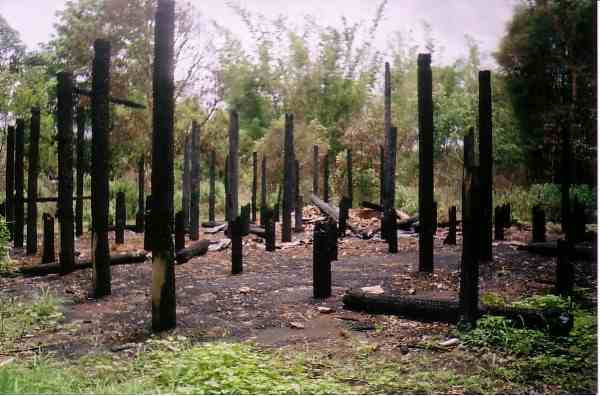
Building burned by the SPDC forces. (Source: FBR, 1 June 2005)
~ ~ ~ ~ ~ ~ ~ ~ ~ ~ ~ ~ ~ ~ ~ ~ ~ ~ ~
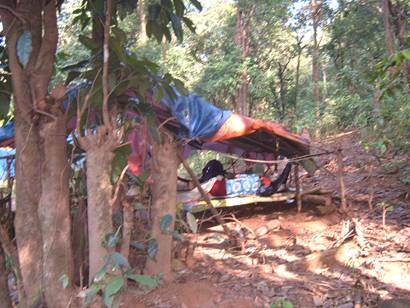
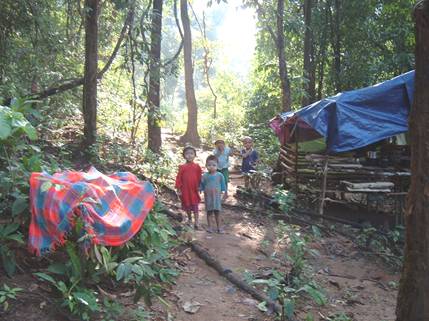
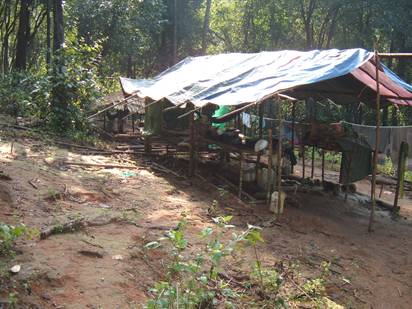
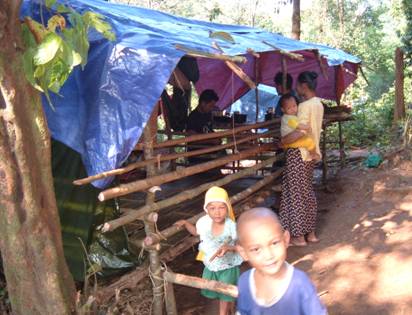
IDP shelters. (Source: BI, 2005)
~ ~ ~ ~ ~ ~ ~ ~ ~ ~ ~ ~ ~ ~ ~ ~ ~ ~ ~
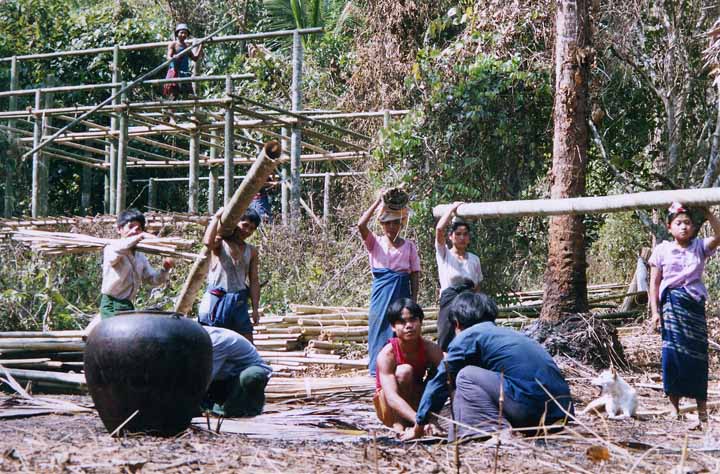
Villagers from Dweh Loh Township, Papun District building new houses in their original village site in February 2005. For several years they moved between this site and hiding sites in the forest to avoid SPDC forced relocation orders, but early in 2005 they were told by the local SPDC Army commander that they would be allowed to stay in the original site once again. Such orders, however, are unreliable and can change as soon as the commanding officer changes. (Source: KHRG, 2005)
~ ~ ~ ~ ~ ~ ~ ~ ~ ~ ~ ~ ~ ~ ~ ~ ~ ~ ~
|
 |
|
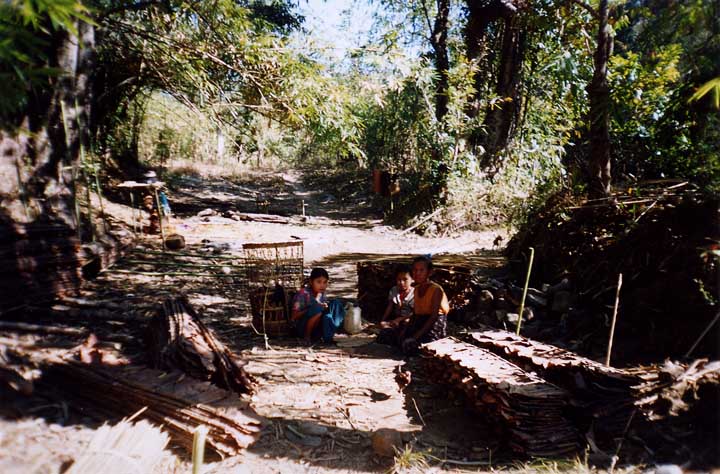
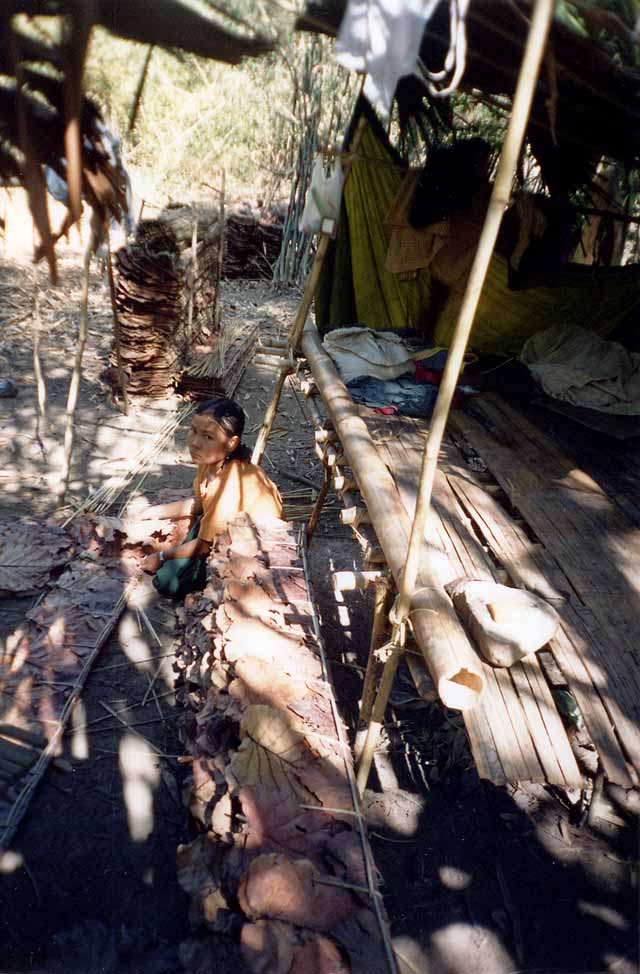
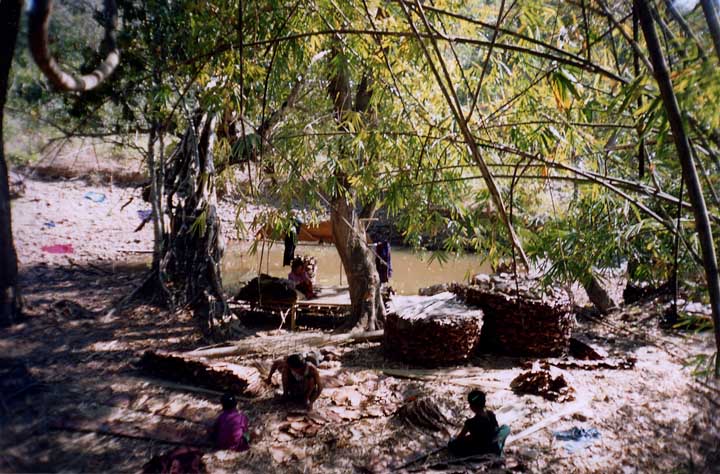
These villagers in Thaton Township of Thaton District left their villages to escape excessive demands for forced labor, money and goods from SPDC and DKBA forces in their area, and now live in the jungle where these photos were taken in February 2005. To survive they make and sell roofing thatch.The photos show different phases of the thatch-making process. In most of the photos, piles of leaves and completed thatch shingles can be seen surrounding the villagers. Each day they must make hundreds of these shingles just to make enough money to buy daily rice. (Source: KHRG, 2005)
~ ~ ~ ~ ~ ~ ~ ~ ~ ~ ~ ~ ~ ~ ~