Photos of Landmines in Burma

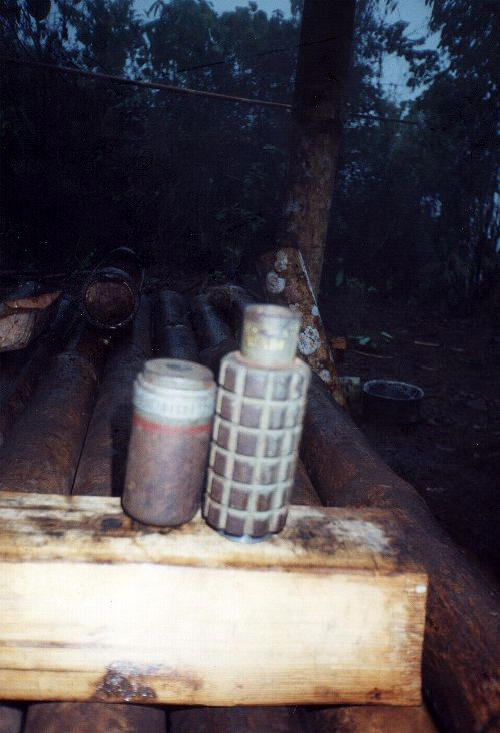
Photo # : Two SPDC landmines unearthed by KNLA soldiers in Papun District in March 2001. On the left is an American-made M76A1 mine, which the SPDC formerly used extensively until the Chinese government built mine production factories for them in Burma in the mid-1990’s. On the right is a Burmese-made MM1 mine produced by these factories; the most common mines presently used by SPDC troops are the MM1 and MM2. In the photo, both mines have had their activation pins unscrewed from the top. [Photo: KHRG researcher]


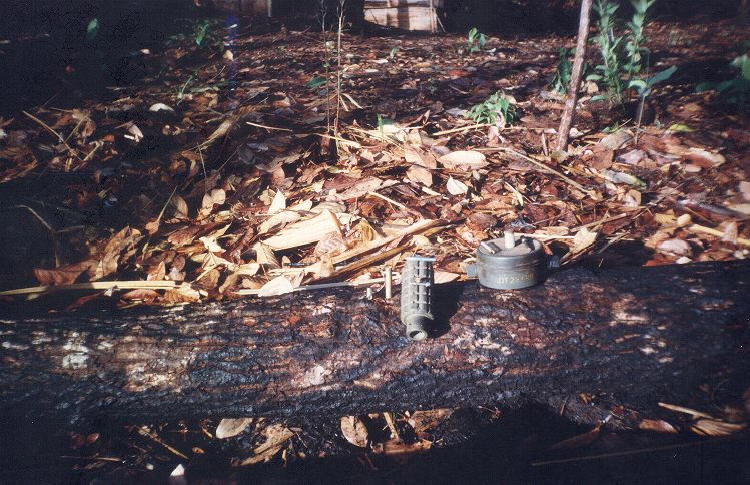
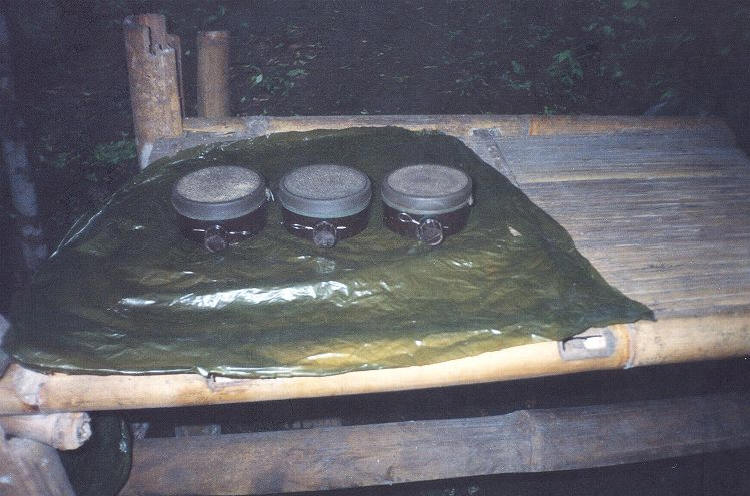
Photos #: SPDC landmines found by internally displaced villagers in southeastern Toungoo District. In May 2001, displaced villagers near Bu Sah Kee spotted an MM1 mine (Photo #G6, left) and an MM2 mine (Photo #G6, right) along a path they normally used, so they called in KNLA soldiers to dig them up. The mines were planted by SPDC Infantry Battalion #30, apparently with the displaced villagers as their targets. Photo #G7 shows three MM2 mines unearthed by displaced villagers in the same area in July 2001. [Photos: KHRG researcher]


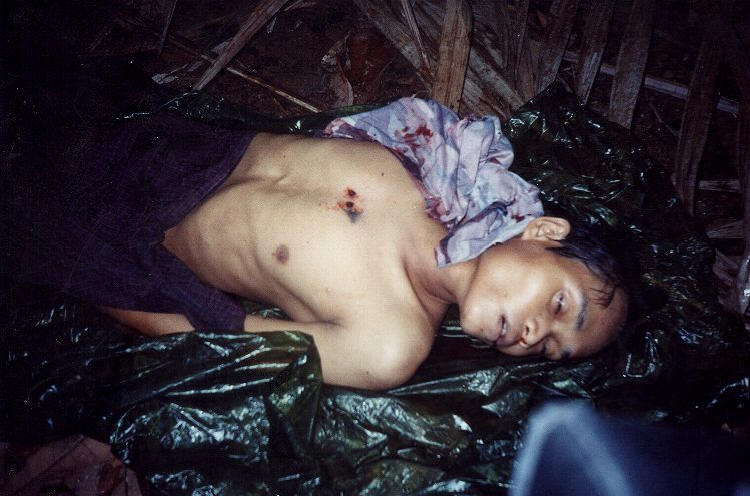
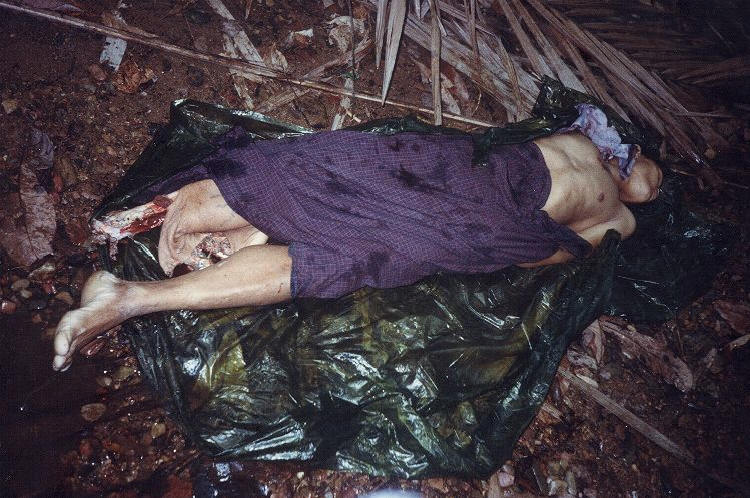
Photos #: A villager killed by a landmine in mid-April 2001 in Bu Tho township, eastern Papun District. This young man is an internally displaced villager. SPDC troops now routinely plant landmines around villages and crop fields they have destroyed and along paths they know are used by the internally displaced. Many of those who step on the mines bleed to death before they can be carried to any kind of medical help. Local villagers believed that this particular mine had been laid by DKBA soldiers; the DKBA receives most of its landmine supplies from the SPDC. [Photos: KHRG researcher]


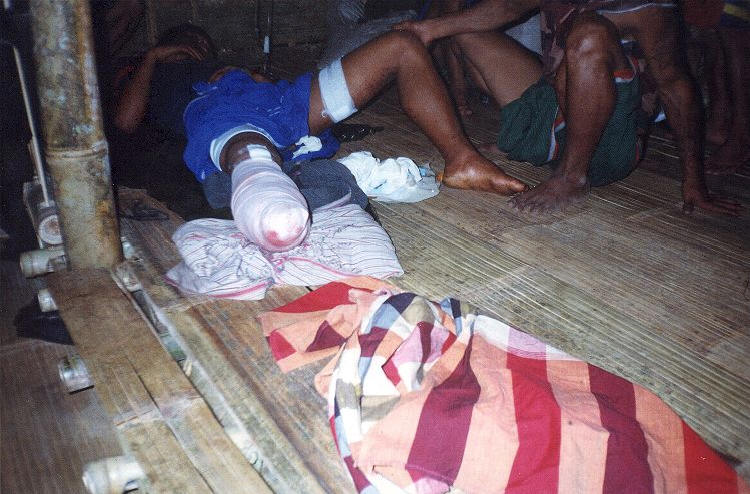
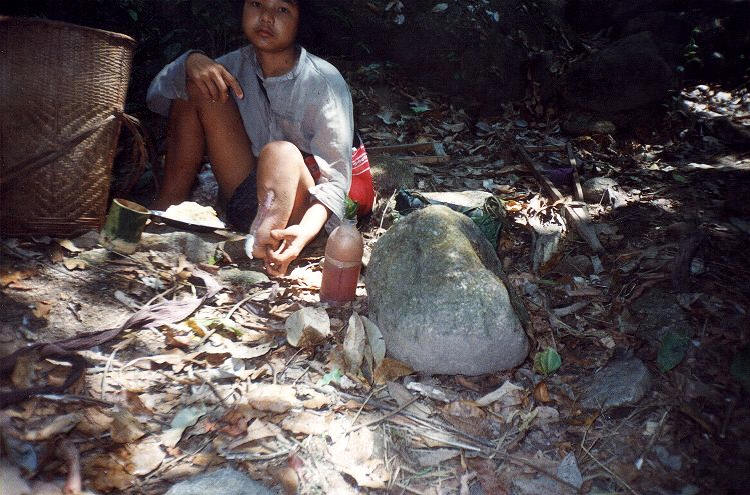
Photos # : Saw H—, a 24 year old displaced villager from xxxx village in Shwegyin township, Nyaunglebin District, receiving treatment from a mobile medical team after stepping on an SPDC landmine on March 28th 2001. A rice farmer, Saw H— fled his village with the other villagers in early 2001 when SPDC troops based themselves nearby, and was living in hiding in the jungle. When they fled they had no chance to carry their rice supply, so on March 28th he and two friends headed back to their village to try to fetch some of the rice stored in their houses. Half an hour from the village, he stepped on a landmine. His right lower leg was blown off, and he suffered serious fragment wounds in his left leg and his face. [Photos: KHRG researcher]


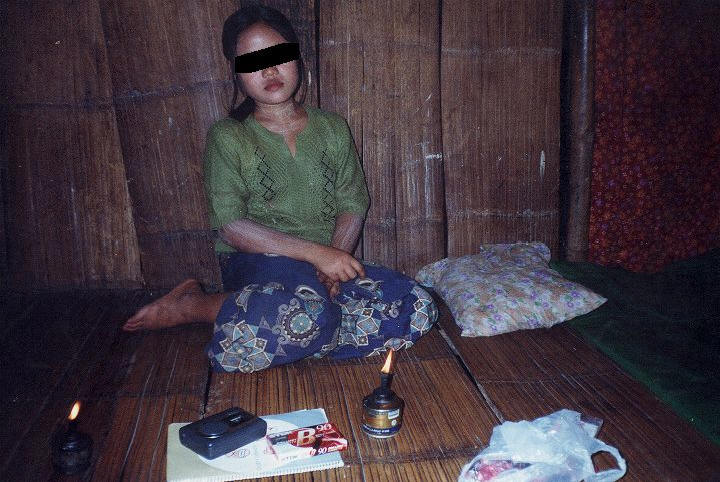
Photo #A: Naw M—, an 18 year old villager from xxxx village in Toungoo District. In April 2001, she described to KHRG how she and others in her village are regularly forced to porter supplies for up to 10 days at a time to outlying SPDC Army camps at Naw Soe, K’Law Soe, Dta Kwih Soe, Kyauk Taung and Bu Sah Kee, all along the road from Kler Lah (Bawgali Gyi) to Bu Sah Kee. She says that she herself has been forced to do this regularly for 7 or 8 years already. She and the other porters are forced to walk in front of the troops in case of landmines, and she has witnessed several villagers killed by mines while portering; she also saw a new mother, forced to porter shortly after giving birth, die from the strain of the load. She says that since January 2001, 10 to 20 people from her village have to go every day to do forced labour clearing and maintaining the road route to Bu Sah Kee, and that 2 people must be sent every day for forced labour as messengers. Even when there is no work to be done, the people are forced to go and sit on standby at the Army camp, so they cannot work their fields anymore. Anyone who cannot go must pay fines of 400 to 5,000 Kyat, and if no one shows up for forced labour then the troops come and start beating up the villagers, including the elderly. [Photo: KHRG researcher]


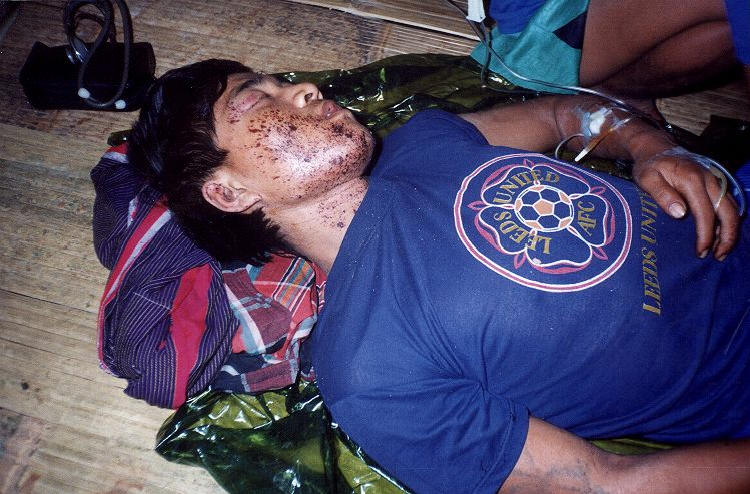
Photo #: Saw P—, a 22 year old from Nyaunglebin District who stepped on a landmine at the beginning of rainy season in June 2000. Living among the internally displaced, he eventually joined a group of people fleeing toward the border with Thailand in March 2001. [Photo: KHRG researcher]


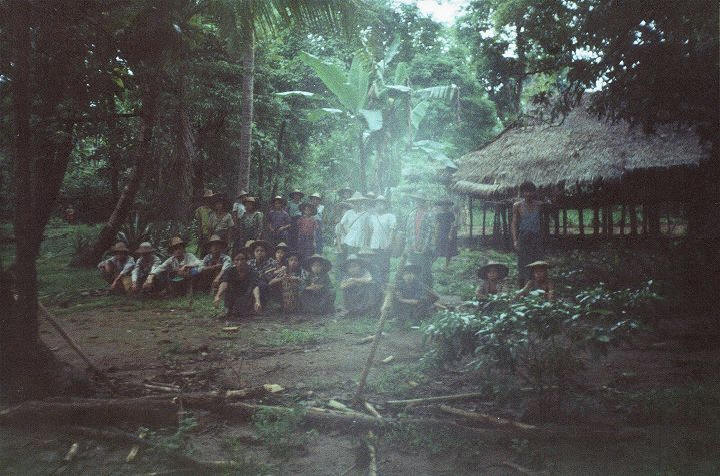
Photo #: Villagers of xxxx village in southern Papun District, gathering to go and do forced labour cutting and clearing the Papun - Ka Ma Maung vehicle road. Villagers in the area say that they have to cut wide ‘killing grounds’ along both sides of the road at least twice a year, and also have to fill potholes with rocks, build fences all along both sides of the road, stand sentry along the road on rotating shifts, and regularly sweep the road for landmines. At the same time they are also forced to do regular forced labour as porters and working at local Army camps, logging for the Army and supplying the Battalions with thatch roofing and other building materials. [Photo: KHRG researcher]

GO TO TABLE OF CONTENTS