* To monitor human rights situations in Mon territory
and other areas southern part of Burma
* To protect and promote internationally recognized
human rights in Burma
human
rights foundation of monland
Human Rights Report 5/96 (August 25, 1996)
The Contracting State shall accord to refugees
lawfully staving in their territory the same treatment with respect to public
relief and assistance as is accorded to their nationals.
Article 23, 1951
International Convention Relating to the Status of Refugees
Spontaneous Repatriation
and Uncertain Future of Mon Refugees
Background of Mon Refugees
In the course of the
approximately five-decade-long civil war in Burma, the numbers of displaced
persons and refugees have increased along the Thai-Burma border. Alongside
other ethnic nationalities the Mon have revolted against the Burmese central
government since Burma's independence in 1948, demanding racial equality and
the rights to self-determination for all the peoples of Burma. Many parts of
the rural Mon area where the Mon National Liberation Army (MNLA), the military
fraction of New Mon State Party (NMSP), is active are also included in the
so-called Black Area meaning Free Fire Zone, by the Burmese Army.
The Mon villagers inhabiting these rural area are
likewise regarded as sympathizers or supporters of the opposition NMSP and MNLA
by the Burmese Army and are normally subject to the gross human rights abuses
of the Burmese Army as other rural ethnic communities in the country.
To escape these continued
human rights violations by the Burmese Army, hundreds of thousands of members
of the rural ethnic communities have abandoned their homes in Burma and fled to
the strongholds of the armed ethnic opposition as internally "displaced
persons" or to the borders of neighbouring countries as
"refugees". Out of those Burmese ethnic people who have fled their
home areas in Burma to escape the continued gross human rights violations of
the Burmese Army under the on-going civil war, more than 50,000 Mon people are
estimated to have arrived at the Thai Burma areas before the current military
regime of Burma SLORC seized power in 1988.
Since the military regime
SLORC took over power by means of bloody suppression of the student-led
nationwide pro-democracy demonstrations in September 1988, the Burmese Army has
intensified its military offensive campaigns against the armed ethnic
opposition and has occupied many of their military bases. In 1990, the NMSP
general headquarters in Three Pagoda Pass was also occupied by the Burmese Army
and thousands of local Mon people homeless and helpless on the Thai border.
To facilitate for emergency
needs of the Mon displaced persons, the Mon National Relief Committee (MNRC)
was formed and it asked the Thai government for the establishment of refugee
shelters. The MNRC has also asked for humanitarian assistance and support from
foreign relief agencies and NGOs for the refugees in terms of food, clothing,
medicine, educational facilities and etc.. As the
human rights situation in Burma was increasingly deplorable and the refugee
camp was later gradually joined by many new arrivals.
However, sadly the stability
of the Mon refugee camp did not last long under Thailand's "Constructive
Engagement" policy in dealing with Burma's ruling regime SLORC. Many of
the MNRC-administrated refugee camps as well as self-help Mon villages on the
Thai border have been subjected to forced relocation or repatriation by Thai
authorities since 1991. At the beginning of 1994, Mon refugees from one biggest
Mon refugee camp "Loh Loe" were forcefully repatriated to a
Thai-Burma border-disputed area "Halockhani", which the site was
close to outpost of Burmese Army and the route that Burmese Army ever used.
Then, one section of Halockhani camp was attacked by Burmese in July, 1994 and
the Mon refugees accepted lack of protection from Thai government after it
refused the request of MNRC for the resettlement of them in Thai soil.
Recent Development before Repatriation
Because of changes of global
political situation, the pressure from its business-interested neighbouring
country Thailand and the enormous military deployment and offensive of SLORC
accompanying with sufferings of its people in the whole territory, the NMSP
decided for ceasefire agreement with SLORC and hold a ceremony on June 29,
1995, in Moulmein, the capital of Mon State. At the same time, the NMSP decided
to resettle the Mon refugees along the border, internally displaced persons and
other immigrants in Thailand, for whom would like to
voluntarily participate and wish to settle in areas under its control. The NMSP
and the Mon refugees have realized the role of Thai government on Burmese
refugees that the Thai government never recognized those suffering peoples as
internationally recognized "refugees" and the previous treatment such
as Halockhani incident motivated them to make decision to return back across
the border.
Even though SLORC promised to
discontinue human rights abuses such as forced labour, recruitment of porters
and tax collection, the SLORC has never kept promise. For the MNRC, except it
provided information of the current situation of its refugees and internal
human rights abuses to world community, it has been unable to decide for the
future of Mon refugees.
After the ceasefire
agreement, the SLORC did not stop its continuous conscription of forced labour
on local villagers and the Thai authorities also forced the MNRC and the NMSP
leaders to move back across the border as soon as possible.
In August, Thai authorities
in Bangkok pressured the Mon leaders to sign only six months assistance in 1996
for the refugees who will be returned and for the rest to ask from SLORC. It
was impossible, because the SLORC could not provide those refugees for sure. In
a letter which was signed by NMSP President Nai Shwe Kyin proposed to Thai
National Security Council (NSC) Secretary-General, he asked only six month
assistance for returning refugees. Then, several organization of international
community dissatisfied on that NMSP's appealing letter to Thai authorities and
created confusion for the future of refugees. Then, the MNRC attempted to get
more assistance for one year provision from the international aids agencies and
allowance by the Thai authorities. The international community concerned on
those who have been passed hard experiences of perpetually relocations of Thai
authorities in
previous time.
With dated August 31, the
MNRC released an official statement to arrange for the repatriation program of
Mon refugees. In the statement it also called upon the international community
working for Mon refugees as a monitoring body in its Mon refugee repatriation
process. To assure for the safety and voluntary return of the refugees, the
international community especially UNHCR should participate as monitoring body.
Additionally, the MNRC also asked the international community for the aids
provision of community reconstruction as well.
With dated September 5, the
MNRC Chairman Ven. Wongsa Pala invited Bangkok based UNHCR chief representative
for monitoring of the repatriation of Mon refugees. In invitation letter, it
made clear that the international community should lend a
helping hands to Mon refugees to secure for safety of them and ensure of
voluntary repatriation according to the international principles.
In the plan of MNRC, it
described that to repatriate those Mon refugees to the areas close to the
border and after the ceasefire was hold, the refugees can return to their
native areas at the later date. Anyhow, to ensure for the safety of the
refugees before, during and after repatriation, it must need a proper
independent monitoring body. In the statement and invitation letter the MNRC
clearly mentioned the refugees needed at least one year provision of adequate
cross-border emergency assistance for survival. (See the attached MNRC's
statement and invitation letter to UNHCR in page 17 and 18 respectively)
The situation for Mon
refugees was likely unsure. The Thai authorities would like to push back those
refugees as quick as possible without the monitoring of international
community. The pressure to Mon leaders have been in
order and some authorities also clearly mentioned that they did not need the
UNHCR participation in repatriation. To ensure for at least one year adequate
provision of foods and medicines and other emergency assistance, the MNRC has
attempted and asked the international community to relieve from the crisis
created by the Thai authorities.
Additionally, President of
NMSP Nai Shwe Kyin also asked the international monitoring in Mon refugee
repatriation by a appealing letter to UNHCR
representative of Bangkok with dated October 17, 1995. (See attached Nai
Shwe Kyin letter in Page 19) On 17 October, the UNHCR representative and
legal officials also visited to Halockhani refugee camp and collected
information for assurance of voluntary repatriation. In the visit, the
representative also explained to NMSP leaders and MNRC that the UNHCR ever made
cross border monitoring with the agreement of all parties concerned. To assure
for voluntary repatriation and for the confidence building of returning
refugees, it needs agreement of all parties such as Thai government, SLORC and
NMSP.
On 27 October, the Thai
authorities also arranged an official meeting with NMSP leaders and MNRC relief
workers in Sangkhlaburi, in a small town close to border area where the Mon
refugees are taking refuge. In the meeting, some Thai military commanders from
Bangkok Military GHQs and Ninth Division of Kanchanaburi Province participated
and discussed about the possible repatriation and smooth resettlement of Mon
refugees.
Because of the campaign of
MNRC, the Thai authorities did not mention for the amount of needed supplies
and they agreed to allow transportation of total amounts of resettlement
assistance by crossing border that provided by international aids NGOs until
April 30, 1996 as deadline. It also meant that the refugees must move back to
resettlement sites on that mentioned deadline, in situation which they are provided
monitoring by international community or not. With humanitarian ground, Thai
authorities promised they will allow for the treatments of referral patients
from refugee sites' field hospital in Thailand. When the MNRC explained about
the requests of UNHCR and other NGOs for the participation in repatriation, the
Thai authorities responded that if the SLORC agreed for international monitoring,
Thai government must agree for such process.
NMSP and MNRC Arrangement for Repatriation
By the way while the NMSP,
MNRC and its refugee community were expecting for the presence of international
monitoring in its repatriation process, it also arrange for the possible and
smooth resettlement. To facilitate and helped the MNRC, the NMSP also formed a
Mon Resettlement Committee (MRC) with its respective district members. Those
MRC members have responsibilities to define the resettlement sites and
measuring the house surrounding area and shared farmland to refugees. In
defining the resettlement site, the MRC set up suitable village spaces in which
they decided the place for school, hospital or clinic buildings. It also
obligated to build the bridges across the main streams in the area for smooth
communication. The most resettlement sites are mainly flooded areas in rainy
season.
In the process of sharing
lands to returning refugees, it is divided into two parts as the land for
surroundings to build house and the lands for plantation. In sharing lands for
the surrounding, the returnees firstly decided where the possible site for them
to settle, and the same group of returnees have to
clear the forest areas and then they selected the defined surroundings with
secret ballot with arrangement of the resettlement committee.
In plans, the NMSP and MNRC
have to facilitate the resettlement of participants are mainly the refugees
living in the camps along the border, and also immigrants from Kanchanaburi
Province and internally displaced person in respective areas. But those
immigrants and displaced persons must settle in resettlement sites voluntarily.
Initially, the MRC established for 17 resettlement sites in four NMSP control
areas. The MRC also proposed the assistance for agriculture such as vegetable
seeds, long-term plantation seeds, tools and other necessities that ever used
by local farmers.
At the same time, the MNRC
facilitated to transport all supplies before the deadline of April 30. In
reports of MNRC, it dearly mentioned the difficulties that faced along the
repatriation process. It also consistently asked the international monitoring.
Following the request, the Bangkok UNHCR office informed about the invitation
of MNRC and the official from the Geneva UNHCR office also came and visited to
Payaw refugee camp. And he also flied to Rangoon and hold a meeting with SLORC
officials concerning for the repatriation of Mon refugees. Since September, the
UNHCR already sent a letter to Rangoon already for mandate in monitoring of the
Mon repatriation. Up to February, there has been no response from SLORC.
Human Rights Situation and Spontaneous Repatriation
As the Mon refugees have been
realized enough on treatment of Thai authorities, the refugees being fear of
forced repatriation before March. The repatriation was started at the beginning
of March. Previously, even the MRC arranged for several resettlement sites in
Halockhani camp's nearest area, when it collected the desire of the refugees,
very few of them moved to resettlement site Baleh Donephai (See attached
resettlement map in page 16). The
majority refugees still remained in Halockhani of over-crowded
population. But for refugees of Payaw camp, all of them were repatriated to
defined resettlement area and a few of them moved to Bee Ree area. The
population in Bee Ree camp remained in the same area except one small village
was moved about two kilometers west from the former site.
Why the refugees would not
like to move deepen inside Burmese territory? The majority of them are still
reluctant to move because of the human rights situation happening inside Burma.
The most resettlement sites for Holockhani were in distance close to the
Burmese military outposts or the route which was normally used by the Burmese
troops. When the MNRC and MRC arranged for resettlement, there have been
several new arrivals also taken refuge in the camp.
Normally, in dry season, the
SLORC local authorities gradually expanded their conscription of forced labour
on local inhabitants to build the well-known 110 mile long Ye-Tavoy railway
construction. (The HURFOM's report 1/96 and 2/96 already described about
forced labour in Ye-Tavoy railway construction). About
1000 of new arrivals from Ye-Tavoy railway construction fled to border camp
after they could not provide the demanding labour for the military. The
MNRC and resettlement committee had to arrange for the sheltering of those new
arrivals and provide foods for them.
In March, the Mon refugee
community more cleared on the role of UNHCR monitoring and its mandate. The
UNHCR also responded to MNRC that the SLORC did not provide mandate for
monitoring. The SLORC responded to UNHCR that after the all ethnic armed
oppositions along the Thai-Burma border agreed for ceasefire agreement with the
regime, then they will allow UNHCR for monitoring of
repatriation. Anyhow, the UNHCR provided moral support to refugees and arranged
its visits to campsite such as Halockhani quarterly. To lessen the pressure and
created troubles from Thai authorities, anyhow, the refugees mainly from Payaw
were repatriated before the defined deadline. The resettlement process have been not so hard for committees and the most
obligations were to move the Payaw refugees back to Burmese territory, but they
could not accept the international monitoring although they hardly expected.
According to the international
norm of refugee repatriation, the refugees must be voluntarily returned and
provided protection and assistance and then to re-integrate for community
development and reconstruction. The Mon refugees could not accept such
international humanitarian treatments and they had been backed without
international monitoring except the aids agencies active in the border area.
According to the registration
collected by MNRC, the Payaw refugees were busy for settlement of their family, they have lack of opportunity to grow rice. Among
the 4000 population of 600 households, only 96 family
have grown rice when the rainy season started and for sure the rice production
could not provide for the whole population in the area for the whole year 1997,
after the 1996 food assistance was completely distributed. In Halockhani, among
the 1000 families, only 250 families has grown rice
and the rice production also could not provide the whole camp residents in
1997. The Bee Ree camp also have similar problem concerning food-shortage, if
the aids NGOs could not get access for some provision of food.
Focus of This Report
This report focuses on the
survival, safety, protection and assistance for the Mon refugees who are
remaining in the border area and for the moment they have no chance to return
back origin places where they escaped from. They just stuck in the border
mountainous areas where they could not get enough chance for creating rice
cultivation. Without the betterment of human rights situation in rural areas,
those refugees will not return back and they are unsure how to decide for the
future. For the Thai government, it has never cared of human rights situation
inside Burma and always claimed that if the fighting ceased, the refugees must
return to Burma. Therefore, the returning refugees have no chance to flee into
Thailand again even in the situation they are facing food-shortage problems or
abused by the Burmese Army.
This report would like the
international community to be concerned on Mon refugees, victims of prolonged
civil war. To assure for the information and create more understandings on
plight of Mon refugees, the HURFOM workers conducted interviews with refugees
after they were repatriated. In interviews, the refugees also described the
background why they were fled from their homes, and what difficulties they have
been faced. Those accurate information must provide
the international community and hopefully, we expect the protection and
assistance for Mon refugees.
Interviews
Interview #1
Name: Nai Dow Ye
Sex/ Age: Male/ 46 years
Nationality/ Religious: Mon/ Buddhist
Occupation: Refugees
Native Place: Ah Ruu Taung Village, Ye Township, Mon
State
Current Residence: Halockhani refugee camp
Interview Date: 28 April, 1996.
Since the BSPP government intensified four cuts
campaign in duration 1980s to the local ethnic community which has contacts
with rebel group, several local ethnic villagers abandoned their native places
and took refuge in rebel control areas, after they were extremely suppressed by
the Burmese Army (tatmadaw).
When did you leave from your village and
why? Before you arrived to the refugee camp, how was your family life?
I left from my village near
Ye in 1984 after the Burmese Army arrested and detained me three times. They
accused me as rebel-supporter. My youngest son joined the Mon army of Nai Shwe
Kyin fraction in 1983 and was active around our village and the Burmese army
told me to tell him to resign from Mon army and send to Ye. At that time, my
wife opened a small shop and sold groceries mainly agricultural products in Ye.
Before they arrested me they already arrested my wife as hostage and then I had
to meet them.
Suffering of local population
along the civil war
Every time in detention, they
accused me my son joined army because of my encouragement. I, myself have ever joined Mon army when I
was
young and that was why they accused me like that. Then I
met them and they detained me for one week in Ye police's detention cell
and after I
promised I will tell to my son to resign they released me. I
contacted my son but he refused to return back and after one month the Burmese
Army informed me to meet them in Ye and I was arrested and detained again. And
I told my wife to close her shop in Ye and to stay in village. She returned
back to village and to avoid the arrests of the Burmese Army, we stayed in
farm-huts nearly for one year. I didn't return back to village and my wife
brought me necessities which I needed. While I was in farm, several letters
from Ye town's council (Township level BSPP administration body) reached to me
and I kept quiet and I refused to meet them.
Arbitrary arrest and torturing
by suppressive BSPP government
Unlucky, I was arrested in my
farm. In harvest time, I was sick in hut and when they Burmese Army came close
to hut I hid in a paddy warehouse nearby but my wife was in hut. As soon as
they reached to hut they stole eggs and chicken that I raised. They also took
some vegetables and drank toddy. My wife was afraid and did not tell them
anything. Among the soldiers, a warrant officer knew my wife very well and he
ever bought products in her shop in Ye. When I was arrested in Ye, he ever
interrogated and beat me. He could recognize my wife and asked her where I was.
My wife lied him that I left to Kanni village for
treading but he threatened my wife he will kill if he met me in farm. Then he
ordered to his soldiers to search me around farm-hut and a soldier met me in
rice warehouse. He also ordered his men to tie me up and beat me with his
jungle boots and rifle butts. He said the town officials sent me several
letters and asked why I didn't meet them. I lied them I didn't receive letters
but they didn't believe and will ask and check to village leaders. He also
interrogated me that I had contacts with my son or not. He also ordered to
search in the whole farm-hut to find gun. I told them I never contacted and he
already moved to military headquarters. However, they didn't believe me and
brought me to Ye's IB No. 61 battalion headquarters. My wife also cried and
asked them that as I was sick to pardon me and I will meet after recovered. But
they refused.
When I reached to their
battalion, they put me in a small cell with other two criminals. My fever
getting serious but they never gave me any medicine. After I slept there one
night, an officer brought me to a room. Then, I think the battalion commander
and two warrant officers including the one who arrested me arrived in front of
me and told me if I told them true, they will release me. I agreed.
Accompanied inhumane
treatment whenever the Burmese military interrogated civilians
They interrogated me one by
one. Firstly, the commander told me he knew I was a former Mon soldier and had
contact with Mon soldiers who arrived around our village. I told them the true,
if the Mon soldiers arrived to my house or farmland, I
had to feed them as I was afraid. He was smile and told that I knew every commanders of the Mon soldiers why I had to be afraid of
them. I said I knew just their names and I was not familiar with them. And a
warrant officer asked the names of Mon commanders whose I knew including their
ages, native places. I told them as much as I knew because I feared they beat
me. After he noted he said I knew many of Mon commanders and that made them
sure I was a rebel-supporter. Moreover, he questioned why I encourage my youngest
who failed Ninth Standard (Ninth Grade) examination to join the Mon insurgency.
I told them that I was very unhappy for my son as he still had chance to learn
in school and to pass exam. They said I lied them and
accused that I, by myself, sent my son to attend medical school opened in
insurgent headquarters. I refused but I agreed he and me
went to farm together and one night he followed with Mon troops and then he
didn't return. I also found and met him in a village southern part of Ye and
but he refused to return. Anyhow, they didn't believe me. The commander just
beat with his fist for one time on that day.
On the next day, my fever
getting worst but they didn't care. Brought me to the room again and tied me up
tightly with a pole. The two warrant officer came and
asked why I didn't meet them when the township authorities sent me letters. I
told I was afraid and they beat me. They didn't listen to my complaints and
continued their beatings. They beat with rifle butts, jungle boots and sticks.
I think they beat for one hour without rest. As I was weak
and lost consciousness at the end.
The local villagers have
to escaped the systematic persecution of the BSPP government
On the next day, they brought
to a room and the commander said I have only one choice to abandon my village,
if not he will imprison me. He said as I was unable to bring back my son, so I had
guilty. As soon as he released me he said to leave from village, if not he will
arrest me and imprison me according to existed laws. I didn't know what kinds
of law. As soon as I arrived at village I arranged to leave. I collected some
materials and I abandoned the village on the next day with my elder son and his
wife and two children. He worried for me and he also accompanied with us. We
traveled up to Wengka village of Sangkhlaburi District of Thailand.
The so-called refugees
initially became as immigrants in Thailand
When you were in Sangkhlaburi, what was your occupation
and did you take refuge in NMSP control territory?
I stayed in Sangkhlaburi for
three years. I worked as a hard labourer in a Thai plantation which I had to
grow banana and mango trees and took care of that plantation. After three
years, when trees grew up, the owner didn't need me and then I went to Three
Pagoda Pass. I stayed there and worked in a furniture factory and then, I
cleared a plantation around the area and planted some vegetables and sugar-cane.
It could provide enough income for family and our life was very comfortable.
The refugees later on took
more refuges in rebel control area for safe haven
How many years had you stayed in there and when the
Burmese troops occupied Three Pagoda Pass, how did you flee and what happened
on your family?
Before the Burmese troops
came into Three Pagoda Pass area, I and my son helped Mon troops in bringing
some belongings to hide in Thai territory. All the people in the area helped
the party (NMSP) as possible as we can. we have
responsibility to prevent the Burmese troops' advance and Sometime, we had to
sent ammunition and food to the frontline.
When we knew the Burmese
troops advanced to Three Pagoda Pass area, I moved our family to Thai side of
the border. I lost my wooden house and plantation in there. Firstly, I moved
them to Songkhlia village in Thai territory and after the Burmese troops
occupied NMSP headquarters, the Songkhlia village was very close to their
outpost and then I moved them to Wengka village again. In Wengka, I had no
house and very uncomfortable to stay with other family. Then when the refugee
camp was opened in Krung Kung village, I moved into refugee camp.
According to Thai
successive government policy, they never recognized the peoples of Burma who
fled from systematic persecution by the military as "refugees" and
since they have been displaced persons in Thailand, they were perpetually
relocated by Thai authorities.
How is your life in the refugee camp?
We received rice, fish-paste
and salt normally every month. We have to find vegetables and bamboo shoots in
rainy season. We can get meat from hunters or cattle traders. In every camp, we
established hospital and school. We have no problem for treatments when we were
suffering from malaria. My grand-children also can attend to primary school and
they got books and other stationary with free charge. The book price in Burma
is very expensive.
Establishment of shelters
for Mon refugees and international humanitarian assistance
Did you often to move from
the refugee camp from one place to another? What arrangements of the Mon and
Thai authorities?
When we were in Krung Kung,
the camp committee informed us our camp and Panang Htaw have to move to Hla
Brad (in 1992). The Hla Brad is about one hour walk from
our camp and about one and half hour walk from Panang Htaw. We would like to
stay more in Krung Kung but any how we would have to follow according to camp
leaders' instruction. Before we moved, the Thai officials including soldiers
came to the camp very often with Mon authorities (MNRC officials) and arranged
meeting with camp leaders. The arranged to move nearly for
one month. Then all our village moved to Hla
Brad. (Later, Hla Brad camp was renamed as Loh Loe)
Perpetual relocation of
Mon refugee campsite
If you refused to move from there, what will happen
for you?
The Thai police will arrest
you. When we moved to Hla Brad, some villagers from Panang Htaw refused to
move. The Thai militias came to Panang Htaw and threatened them to move to Hla
Brad. Because of the villagers still refused, the militias arrested them and
detained in Sangkhlaburi detention cell. They were put in detention cell about
three days and forced them to agree to move. After the release, the villagers
moved to Hla Brad.
Forced Relocation by Thai
authorities
How long could you stay in
Loh Loe or Hla Brad and then how you have to move to another area?
We stayed in Loh Loe for
nearly two years. And then, at the beginning of 1994, we were also have to move Payaw or Halockhani. I decided to move to
Halockhani and the camp committee also explained us we can choose the place
where we would like to move. At that time, we were very complicated because the
camp committee said the Mon leaders (NMSP and MNRC) attempted not to move from
Loh Loe and not to hurry to move. But in February, the Thai military came into
camp and stayed in the houses in the whole camp and told the refugees to move
to Halockhani or Payaw. Actually, the refugees would not like to move but they
were afraid of Thai soldiers. Even they did not treated badly ordinary
villagers were already afraid of them. Then, they hurried to move. My family also
moved to Halockhani.
The Burmese troops
attacked Mon refugees and additionally, terrible treatment of Thai authorities
When the Burmese troops
attacked one section of Halockhani, what happened to your family?
We have to flee into Thai
territory over the border again. Just three months after the refugees were
resettled in Halockhani. Firstly, we didn't know what happened in Baleh
Donephai (the section which was initially attacked by Burmese soldiers) and
when the fighting occurred between Mon troops and them on the way to
Halockhani, we knew close to us, we had to flee. Luckily, they didn't reach to
Halockhani, but when they returned back, they burnt down Baleh Donephai and
some men were arrested and tortured.
We had to stay in muddy area
near Thai border police station more than one month. The camp and main
committee (MNRC) told us they requested the Thai government to allow us to
resettle in Thai territory again. We agreed with leaders, because it was very
dangerous for us to stay longer in Halockhani. The Burmese troops could come
any time. May be they have to walk one hour from their nearest outpost to reach
the camp. At that time, the party (NMSP) had no ceasefire agreement. We were
waiting kind consideration of Thai authorities. We expected that they will
allow us to stay. Waited and waited, at the end they didn't allow us. The Thai army came to rice warehouse of the refugees and close it and
forced us to move, if we refused to return to their former campsite Halockhani,
they will cut off supplies. All of us were just depend on that rice. As a
result, all of us slowly moved back to dangerous place again after we have no
choice. After we returned back even no more attack, we have been reluctant to
move to another area.
Unsuccessful resettlement
process and flexible future of Mon refugees
After the party (NMSP) had ceasefire agreement with
SLORC, the party planned to settle you in some area. You already knew that. If
you went the resettlement area you could get wider surrounding for you. Why you
don't move there?
I don't trust the Burmese
soldiers. If I moved to Baleh Donephai, the Burmese troops will pass through
the village very often and will make trouble to me. Also the IB 61 always
passed through the village. May be some of them will know me. I am still afraid
of them and don't trust them up to now. Even I would like to visit to my native
village but I don't trust them. That was why I don't want to move to Baleh
Donephai. I don't want also to move to Palaing Japan village which was newly
resettled. The site is very close to Burmese military battalion of Three Pagoda
Pass. And, if we stayed in Halockhani, we have been possible to attend hospital
easily or they (the medic) will transfer the serious patient to treat in
Christian hospital in Huai Malai (in Sangkhlaburi District of Thailand).
Last dry season and on the eve of rainy season, did
you grow rice in the mountain? How much you grew and can you estimate the
amount of the products.
Yes, I grew rice. But I could
not clear large area and grew only two tins of rice seed. The amount of rice
production is depended on the weather. If the rain fell too much before the end
of rainy season, it will destroy the crops. At the beginning of rainy season,
the rain fell very little and the plants grew up very slow and weak.
Estimatedly, we can get about 20 tins of plain rice from each one tin rice
seed. Our family could have enough rice for three months. We still need the
help of relief committee.
Do you have plan to return back your native village and to work in your
farm?
I already sold my farm. At
the moment I don't want to return back to native village. If no Burmese army
around the area I will return back. I can find out new farm and create new
life.
Interview #2
Name: Nai Lane
Sex/ Age: Male/ 52 years
Nationality/ Religious:
Mon/ Buddhist
Occupation: Refugees
Native Place: Paukpingwin Village, Yebyu Township,
Tenasserim Division
Current Residence: Payaw
refugee camp
Interview Date: 4 May,
1996.
The conscription of forced
labour in Ye-Tavoy railway construction other kinds of human rights abuses have
created the massive influx of displaced persons and refugees. Those refugees
reached to Payaw since at the end of 1993.
Why did you leave from your village and when?
I left from the village in
March 1993 while the Loh Loe refugees were relocating to Payaw. I also settled
and built my house in Payaw. At that time, there was busy time while many
refugees from Loh Loe and new arrivals reached to same camp. And the small side
of camp became bigger.
We have to abandon the
village because the Burmese soldiers treated us very severe. Since October of
1993, we have to work in clearing foliages and cut down the trees along the
planned railway route. And at the same time, the villagers also have to find
facilities for the construction of military outposts. We had to cut tree and
bamboo in the forest and brought it to the military outpost and then the
villagers including the women and children have to build the fences, barracks
and other buildings in their outposts.
Under the constructive
engagement policy, Thai and SLORC created better relationship and the Thai
always tried to push refugees back. At the same time, the SLORC intensive
military operations and accompanied human rights situation have created massive
influx of refugees and displaced persons
At that time, the NMSP did
not reach a ceasefire agreement with SLORC. Several fightings happened around
our area and the military also issued the order not to move to farm or forest
areas. But when they asked for tree and bamboo, they said we could go to there
forest but they did not provide us any insurance letter. Once when me and other
two villagers went into forest to cut trees for their ouposts, we were arrested
by the Burmese soldiers from LIB 410 and they beated us very severely. We also
explained them that we cut trees for LIB No. 407 but they didn't accept our
complaint and at the end we were forced to be porters to carry their materials
for nearly one week. When we arrived we did not get any materials and the
soldiers from No. 407 punished us again. They never listen to us.
I ever been
as porters for several times before I decided to flee. Besides the railway
construction, portering, we also have to provide them several kinds of tax and
later, we have been shortage of income and foods. Sometime, even our area has
large farming, we have to eat rice-soup and became
food-shortage. Every year, before the harvest time, we faced food-shortage
problem.
Displaced population
movement around the local areas
When you escaped from village, how many families
accompanied with you?
Three
families. We were the most poorest families in the village and we had to flee
first. We could not provide them any payment or labour. If we worked for them,
we left nothing to eat. We decided to escape from the village. After we escaped
the army conscripted more labourers from our villagers, nearly 30 families
continuously arrived to Payaw after one month we arrived. All of them are
likely poor family. Among the villagers who escaped from the village, many of
them left to several villages in Ye, Thanbyuzayat and
Mudon townships and avoided from conscription forced labour. Some also left to
Thailand by boat while some hid in the forest. Some families still left in the
village and they have to permanently provide payment to the army.
Please compare me what are difference in your life
when you stayed in your village and now (in refugee camp)?
When we were young, it was
very nice to stay in our native village. We have our own farm and no Burmese
soldiers around the village. We have to give some small tax to Mon troops and
we were safe. About 10 years ago, the Burmese soldiers came into our village
very often and built a small outpost and tried to control the village. And the
army, themselves, selected the village leaders and adopted the administration.
All villagers disliked them and informed Mon troops to drive them out. But the
Mon troops sympathized on villagers and never shot while the Burmese soldiers
were in village. And they just fought outside the village. The Burmese troops
kept more control on villagers and treated very bad after the
knew the villagers have cooperation with rebel.
The local population never
exercised a better life since the BSPP launched four cuts campaign to ensure
more control in every area
Killing the innocent
villager with accusation of rebel-supporter
Every the Burmese soldiers
were attacked by Mon troops we were terribly treated by them. They checked
every men asked who keeping contact with Mon troops and
firstly the village leaders whose were selected by them were severely beaten.
And they arrested every men and detained them. Or they
were forced to be porters. Some villagers were also killed and our villager Nai
Htawe was killed by them. It might be about 7 years ago,
I could not recognize the date. He was killed in Ye IB No. 61 headquarters. We
didn't know what the exact accusation was put on him by army. Might be they
accused him Mon rebel-supporter. He was arrested in his betel-nut plantation.
According to one participant of Burmese soldiers, he said he gave shelters and
foods to Mon troops in his plantation. It has been normal that the Mon troops
always taking a rest and cooking food in plantations near village. But which
the Mon troops were in his plantation he was in village. When he arrived to
plantation the Mon troops already left and when the Burmese soldiers arrived
they met such evidences and accused him as rebel-supporter without checking for
the accurate information. After they severely beated him for one hour, they
shot him and he died on the spot. The villagers heard the gun sound and nobody
dared to go to incident place. On the next day, the villagers searched around
his plantation and met the dead body. Then they brought back to the village.
After that case, when the Mon troops had activities around the area, the
villager never went and worked in their plantation. We always feared the
maltreatment of Burmese soldiers when we were in the village.
Anyhow, when we were staying
in the native village, we could have living stocks and we have relatives to
help each other. When we were young we had a better life than now in our
native. After the Burmese Army deployed more troops in the area, all villagers
have been unhappy and they have to provide the military for several things
which they asked. The life here is better than in our village. But if the
Burmese troops retreated from the area, the life in there is better than here.
The refugees from Payaw camp were repatriated to
Burmese side of the border by the MNRC and MRC in March. Even the refugees were
hoping for the international monitoring before the repatriation they were not
provided.
The explanation to refugee
community concerning to the international monitoring
When did you move here? Who mainly arranged to move you here?
At the beginning of cold
season (in October) we were explained by the camp committee that we have to
move down to Tavoy district area because the party (NMSP) already reached a
ceasefire agreement. They also explained if we were moved in dry season
(February-March), the English (The Mon called all Westerner or foreigner as
English and in case, the camp would like to mention that international
organization will provide monitoring in the repatriation) will stay along
with us and arranged for the trips, sharing lands and houses for us. They will
help us to build hospitals and schools in the new place. Sincerely, we would
not like to return back Paukpingwin (native village), but I accepted to move
down to Tavoy district area. According to the camp committee and party leaders
(MRC), they explained we will have to create the plantation the in area and
before our native village was safe enough to return back, we will have to stay
there.
In fear of forced repatriation by Thai authorities
Since then, the English came
often and asked some questions to some villagers (refugees). But when we moved
to the Tavoy District areas, only Mon authorities arranged for us for smooth
settlement. Every family hurried up move as they were afraid of Thai soldiers.
If they delayed to move, might be, Thai soldiers will
came to village and threaten to move like situation when Loh Loe refugees moved
to Halockhani. I was also afraid of the bad treatment of Thai soldiers and
hurried up to move there. And we arrived there before others, we also more
chance and time to clear house surrounding and to build house. If we have more
time we can create plantation.
Lack of time for creation
of rice cultivation after repatriation
Did you create any space for plantation? If you did, what you grew?
I hurried to arrive here (in
the new site). I arrive here at the beginning of March and I arranged to build
house. I have to cut trees for pole and bamboo for one week. I cut in the
forest nearby and brought it to village. After I collected the needed facilities,
I had to build my house for another one week. Therefore, I have been delayed to
clear land space to grow rice. I could not grow rice because I have no enough
time. If you plan to grow rice, you have to cut every things
in the hill and put all foliages and things to be drought in there for nearly
one month, and you have to burnt all into ashes. And you have to pick and throw
every things left from the burning. It is a serious
and busy job to create a rice plantation in hilly area. As I have no time, I
just created a small vegetable plantation and I grew some vegetables such as
green bean and egg plant. I sold it in the village for income.
What do you think on ceasefire? If the ceasefire is
broke out, where you will flee?
We never trusted the Burmese
troops. According to Burmese troops in Aleskan village, they said the ceasefire
agreement is a short term of them and after they finished building the railway,
I think they will resume fighting to Mon troops. If the Mon and Burmese troops
fought each other in this area, may be, I will flee to former place (Payaw)
again.
Unsafe situation for
returning refugees and food-shortage
As you said you have no rice plantation and next year,
if you could not rice from English what
you will plan.
Surely, I could make any
products this year. Some other families also have the same situation like me.
They also have nothings. If the English and camp committee could not provide us
rice, we will face more difficulties and we don't know how to plan. We will
flee to the place where we can get foods.
Do you go back to your village?
No. I'm afraid of Burmese
soldiers.
MNRC Statement Calls upon International Monitoring in Repatriation
statement of the mon national
relief committee regarding the repatriation program of mon refugees
As a recent political
development in Burma, the New Mon State Party (NMSP) and the State Law and
Order Restoration Council (SLORC) celebrated a ceasefire agreement on June 29,
1995.
The Mon National Relief
Committee (MNRC) welcomes this good tidings. After
many years of miserable life, Mon refugees now have an opportunity to return
back home in peace.
Mons never wanted to become
refugees. They had to flee from their native places in their homeland (Mon
State, Burma) because there was fighting between the NMSP armed forces and the
SLORC troops for several years during which systematic persecution on Mon
people, such as, forced relocation, forced labour, press-ganged for porterage
to be used also as mine-detectors and abuse of women porters.
Mon people who fled
persecution are entitled to be accepted as refugees in accordance with the
international norm.
This means that these
refugees are entitled to be repatriated under secure conditions and it should
be voluntary according to the established international principles.
As ceasefire agreement had
been effected there will be no more fighting.
The SLORC has promised to discontinue its systematic persecution, except
using voluntarily given labour.
Even though the long-awaited
ceasefire came into effect, Mon refugees are still reluctant to return because
of their past miserable experiences. Therefore, Mon refugees need assurance for
their safety and voluntary return.
The MNRC believes these
refugees need protection and assistance as provided to other returning refugees
worldwide.
Firstly the MNRC calls for
the establishment or identification of a proper independent monitoring body
which can ensure the safety of the refugees before, during and after
repatriation.
Secondly, the MNRC calls for
the provision for cross-border resettlement relief assistance for the Mon
refugees for a period of at least one year (or until they
can subsist on their own).
We request the international
community to provide us with development aid to help us rebuild the Mon State
which had been shattered by protracted civil war.
The Mon refugees now are
looking forward to returning home and are hoping to go back as early as
possible. However, to attempt to return them prematurely without necessary
protection and assistance would cause uncertainty among the Mon refugees as to
their future existence in Burma and this
could lead them to flee back to Thailand once again in the
near future.
The MNRC calls upon the
international community working for Mon refugees; the Royal Thai Government and
the SLORC to ensure a safe, secure and confident return of the Mon refugees.
Date: August 31, 1995. Mon
National Relief Committee
Thai-Burma Border
MNRC Letter to Bangkok
Based UNHCR
To
Mr. Ruprecht von Arnim
Representative
United Nations High
Commissioner for Refugees (UNHCR)
Bangkok
Date: September 5,1995
SUBJECT: Invitation for
monitoring of the repatriation of Mon refugees.
Dear Sir,
The Now Mon State Party
(NMSP) has signed a ceasefire agreement with SLORC, the military regime in
Burma, at the end of June.
Because of the prolonged
civil war between the successive central governments and the ethnic
nationalities armed forces, the local inhabitants have suffered from the
persecution of Burmese troops such as forced relocation, forced labour,
press-ganged for porterage to be used as mine-defectors and abuse of women
porters. Even though those local inhabitants have escaped systematic
persecution to the Thai-Burma border, they have received lack of protection
from Thailand, and its governments also barred the international community from
offering possible protection and assistances under the recognition of refugee
status.
In view point of our relief
committee, the NMSP had to sign ceasefire agreement because of the outside
Thailand pressure and inside SLORC inhumane treatments to Mon community. The
example of resumed fighting in Karenni areas and other ethnic areas show the
ceasefire agreement does not mean absolutely that peace is returned to Burma. And.
it also means there is not enough safety for the refugees to return back to
their native villages where are deeply situated inside Burma, in the current
situations. However, because of the ceasefire, the refugees must be repatriated
to Burma side of the border in coming dry season and we would like those
refugees who fled persecution to be repatriated under secure conditions and it
should be voluntary according to the established international principles.
Therefore, the MNRC has plan
to repatriate Mon refugees to the areas close to the border and if the
situation becomes unsafe because of fighting, they could flee back into
Thailand again in easily. We hope that in the future, it the ceasefire holds,
that the refugees can return to their native areas at a later date. To
ensure for the safety of the refugees before, during and after repatriation, it
must need a proper independent monitoring body. As we hope, the most suitable
international organization to establish a proper independent monitoring body is
your Bangkok branch UNHCR. We would like you to consider this. We think, only
the UNHCR monitoring can provide enough safety for the future of Mon refugees,
provision for adequate cross-border resettlement relief assistance and other
community reconstruction assistance as well. Thank you very much.
Yours sincerely, Sd/-Wongsa Pala
(Ven. Wongsa Pala)
Chairman, Mon National Relief
Committee
NMSP President Letter to Bangkok Based UNHCR
THE NEW MON STATE PARTY
GENERAL HEADQUARTERS
Mr. Ruprecht Von Arnim
Representative
United Nations High
Commissioner for Refugees (UNHCR)
Bangkok.
Dated, October 17, 1995
Subject: Resettlement of Mon refugees.
Dear Sir,
The Thai Royal Government
looks forward to the quick systematic repatriation of Mon refugees stranded on
Thai-Burma border into Burma. Therefore, in reference to my letter to General
Charan, Secretary-General to the National Security Council, dated August 1,
1995, a copy of which was also forwarded to you, I made a request for supply of
food, medicines, seeds and necessary farm tools to facilitate the resettlement
of Mon refugees for 6 months.
The Mon National Relief
Committee (MNRC) which have all along been taken appropriate action to
facilitate the welfare of Mon refugees, had already requested for food,
medicines and other necessary assistance from the Non-government Organizations
for one year is quite adequate.
The request made by the New
Mon State Party (NMSP) to the Thai Royal Government should not be confused with
the request made by the MNRC to the NGOs. The two requests, actually supplement
each other in the smooth resettlement of Mon refugees.
The NMSP hope that the UNHCR
would give every possible help to the request made by the MNRC. dated September 5, 1995. to it,
regarding the resettlement of Mon refugees.
(Nai Shwe Kyin)
President
New Mon State Party
Photos
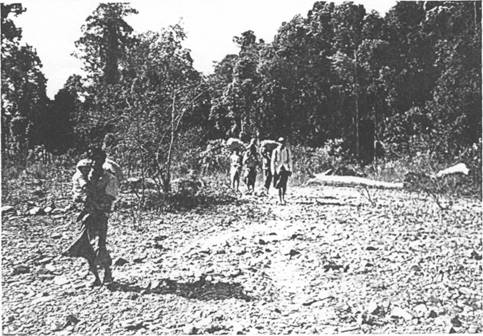
There have
been large number of new arrivals escaped from human rights abuses of
Burmese Army to Mon refugee camps, while the refugees were preparing to move
back into Burmese territory along the border
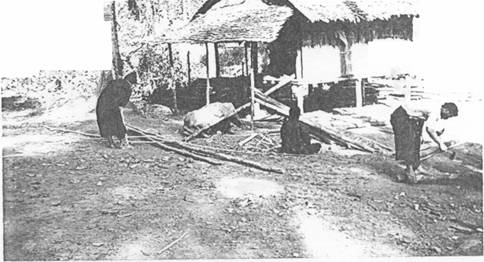
One refugee family built
their house in a resettlement village of Tavoy District