
Text Box: Destruction and Degradation of the Burmese Frontier Forests
Text Box: #
Text Box: A villager in Malagoon said that after 1995 the water level of his well has obviously lowered and it nearly becomes dry in the hot season. In the flat area of Tantibin Township the quality of water from the wells has declined. This means that it takes more time for the women to collect water. After the logging started, the water in the wells lowered every season. The villagers dug the wells deeper but the water did not come up higher. Before 1975, the water in the well was high but now there is just barely enough water to use. They cannot use it to create vegetable gardens and use for their animals. Some wells are nearly dried up. Poor villagers who use one well for four or five families have to wait until the water level rises again. Elder people in this area said that big trees give shelter and absorb the water. Since the big trees were cut down it is too hot and the streams are drying up, as well as the water in the wells. Many villagers asked KESAN to give them advice on how to get back more water in their wells.
Some local villagers have their integrated orchards or betel nut gardens along the streams. The fruit trees rely on the water of the stream. Logging leads to the drying-up of streams and some gardens are destroyed. When people do logging with elephants, buffaloes or cows, they pull the logs along the streams and destroy the small fruit trees in the villagers' garden. The villagers in Soiloh (Lunbu) said that because loggers pull the logs through their gardens, they couldn't replant the nursery trees. The elephants destroy the betel nut gardens. Also when the people who log with buffaloes and cows cannot find any more big trees, they cut down the trees in the villagers' gardens. Villagers keep some big trees around the garden for shelter for the small fruit trees and to use for building a house whenever they need them. There is no security for the villagers' gardens. The loggers come and take their betel plants and take their fruit in their gardens. “Since the logging, I could not afford to plant the betel pepper vine”, said an elder person in Htee Loh village.
Furthermore, villagers said that theft occurs where there is logging. Some villagers reported that they lost their properties, which they left in the huts in their gardens and in the farms.
The drying up of streams because of the logging meant that villagers could not water their gardens in the hot season and their baby fruit trees died. “Half of my betel nut garden was destroyed in 2000. I couldn't survive with my garden so I took a job as an elephant worker” said a villager in Soiloh village. The villagers have to change their lifestyle and become elephant workers or do small-scale mining in the rivers.
Deforestation also means less flowers and fruits. One woman in Peh Taw Day village (reserved forest) said that people from outside come to collect firewood even from fairy trees that Karen people are afraid of and respect. There are less of these trees that produce fruit for the birds. Animals are disappearing, not because they are hunted excessively, but because they have less food and shelter due to the logging.


Main factors that threaten the practice of traditional forest conservation

Logging and civil war are the main, interrelated factors that threaten the practice of traditional forest conservation. 


Logging

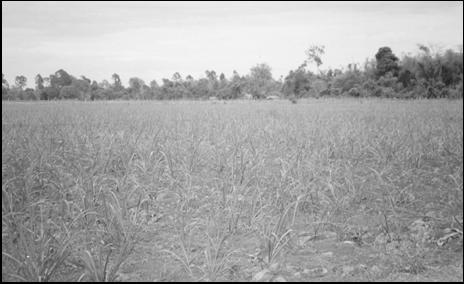
Logging started under British rule and continued under independence, but wasn't as destructive as it is now. The KNU commander of Toungoo district said: “Before 1975, the KNU controlled all the reserve forests of Toungoo district, Karen State. Since 1975-76, when the Burmese government initiated the ‘Four Cuts policy’ in Toungoo district, we lost Text Box: Sugarcane mono-plantation


4

4 a