
Text Box: Destruction and Degradation of the Burmese Frontier Forests
Text Box: #
Text Box: ship. Unreserved forest is found in some parts of all three forest types, from the hillsides to the top of the mountains.

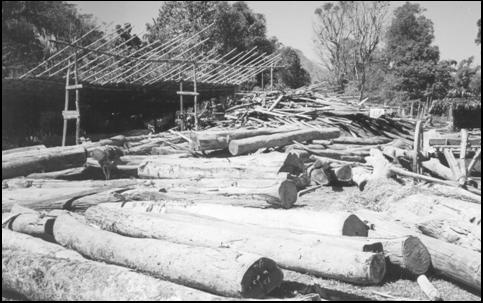
In 2000, commercial logging was stopped in all reserved forests except for Mehaw because of the deforestation. In 2000, the local Lintho area of Thandaung Township KNU troops signed a cease-fire with the SPDC. Now this cease-fire group does logging in Mehaw reserved forest and sells the logs to the SPDC timber product enterprise (MTE). 
In reserved forests few trees are left, and are still continuously cut for trade, building materials, and firewood. Unofficial logging with bullock carts still persists in reserved forests. Today, some areas of reserved forest have become flat farmland and temporary cash crop and fruit tree gardens. 
In 2002-2003 commercial logging moved to unreserved forest areas. For example, a commercial logging area not very far from Paletwa SPDC camp is in the unreserved forest of Thandaung Township. The SPDC has ordered to clear-cut this area because a dam will be constructed on the Thaukyegat (Dayloh) stream just upriver of the Paletwa SPDC camp.
Some areas of unreserved forest are degraded and destroyed because the farmers cannot practice their traditional rotational farming and were forced to practice shifting cultivation because of the initiation of the “Four Cuts policy” in 1975. In Tantibin Township, farmers who have been practicing shifting cultivation have cleared 38,823 acres of the old growth forest (Agriculture Census, 2001). The yield from this forest is only about five baskets of rice for each acre. In contrast, a good shifting cultivation plot will yield ten to twenty baskets of rice on one acre of land. 
Additionally, SPDC troops burn the bushes around their camp and along their road of Kawthinder-Busharkee every year, at least three times a year. Because of the fires, eggs and habitats of fowl species are destroyed, small plants and seedlings die, and orchards of forced relocated people in many villages are destroyed.
Political conflict has caused forced displacement, which contributes to the degradation of the forests in Toungoo. It is estimated that due to the logging and the non-traditional shifting cultivation of IDPs, only around 25% of the unreserved forest areas and 5% of the reserved forests remain in Toungoo district. “In the hot season of 2003, 3,000 bullock carts of farmers who are not local people of Tantibin township collected about 12,000 living trees for fuel (firewood and charcoal) and shelter (timber, post and furniture)” estimated a KNU local forester who gave bullock cart passes for people collecting firewood. But a local villager in Aung Myin Ywa SPDC concentration camp said that some urban people and a few local people do not only collect wood for their household needs. They also collect wood to sell to the sawmill. 
The land of local people and the habitats of local species have been destroyed by the civil war and the logging. One hundred years ago, there were numerous types of animals in the reserved forest of Tantiban Township. For example, wild elephants, several pairs of hornbills, gibbons (Teryupwa), peacocks, the rhinoceros, gaurs and some tigers lived in the reserved forest according to an interview with the elder people in one of the villages. The fact that the forest contained these animals indicates that once the forest was rich and healthy. But now there are hardly any of these animals to be seen in the reserved forest except for the peacock. The wildlife habitats are gone because of forest destruction. Peacocks are becoming a rare and endangered species too. As the SPDC policies and landmines threaten IDP's traditional livelihoods, IDP's agricultural practices and logging make the peacock live in fear.


Text Box: Stockpile


2