
Text Box: Destruction and Degradation of the Burmese Frontier Forests
Text Box: #
Text Box: Main factors that threaten the practices of traditional forest conservation


In the traditional system of forest conservation, forests are classified as protected forests, cultivated forests, communal forests, and religious forests.
Protected forests are watershed areas, wetlands, Ta Day Doh (area where two ridges meet), and Tee Per Chu (area between two rivers or streams). Cultivated forests are mostly mountainous or highland areas where rotational cultivation is practiced. Where there are flatlands, wet paddy cultivation is practiced. Communal forests are forests that belong to the community. People from the community have the right to collect their non-timber forest products, building materials and other resources they need.
Religious forests are specially protected because of animistic beliefs. For example, flat areas on the mountain side which have springs and are always wet (Na Oo Rhoo), areas where 2 rivers meet (Tee Per Chu), and areas where two ridges meet (Dah Dey Doe). Because these watershed areas have spirits or souls that protect the animals and plants they are not cultivated.
The traditional forest system protects the forests from unsustainable exploitation. The survival of the traditional system depends on the survival of the agricultural practices. However, there are three main factors that threaten traditional practices; logging, civil war and territorial zoning in the southern part of the district and civil war in black zones, mostly in the northern part of the district. Although shifting cultivation directly affects the forests, it is not considered as a main factor since it is a consequence of the civil war.


 Logging

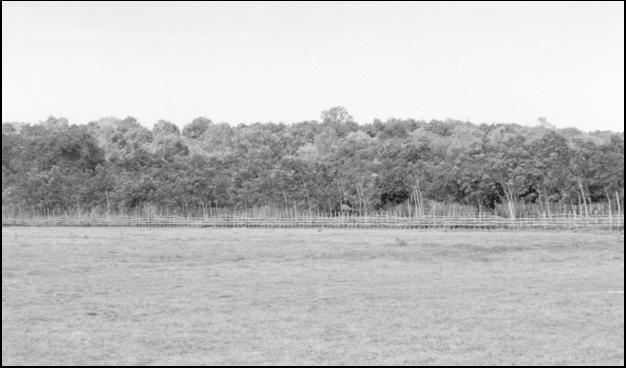
In the “brown zone" areas, the villagers, DKBA, SPDC and KNU all stay in close proximity. There is constant fighting between the groups and they gain control of different areas. Since the capture of the KNU headquarters at Manerplaw by the DKBA and the SPDC, the DKBA spread out into different areas and took control of many other territories held by the KNU. After 1996, logging began in many parts of Mu Traw district. The DKBA was the first to start logging in Kahilu wildlife sanctuary and within one year it expanded its logging up north through Htee K' Hsaw Mae reserve forest and to Pa Pun areas. Its main targets were teak, ironwood and other hardwood trees. In 2000, after the big trees had gone, privately owned logging enterprises from the cities held by local elites moved in. They have to pay tax to the KNU in order to avoid conflicts between loggers and the KNLA, the military arm of the KNU, as well as pay timber tax to the DKBA or SPDC soldiers. All together there are 30 small logging enterText Box: Wasteland area: dried out and unable to use for cultivation (consequence of logging)

4 a