

Text Box: Destruction and Degradation of the Burmese Frontier Forests
Text Box: #
Text Box: species in this forest. Maw Lu wildlife sanctuary is a suitable habitat for animals because of its high cliff ranges, many small streams and creeks, and thick forests with big trees such as Ghaw (Dipterocarp family) where it is always cool and green. But now, as internally displaced persons (IDP's) are expanding shifting cultivation in this area, forests and wild animals are endangered. According to a local source, there are almost no trees left in Kahilu wildlife sanctuary. Htee K'Hsaw Mae reserve forest used to have many teaks, ironwood and other hardwood trees, but now these have all been logged.
From 1989 to 1993, most forests along the eastern side of Burma on the border with Thailand have been seriously degraded by logging. From 1996 to the present, logging and charcoal production is taking place in the south and moving up towards the central part of the district, which is one of the best forest remaining areas. 
The forests in the northern parts of the district are also degraded only because of IDP's shifting cultivation practices.


Importance of the rainforest for local communities


The most important role of the rainforest for local communities in Mu Traw district is for agriculture. One senior leader of Mu Traw district estimated that 80 % of the villagers practice rotational (swidden) cultivation and 20 % practice rice paddy cultivation for their livelihood. Especially the rotational farmers depend mainly on the good conditions of the forest to produce satisfactory yields. The farmers grow rice and a variety of fruits and vegetables in different seasons. Even after the rice harvest, chili, yam, taro, cassava and other vegetables can be obtained from the fallow land. In one community in Lu Thaw district there are still 120 different kinds of food plants in rotational farming; in the past there were about 180.
Local communities not only depend on cultivated plants but there are many uncultivated plants that they can get from the forests. In Ta Paw Der village, northwest of Lu Thaw Township, villagers can get more than 150 forests products as food from the forest. Most of the villagers rely and depend on the forest. Quoting a Pah Khae Pee village elder: “We stay in the jungle and we survive from forest products. We don't need to go to the city and buy things. We live in the jungle and we know that the forests are useful and important for our livelihood. If there is no forest we've lost our livelihood. There are different types of vegetables that people can eat, for example in the summer time, bitter cane, K' Yeh (Caryota urens) and wild vegetables. In the rainy season, we get Por Du (ginger family), wild bananas, mushrooms, bamboo shoots and wild vegetables from the forest. If there is dot fruit, cardamoms and honey we can earn income for our families.”
Communities use forest products in many other ways. For example, the local people know that the forests are full of herbal medicines, which they use and depend on. Na Por Kyaw and Noe trees are used to treat malaria. Bark and leaves from one type of tree called Takuk Hor are used for pest control to kill insects that destroy rice paddies. These trees grow in very wet conditions.
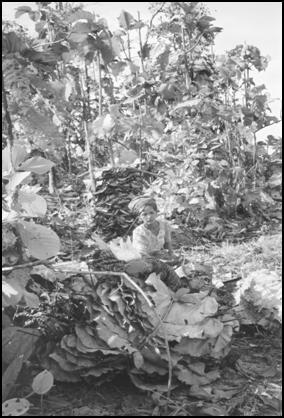
Building material comes from the forest. Counting the number of different tools and materials made by Ta Paw Der villagers, at least 180 different kinds of trees and 30 different kinds of bamboo are used. One villager from another village said: "For building, Text Box: Women collecting Terr leaves for income and building roofs


2

Text Box: