Text Box: Destruction and Degradation of the Burmese Frontier Forests
Text Box: #
Text Box: cleared.
Populations of wild animals are dramatically in decline. Only a very few wild animals are found in Kyakat Chuang wildlife sanctuary. Villagers no longer see wild animals inside or outside the reserve forests. Rare animals such as the tiger and the rhinoceros are gone from the wildlife sanctuary.
Environmental conditions have radically changed. Rivers dry up in the summer, and have a lower level in the rainy season than in the past. People travelling in these areas can no longer rest in the shades of the trees and always have to carry their own drinking water.
Despite the serious degradation of the forest, logging continues. Together with the collection of firewood, the charcoal business, the expansion of mono-crop plantations, and regular forest burnings by SPDC soldiers, the remaining forests are in serious danger. 


The importance of rainforest for local communities 


The rainforest plays very important roles in the livelihoods of the local communities in Doo The Htoo district. Rotational farming is a vital part of agriculture, and depends on good forest to produce successful yields. Traditionally, villagers let the land lie fallow for at least seven years. Another kind of agriculture is irrigated paddy farming. The traditional irrigation system is very productive because there are lots of organic substances like leaves and other tree litter that drops and decomposes in the canal. This organic matter flows with the water into the field and fertilizes the paddy fields. Forests also provide good conditions and fertility for the local communities' orchards. Many villagers plant betel nut (areca nut), dot fruit, durian, coconut, jackfruit, plum mango (Takaw Hsi Tha), Livistona speciosa (Lo Htu: have big leaves which look like palm leaves and are used for thatch), palm trees, sour grapefruit (Shau Thee), leech lime or kumquat, (Shaunu Thee), lime, pomelo (Ma O) and other species in the forest. These orchards are not only for household consumption but also provide extra income.
In addition to agricultural benefits, forests are sources of food (wild vegetables, fruits) and medicines. Most of the materials for buildings and basketry come from the forest. Forests used by the community as a whole are called community forests. They also serve as pasture for the

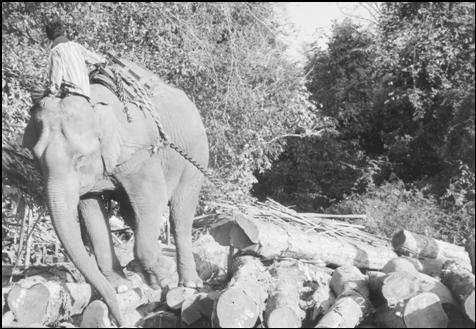
The designated reserve forests have helped protect the land, but that protection has not been adequate. Most of the reserve forests, as much as 85%, have been felled for timber or for permanent conversion to cultivation. The KNU protected areas still provide habitats for some wild animals, but these areas are inaccessible for villagers. The only suitable logging area left in Doo The Htoo district is in Bilin Township. Here, since 1996, the SPDC has pursued a new policy to avoid KNU resistance to the logging. The SPDC loaned money through a state-owned logging company to local Karen elites who establish logging operations and sell the timber to the Myanmar Timber Enterprise (MTE). These elites also negotiate with the KNU to safeguard their operations. The KNU used to ambush state-owned logging business operating in their areas. But now it grants permission and taxes the loggers. This has caused tension between the villagers and the KNU because the loggers have access to the reserve forests while the local villagers do not.

Text Box: Transferring of logs to stockpile using elephant labour


2